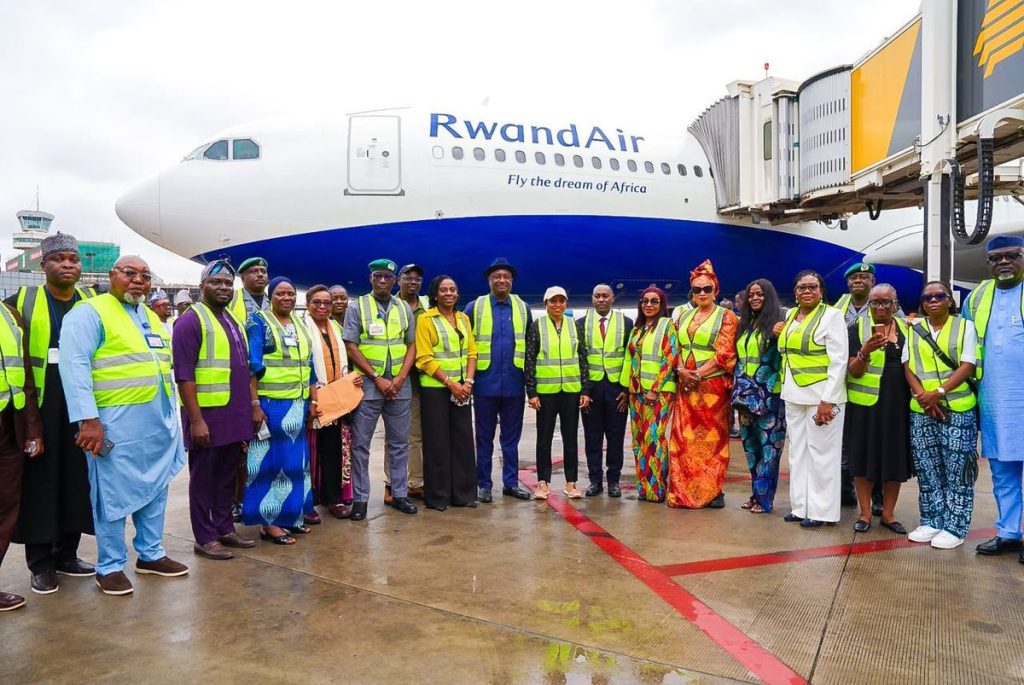
Nigeria has officially launched the Nigeria–East and Southern Africa Air Cargo Corridor in partnership with RwandAir, opening a new chapter in Africa’s drive toward deeper economic integration and expanded intra-continental trade.T
he initiative, flagged off by Nigeria’s Federal Ministry of Industry, Trade and Investment, establishes a dedicated air cargo network connecting Nigerian businesses directly to Kigali in Rwanda, Lusaka in Zambia, and Harare in Zimbabwe. Through RwandAir’s wider route network, exporters will also gain enhanced access to Nairobi, Kenya, and Johannesburg, South Africa.
The corridor is expected to significantly reduce logistics challenges, shorten delivery times, and lower transportation costs for businesses seeking to expand beyond their domestic markets. It is being implemented as part of efforts to operationalize the African Continental Free Trade Area (AfCFTA), the world’s largest free trade area by number of participating countries.
Officials described the launch as a transformative milestone for African trade, highlighting the critical role of air connectivity in facilitating commerce, supporting industrial growth, and strengthening regional value chains.By creating more efficient trade routes between West, East, and Southern Africa, the initiative is expected to benefit exporters of agricultural products, manufactured goods, pharmaceuticals, and other high-value commodities that rely on fast and reliable transportation.
The partnership further reinforces Rwanda’s growing position as a continental logistics and aviation hub, while providing Nigerian businesses with new gateways to some of Africa’s fastest-growing economies.RwandAir said the collaboration aligns with its broader mission of connecting African markets and enabling businesses to take full advantage of opportunities created by the AfCFTA.
The airline has continued to expand its cargo and passenger networks across the continent as demand for regional trade and connectivity increases.The launch of the corridor represents more than a transportation project; it is a strategic investment in Africa’s economic future. By improving market access and facilitating the movement of goods across borders, the initiative is expected to drive trade growth, create jobs, and contribute to the realization of a more integrated and prosperous African economy.