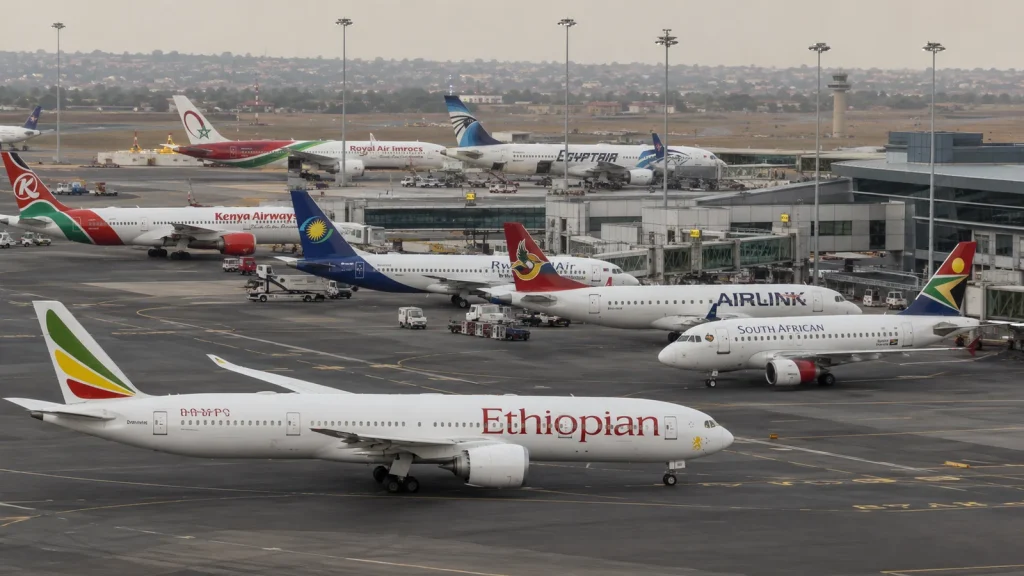
KIGALI, Rwanda: More than eight years after African Union member states signed the African Continental Free Trade Area (AfCFTA) agreement and committed to a Single African Air Transport Market, an uncomfortable statistic still defines African aviation: airlines operating on the continent cannot get their own money out of the countries where they earn it.
As of March 2026, roughly $774 million in airline revenue remained trapped in African markets by foreign exchange controls and regulatory delay, according to the International Air Transport Association (IATA), the largest share of blocked airline funds anywhere in the world. Algeria alone accounted for $258 million, followed by the CFA franc zone, Mozambique, Eritrea and Angola.
It was against this backdrop that ministers, regulators, airline executives and development finance leaders gathered for a high-level pre-Forum working session on open skies, ahead of the African School of Governance’s (ASG) flagship Africa Mindset Reset Forum at the Kigali Convention Centre on 25–26 August 2026.
Convened under the leadership of ASG co-founders Rwandan President Paul Kagame and former Ethiopian Prime Minister Hailemariam Desalegn, the Forum will bring together an expected 1,000 leaders, 80% of them young and emerging, to interrogate a shift “from Pan-Africanism to Meta-Africanism”: from the language of solidarity to the discipline of delivery.
Nowhere is that gap between declaration and delivery starker than in African skies.
A four-hour continent, still out of reach
“The business case for open skies has already been established,” said Prof. TK Pooe, Assistant Professor at ASG. “The real question before us now is who is prepared to move, why they need to move, and what action they are willing to take.”
Pooe described Africa’s aspiration as a “Nonstop Africa”: a continent where enforceable rights and rationalised costs make it possible to travel almost anywhere in around four hours. He cautioned against liberalisation declared on paper while the underlying costs, taxes and charges remain untouched, what he called a “closed-wallet system” masquerading as open skies.
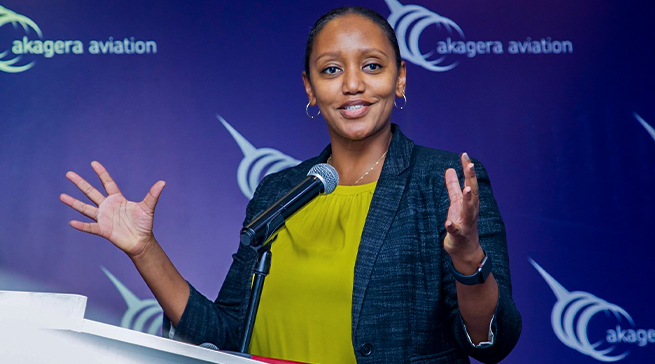
Yvonne Manzi Makolo, CEO of RwandAir, said the sector has spent nearly a decade circling the same debate, noting that flying from Kigali to a destination outside Africa can sometimes be cheaper than flying to a nearby African city, because taxes, fees and charges can account for nearly half a ticket’s price.
Getachew Mengistie Alemayehu, Director of Air Transport at the African Civil Aviation Commission, put a number on the shortfall: Africa’s aviation connectivity index sits at roughly 23%, well below the global benchmark. “Affordability is perhaps the greatest challenge facing African aviation today, because most citizens simply cannot afford to travel by air,” he said.
The money problem behind the policy problem
If political will were the only obstacle, the sector’s leaders argue, it would have been solved already. Increasingly, the binding constraint is financial. Dr. Lufeyo Banda of the Infrastructure Consortium for Africa at the African Development Bank noted that Africa holds roughly 18% of the world’s population but accounts for only a small fraction of global aviation activity. The Bank’s new Integrated Aviation Transformation Programme, he said, aims to mobilise private, institutional and concessional capital toward airline growth, fleet modernisation and infrastructure.
Raphael Kuuchi, adviser to the African Airlines Association, argued the continent’s problem is not a shortage of aircraft but a shortage of cooperation between African carriers to deploy the right aircraft on the right routes. He pressed governments to release the blocked funds still stranding carriers’ revenue in some 14 countries.
Ellen Manga, a Legal Services Manager at the Gambia Civil Aviation Authority and a senior officer with the continent’s aviation Dispute Settlement Mechanism Secretariat, said the legal architecture already exists in the Yamoussoukro Decision. “We cannot discuss the Single African Air Transport Market while leaving the Free Movement Protocol behind. The two initiatives must advance together,” she said. The protocol, adopted in 2018 to complement the AfCFTA, remains ratified by only four countries, Rwanda, Niger, Mali and São Tomé and Príncipe, of the 15 needed for it to enter into force.
A coalition of the willing
Rather than wait for continent-wide consensus, several speakers argued for a “variable geometry” approach: willing countries moving first and building a model others can join.
Dr. Joy Kategekwa, Strategy Advisor on Africa at UNDP and Director of the Regional Integration Coordination Office at the African Development Bank Group, proposed an “Africa Zone”, a coalition offering visa-free or visa-on-arrival access as a single, connected destination for business, tourism and investment. “Africa must accelerate the transition from visa requirements to visa on arrival, and ultimately to visa-free travel,” she said.
Youth and private-sector voices were less interested in further diagnosis.
Arnold Kwizera of the African Union Youth Business Council called every expensive flight, unnecessary visa and disconnected route “a tax on African businesses, particularly young entrepreneurs,” and urged a 12-month reform pilot by willing countries.
Dr. Tsotetsi Makong, Director for Coordination and Programmes at the AfCFTA Secretariat, framed the task as translation rather than negotiation. “Those rules must be domesticated, brought to life, and translated into practical benefits for African people and businesses,” he said, pointing to the AfCFTA’s Guided Trade Initiative, which has grown from a handful of countries in 2022 to more than 38.
From dialogue to delivery
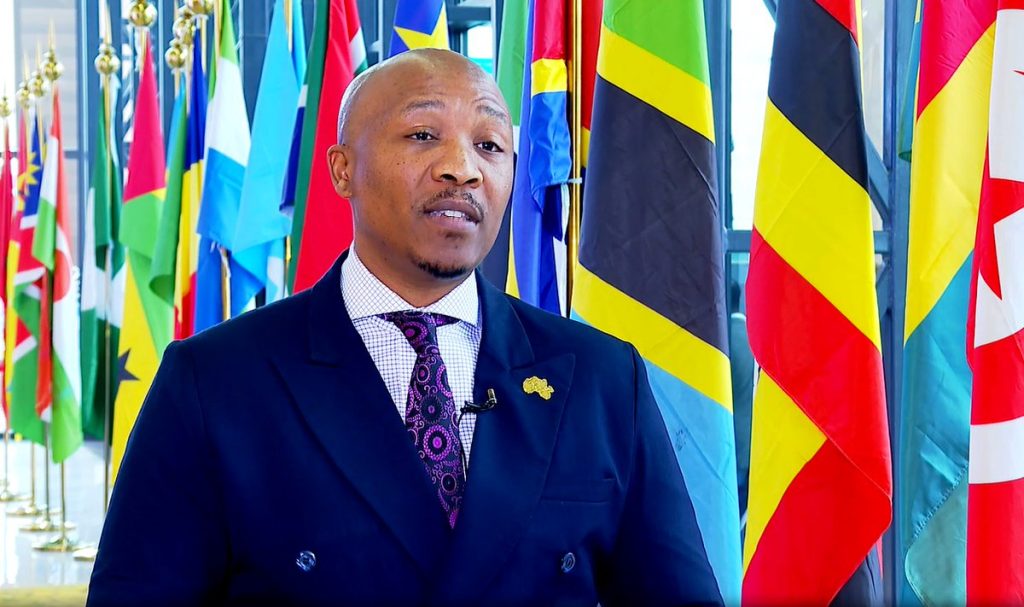
Closing the session, Rwanda’s Minister of Trade and Industry, Antoine Kajangwe, tied the aviation agenda to the AfCFTA’s broader promise. “If African countries can reduce and harmonize some of these costs, we can begin making meaningful progress towards affordable connectivity,” he said, before challenging the room to identify who, at the continental and national levels, actually owns the agenda.
That challenge is precisely the terrain the Africa Mindset Reset Forum has set out to occupy. Billed as “not just another conference about Africa’s problems,” the Forum aims to spotlight what already works and move discussion from dialogue to execution, organised around “seven shifts”: from fatalism to growth, from dependency to initiative, from victimhood to ownership, and from low standards to excellence, among others.
For a continent where the aircraft, the agreements and the market are largely already in place, open skies may be the clearest test yet of whether that mindset reset can translate into movement of people, cargo and capital, before another decade passes.
The Africa Mindset Reset Forum takes place on 25–26 August 2026 at the Kigali Convention Centre, convened by the African School of Governance under the leadership of H.E. Paul Kagame, President of the Republic of Rwanda, and H.E. Hailemariam Desalegn, former Prime Minister of the Federal Democratic Republic of Ethiopia.