The Democratic Republic of Congo is facing an increasingly serious Ebola outbreak, with more than 4,300 confirmed cases and more than 2,000 deaths recorded since the disease was officially declared in May.
The World Health Organization has now warned that the outbreak could become the deadliest Ebola epidemic ever recorded if it continues at its current pace. WHO Director-General Tedros Adhanom Ghebreyesus said the current outbreak could eventually overtake the 2014–2016 West Africa epidemic, which killed more than 11,000 people.
The latest WHO figures put the number of confirmed cases at 4,381, including 2,011 deaths, as of 9 August. That represents a case-fatality ratio of 45.9%, meaning nearly one in every two confirmed patients has died. The figures are changing rapidly as health authorities continue to identify and confirm cases.
The outbreak is also expanding at an unusually fast rate. More than 1,000 of the reported deaths have occurred in just the past three weeks, highlighting how quickly the epidemic has intensified.
The outbreak began months before it was declared
The DRC officially declared the outbreak on 15 May 2026, but health officials believe the virus had already been circulating for several months.
Investigations indicate that transmission may have begun as early as February, with some early infections reportedly misdiagnosed as malaria or typhoid. This means the virus had already been spreading in communities before health authorities formally identified the outbreak.
That delay is significant because Ebola control depends heavily on finding cases quickly, isolating infected patients and identifying people who may have been exposed. The longer infected people remain unidentified, the greater the opportunity for transmission within families, healthcare settings and communities.
The speed at which the current outbreak has grown is particularly striking when compared with previous Ebola epidemics in DRC. The Centre for Disease Control and Prevention CDC says the current outbreak passed 1,000 confirmed cases within about 40 days after the response was activated, whereas the 2018 DRC Ebola outbreak took roughly 235 days to reach the same threshold. That means the current outbreak reached 1,000 cases in approximately one-sixth of the time taken during the 2018 epidemic.
The 45.9% case-fatality ratio provides one of the clearest indicators of the severity of the Bundibugyo Ebola. The virus responsible for the current outbreak has previously caused only two recognised outbreaks. In Uganda in 2007–2008, the Bundibugyo outbreak recorded a case-fatality rate of about 25%, while the 2012 outbreak in DRC recorded a fatality rate of about 51%.
The current outbreak is therefore already approaching the fatality level recorded during the previous Bundibugyo outbreak in DRC.
Why is the outbreak spreading so fast?
The virus is spreading in some of the most difficult areas in which to conduct a major public-health response.The outbreak is centred in eastern and northeastern DRC, where communities are dealing with insecurity, displacement, limited healthcare infrastructure and significant population movement.
WHO reported that cases have been detected across five provinces: Ituri, North Kivu, South Kivu, Haut-Uélé and Tshopo. Ituri remains the epicenter.
The US Centers for Disease Control and Prevention identifies several factors complicating the response, including inadequate access to healthcare, diagnostic and laboratory services and infection-prevention supplies. These weaknesses can delay diagnosis and make it harder to isolate patients before they infect others.
Insecurity is another major problem. Conflict in Eastern DRC restricts access to some communities and makes it more difficult for response teams to conduct surveillance, investigate cases and trace contacts.
The CDC has also highlighted violence against healthcare workers and shortages of personal protective equipment as challenges facing the response. These challenges are particularly serious for Ebola because healthcare workers can themselves become infected if adequate infection-prevention measures are not in place.
Population movement makes containment harder
The outbreak is also occurring in an area where people regularly move between communities and across national borders. Trade, migration, family networks and displacement mean that people from affected areas may travel to other parts of DRC or into neighbouring countries.
The CDC identifies population movement and cross-border travel as factors that increase the risk of Ebola spreading beyond the immediate outbreak zone.
This does not mean that the disease is spreading uncontrollably across East Africa. Rather, it demonstrates why neighbouring countries need strong surveillance systems capable of detecting imported cases quickly.
For Rwanda and other countries bordering DRC, the priority is therefore preparedness: identifying people who may have been exposed, strengthening surveillance at points of entry and ensuring health facilities can safely manage suspected cases.
Misinformation and trust are also part of the problem
The Ebola response is not only a medical operation. The CDC has identified misinformation and a lack of trust in authorities as additional barriers to controlling the outbreak.
As a result, the affected communities are not cooperating with the medical personnel, failing to report symptoms, accept testing, allow health workers to identify and monitor contacts and seek treatment early.
When communities distrust response teams or believe false information about the disease, those measures become more difficult to implement. This is why WHO and the Africa Centres for Disease Control and Prevention are increasingly emphasising community-led action.
In a joint statement issued on 6 August, the two agencies called for stronger community involvement in the response, including earlier detection of cases, improved contact tracing, better access to care and greater protection for frontline health workers.
What is being done to control the outbreak?
The response is built around several measures designed to break chains of transmission.
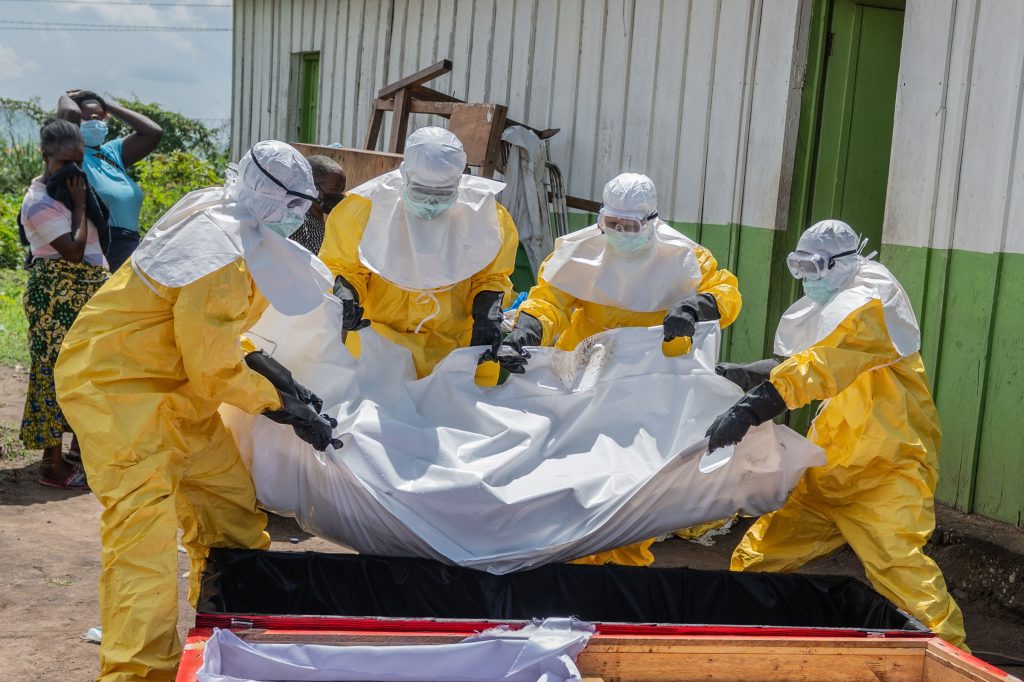
Health authorities are working to identify and isolate cases quickly, test suspected infections, trace contacts, strengthen infection prevention and control, conduct safe and dignified burials and engage communities.
The CDC says these measures are being supported through surveillance, laboratory diagnostics, infection-prevention activities, border health measures, data management and risk communication.
The scientific response faces a major gap
The current outbreak is caused by Bundibugyo ebolavirus, a rare Ebola species that has previously caused only two recognised outbreaks.One of the biggest challenges is that there is currently no approved vaccine specifically for Bundibugyo virus and no recognised specific treatment.
Researchers are therefore working to develop and test new tools while the outbreak is already underway.The UK medicines regulator has authorised human trials of a vaccine candidate developed by Oxford University, while other groups are also developing vaccine candidates.
WHO is additionally supporting clinical research into antiviral treatments that could potentially improve survival.
The response is also benefiting from improvements in diagnostics. WHO has authorised the use of a diagnostic test for Bundibugyo virus under its Emergency Use Listing mechanism, allowing health authorities to expand testing during the outbreak.
These scientific efforts could eventually provide additional weapons against the virus, but they do not remove the immediate need for surveillance, isolation, contact tracing and community cooperation.