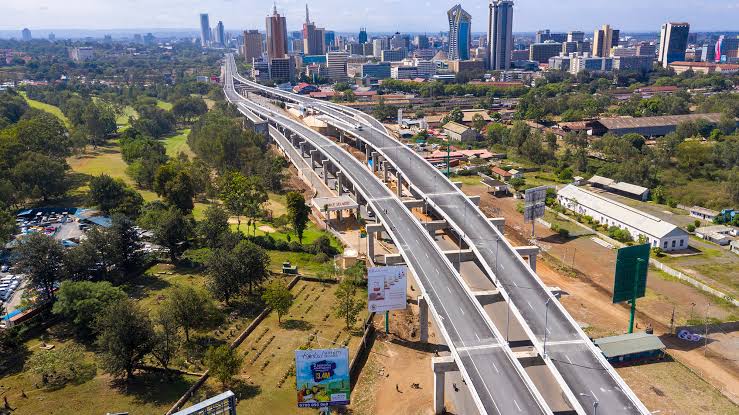
Kenya is pursuing plans that could eventually create a continuous high-capacity road network linking the Port of Mombasa to the Ugandan border, in a move aimed at strengthening trade and transport connections across East Africa.
The proposed network would connect the Mombasa-Nairobi Highway with Nairobi’s existing Expressway before extending through the planned Rironi-Mau Summit Highway and the Mau Summit-Eldoret-Malaba route.
If developed as envisaged, the interconnected roads would provide a major transport corridor stretching from Kenya’s Indian Ocean coast, through Nairobi and western Kenya, to Malaba, one of the region’s key border crossings with Uganda.
The plan forms part of Kenya’s broader efforts to strengthen the Northern Corridor, a critical trade route connecting the Port of Mombasa with landlocked markets in East and Central Africa.
Kefa Seda, Director General of Kenya’s Directorate of Public-Private Partnerships, said the government is increasingly approaching transport infrastructure as an interconnected network rather than a series of individual road projects.
The objective is to improve the movement of cargo between maritime gateways, production centres, logistics hubs and major consumer markets.
The proposed Rironi-Mau Summit Highway is expected to strengthen the connection between Nairobi and western Kenya, while preparations are also advancing for the Mau Summit-Eldoret-Malaba Highway.
According to the PPP Directorate, feasibility and other preparatory work for the Mau Summit-Eldoret-Malaba project is being undertaken under a public-private partnership framework as Kenya looks to attract private financing and technical expertise.
The route is particularly significant for regional trade because Malaba serves as a major gateway for goods moving between Kenya and Uganda, with cargo continuing onward to other East and Central African markets.
A corridor beyond Kenya
For the wider East African region, the proposed network could have implications well beyond Kenya’s borders.
The Port of Mombasa is an important maritime gateway for several landlocked countries, including Uganda, Rwanda, South Sudan and parts of the Democratic Republic of Congo. Faster and more reliable connections between the coast and inland markets could therefore help reduce transport delays and improve the movement of goods across the region.
The plan also comes as Kenya works to expand and modernise its maritime infrastructure. The government is pursuing upgrades at the Ports of Mombasa and Lamu, with the aim of increasing cargo-handling capacity and improving connections between ports and inland transport networks.
The PPP Directorate is expected to package infrastructure projects into investment opportunities capable of attracting private capital while addressing logistics bottlenecks.
For East Africa, the broader objective is not simply to build more roads, but to create a more integrated transport system capable of supporting growing regional trade.
If the projects are delivered and effectively connected, the Mombasa-to-Malaba route could become an important backbone for the movement of goods between East Africa’s largest maritime gateway and markets across the region.
The scale and timing of the proposed projects, however, will depend on feasibility studies, financing arrangements, procurement and implementation decisions. The plans therefore represent a developing infrastructure strategy rather than an already completed expressway network.