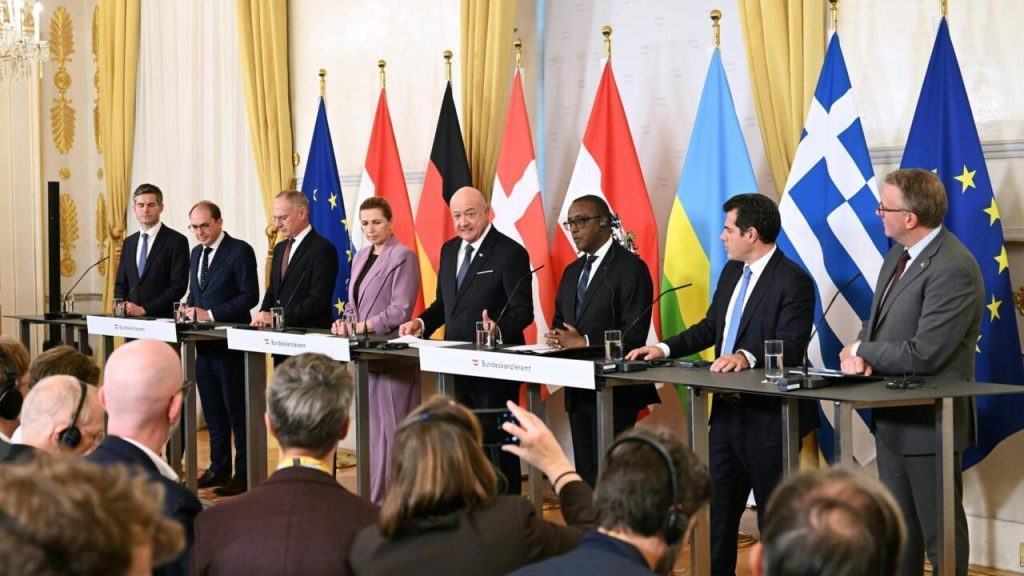
Rwanda has entered into a migration partnership with five European Union (EU) countries to establish a migrant return hub in the country, creating a framework for receiving people who no longer have the legal right to remain in the participating European states.
The initiative brings together Rwanda, Germany, Denmark, Austria, Greece and the Netherlands. It was announced on Monday, November 16, following a meeting of senior officials in Vienna, Austria, where the countries agreed to begin concrete negotiations on implementing the proposed arrangement.
Under the plan, Rwanda would receive migrants who are staying illegally in the five European countries and are subject to enforceable return or removal decisions. The arrangement excludes people who qualify for international protection or have another legal basis to remain in those countries.
The proposed hub is expected to operate as an open, temporary reception facility rather than a detention centre. People transferred to Rwanda would have the opportunity to integrate into Rwandan society, including accessing residence rights, education, healthcare and employment.
They would also have the option of voluntarily returning to their countries of origin or relocating to another country where they have the legal right to settle, with support from Rwanda and international organisations.
The initial phase is expected to operate as a pilot, with a proposed capacity of approximately 100 people. Diplomatic sources cited by AFP indicated that each participating European country could initially send around 20 people.
Rwanda’s position
Rwanda’s Interior Minister Vincent Biruta said the partnership reflects the country’s willingness to work with European partners to develop solutions to migration challenges while providing opportunities for people who cannot remain in their current countries.
He described the initiative as offering a “second chance” to people who no longer have the right to stay in the participating European countries.
The Rwandan government has said the arrangement will be based on an equal and mutually beneficial partnership, extending beyond migration to other areas of cooperation.
The five European countries are expected to cover the costs associated with the arrangement, including temporary accommodation and support for migrants transferred to Rwanda.
The six countries intend to advance negotiations through a phased approach to reach an agreement and begin the first transfers in 2027.
The proposed arrangement differs from the Rwanda-United Kingdom migration deal announced in 2022, which sought to transfer asylum seekers to Rwanda while their claims were processed. That agreement was later abandoned.
Under the new initiative, only people who have exhausted the relevant legal processes and have no right to remain in the participating European countries would be eligible for transfer.
The partnership places Rwanda among countries working with European governments on new approaches to migration management, while further negotiations will determine the operational arrangements and safeguards governing the proposed centre.