

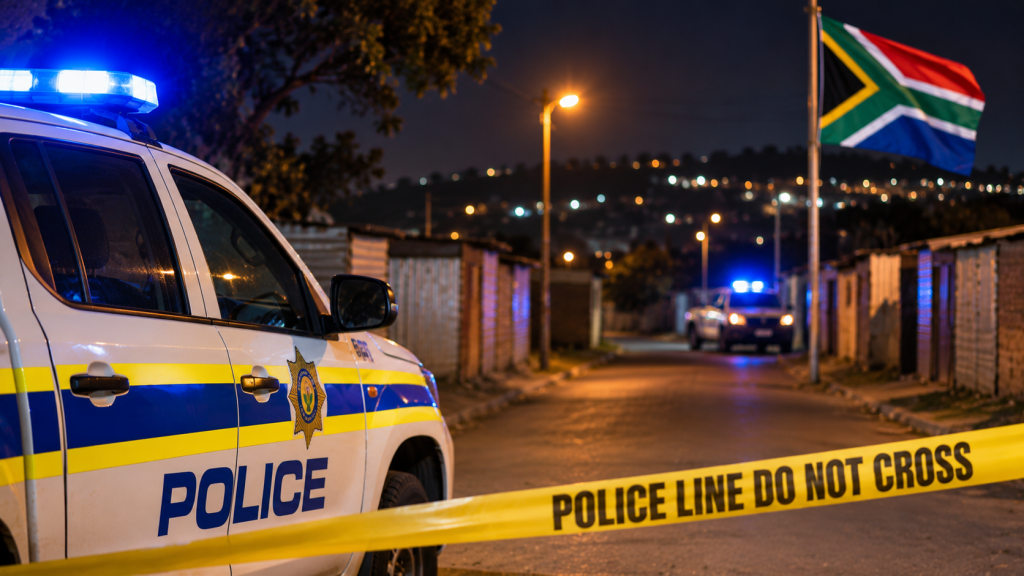
South African police are investigating two separate mass shootings that left at least 17 people dead in KwaZulu-Natal and Gauteng provinces on Sunday night, November 15, as authorities launch manhunts for those responsible.
The attacks claimed the lives of eight men in Sweetwaters, outside Pietermaritzburg, and nine people in the Jeffsville informal settlement in Atteridgeville, west of Pretoria.
In the first incident, police responding to reports of gunfire in Mabane Section, Sweetwaters, discovered a white seven-seater vehicle riddled with bullet holes. Inside, officers found eight men with multiple gunshot wounds who were pronounced dead at the scene.
Police spokesperson Robert Netshiunda said investigators were collecting evidence to establish the circumstances surrounding the killings, identify the suspects and determine the motive.
Subsequent investigations established that six of the eight victims had been identified, with most believed to be between 20 and 23 years old and from areas around Marianhill, west of Durban.
Police also recovered two firearms, ammunition and a blank gun inside the vehicle. Investigators established that one firearm had been reported stolen in October, while the other belonged to a security company in Gauteng. The vehicle was reportedly used for e-hailing services.
Nine Others Killed in Pretoria Shooting
In a separate incident, nine people, comprising six men and three women, were found shot dead inside a four-roomed shack in Jeffsville informal settlement in Atteridgeville.
Police believe the shooting occurred between 10 p.m. and 11 p.m. on Sunday. Authorities were alerted at approximately 7:30 a.m. on Monday, November 16, and discovered the bodies inside the shack.
Several spent cartridges were reportedly found outside the property.
Gauteng police have mobilised crime intelligence officers and tracking teams to identify and arrest the suspects. No arrests had been announced in connection with the Atteridgeville attack at the time of the latest reports.
Gauteng Provincial Police Commissioner Tommy Mthombeni said investigators were examining a possible connection between the attack and an earlier mass shooting in a nearby informal settlement in 2025, which left 12 people dead and 13 others injured. However, this link has not yet been established.
Police Launch Manhunt Amid Rising Gun Violence
National Police Commissioner Fannie Masemola has directed police commanders in both provinces to ensure that the investigations receive the necessary resources.
He said investigators were following leads and collecting evidence to identify those responsible, adding that authorities would pursue every available avenue to bring the suspects to justice.
The two shootings add to a series of deadly mass attacks that have heightened concerns over gun violence and organised crime in South Africa.
In September 2026, separate shootings near Johannesburg and Cape Town killed dozens of people, including an attack in which gunmen opened fire at a bar near Johannesburg, leaving 18 people dead and 14 others injured.
Illegal firearms, gang-related violence, drug trafficking and disputes over criminal territories remain among the challenges facing law enforcement agencies.
In February 2026, President Cyril Ramaphosa described organised crime as one of the most immediate threats to South Africa’s democracy, society and economic development.
The government has also deployed military personnel alongside police in several high-crime provinces to support efforts against organised criminal networks and armed violence.
According to the latest police statistics for April to June 2026, South Africa recorded 5,427 murders, averaging approximately 60 killings per day, although this represented a six percent decline compared with the same period in 2025.
The latest attacks have renewed calls for stronger action against illegal firearms, improved policing and greater efforts to address organised criminal networks.
Police investigations into both incidents are ongoing, with authorities appealing to anyone with information to assist in identifying those responsible.


