On 27 August, Kenyans marked sixteen years since the promulgation of the Constitution. This 2010 moment was the culmination of decades of struggle, sacrifice and a collective aspiration for a more accountable, equal, inclusive, and responsible state. And a reset of the state-citizen relationship.
A year later after that Constitution was promulgated, eight governments and civil society organisations came together across the Atlantic around a similar concern: the state of democracy, and how governments were engaging their citizens. From that effort, the Open Government Partnership (OGP) was born as a co-created space between governments and civil society. Kenya joined as one of its first members, buoyed by the constitutional moment the year before, and the shared values and promises. The two processes, born a year apart on different continents, aimed at the same thing: putting citizens at the centre of how they are governed, and rebuilding the relationship between people and power.
Two projects, one origin
These two anniversaries are therefore not separate stories. They are the same story, told from two directions: a country trying to rebuild trust in its own institutions, and a global effort trying to build trust into government by design and to ensure that democracy delivers for the people. Both were responses to a loss of trust. Kenya’s Constitution was drafted in the aftermath of 2007, when the country went to war with itself partly because we no longer trusted the institutions meant to referee our disputes, chief among them the body that managed our elections, and the courts meant to arbitrate any disputes arising from outcome. The Open Government Partnership, on the other hand, was democracy’s own admission that access to information, public participation, and technology needed to be deliberately built into government if citizens were going to believe in it again.
Thankfully, out of that tumult we built oversight institutions, constitutional commissions, and an independent judiciary, all designed for one purpose: to be trusted. And through consecutive OGP actions plans meant to advance accountability, inclusion and openness have continued to be made.
As we mark the anniversaries however, it is tempting to treat these two moments as a ceremony. We shouldn’t. Instead, we should take the opportunity to audit whether the promises made have been delivered to the citizens.
The honest audit
Sixteen years later, the honest question is whether either project is doing what it was built to do. We now have a plethora of constitutional commissions and one of the more independent judiciaries in the region. Kenya has published five National Action Plans under the Open Government Partnership through which commitments around public participation, access to information, protection of civic space, accountability through open contracting and beneficial ownership have continued to make incremental gains to constitutional promises on transparency, inclusion and accountability.
Despite these gains, data by the Edelman Trust Barometer, Afrobarometer on nearly every measure available to us shows that trust in democratic institutions across Africa and the world sits at a historic low. That gap should trouble anyone who helped build these tools.
Service delivery remains unresponsive in too many places, participation still feels tokenistic more often than it should, and digitisation has improved government without yet reaching everyone it was meant to reach. Wanjiku remains at the centre of the Constitution discourse, yet the promises and aspirations to her remain elusive. We are not where the Constitution promised we would be. The work is incremental because trust itself is incremental. It is lost fast and rebuilt slowly, and there is no shortcut available to either side of this partnership.
As governance actors, this is the time to ask ourselves the hard questions. Does access to information still lead to trust, when the information environment is now as full of disinformation as it is of fact? Does public participation still build trust, when participation itself can be designed, choreographed, or weaponised to manufacture a result rather than test one? Does technology still accelerate trust, when the same digital tools that promised better service delivery now to carry not just misinformation and disinformation but can also be used to exclude large segments of communities? My answer is not that the tools have failed. It is that the work is unfinished, and unfinished work looks unglamorous up-close.
Trust is a verb
Trust, I have come to believe, is best understood as a verb rather than a possession. It is not something a constitution or an action plan grants once and for all; it is earned continuously, and it must accommodate views that make power uncomfortable. It is the bedrock of democracy, the foundation of which must be rooted in the belief that political leaders and institutions act in the best interest of the public. This includes the rule of law, transparency, credible electoral process, and the responsiveness of government structures to citizen needs. Ultimately, government must do the job for which it exists – protecting and promoting the common welfare of its citizens.
It also cannot survive certain conditions that no framework can legislate away: polarisation along any line, political intolerance and violence, a shrinking civic space, media threats or the exclusion of women, young people, persons with disabilities, and other marginalized groups who do not feel the system was built with them in mind. Government cannot rebuild that kind of trust alone, and neither can civil society alone.
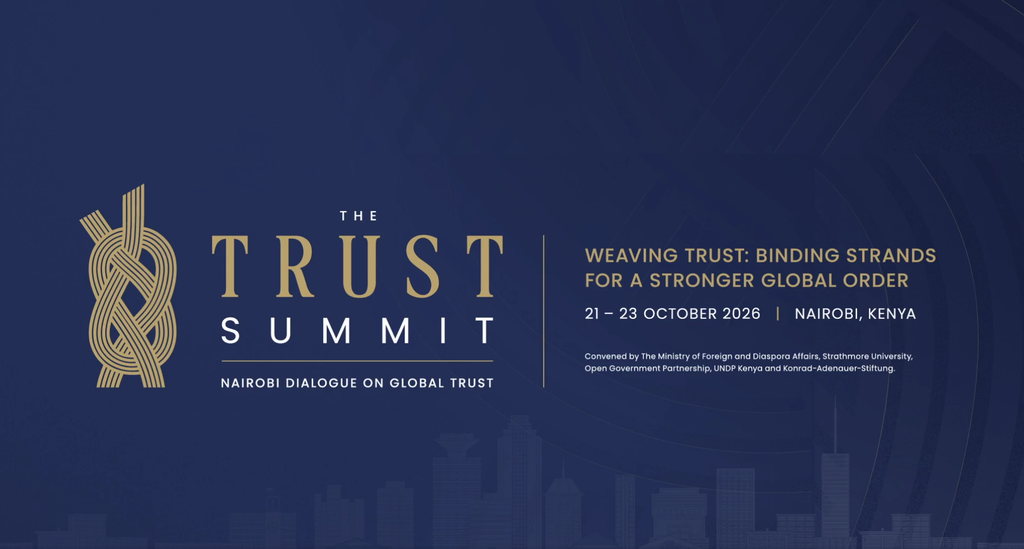
As the country gears up to host the Global Trust Summit in October 2026, these are some of the real conversations that the participants must honestly engage with. The Summit takes place at a time when democratic reversals across the globe threaten the very ideals that have defined government-citizen relations, multilateralism is under scrutiny and technology is shifting the socio-economic and political arenas. At the national level, a highly charged political environment and inter-generational contestations further compound this trust deficit. This moment therefore calls for deep reflections and candid conversations to course correct.
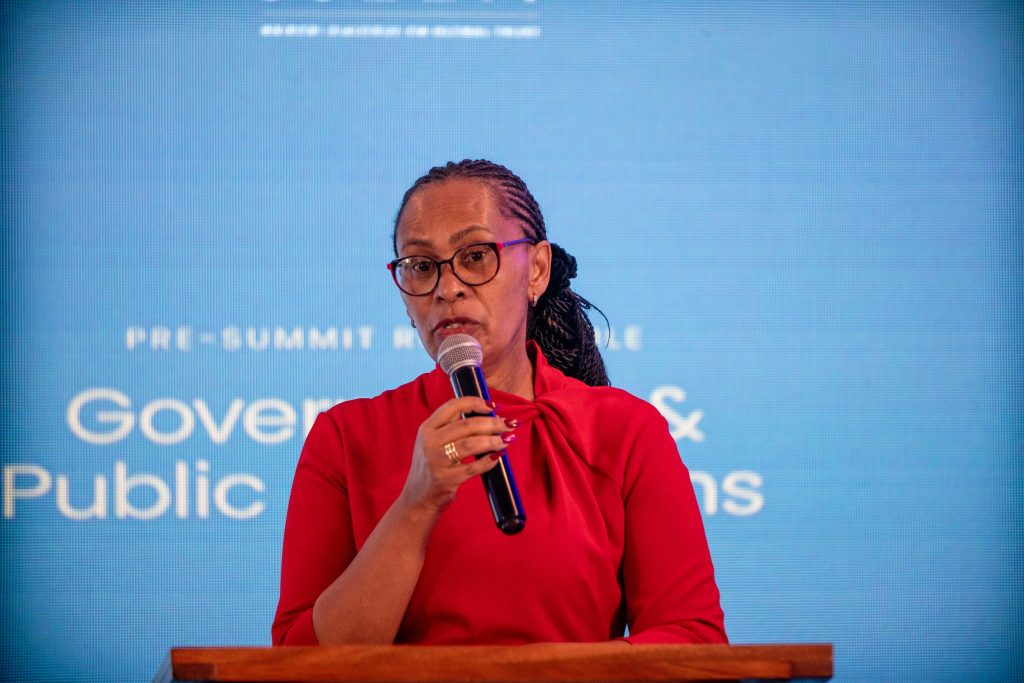
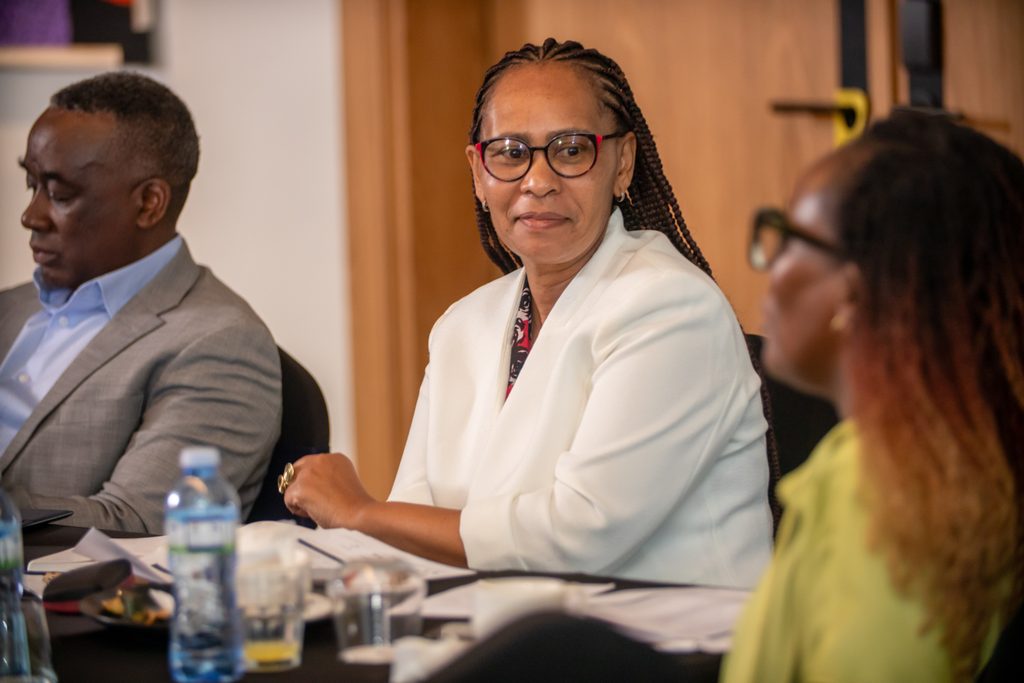
Fortunately, the governance and public institutions conversation that produced this piece, held fittingly on Katiba Day itself and the previous pre-summit convenings with regulators and private sector respectively have already provided opportunities to pressure-test the Summit’s thinking against sector realities before the main event convenes. Having these conversations as a pre-lude to the Summit ensures that we can forge and weave processes upon which trust in our democratic processes and institutions can be anchored, rebuilt and protected.
Ultimately, reducing and restoring the trust deficit will be critical to the realization of constitutional and global promises on good governance. It need not remain an unfinished business.
Caroline Gaita is the Executive Director Mzalendo Trust and the OGP CSO Convenor of the Trust Summit.