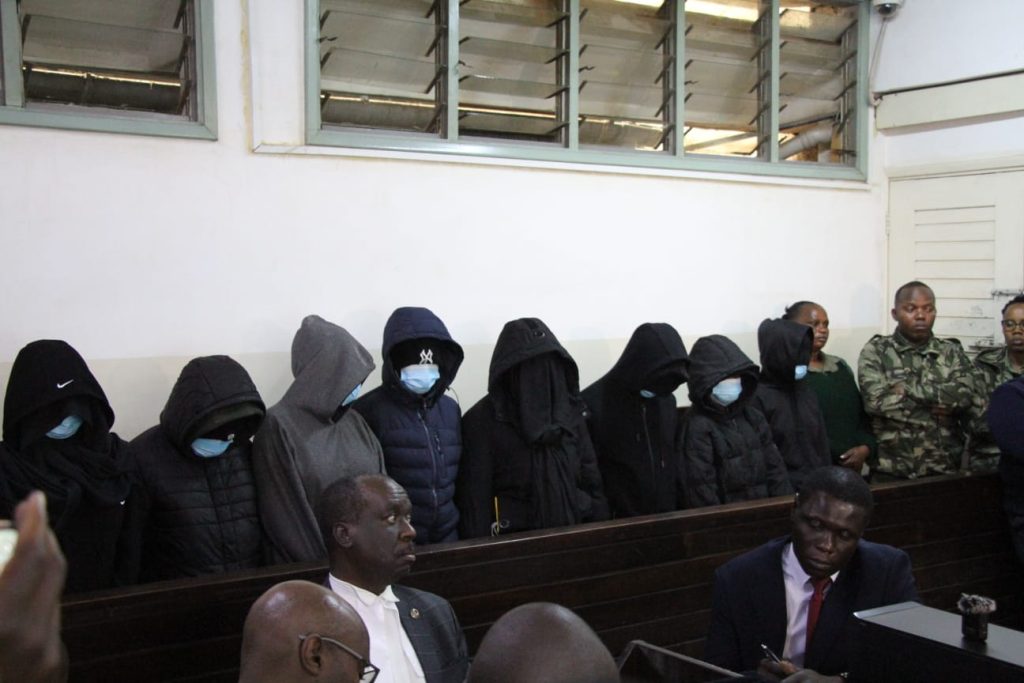
Eight students from Utumishi Girls Academy in Kenya, accused of an arson attack that razed down a school dormitory claiming the lives of 16 fellow students, have pleaded not guilty to 16 counts of murder.
Appearing before Justice Diana Kavedza at the High Court in Kibera, Nairobi, the eight minors denied the charges after psychiatric assessments found them mentally fit to stand trial.
The prosecution says the May 28 fire at the Gilgil, Nakuru County school was deliberately set, destroying a dormitory and injuring several students. However, the accused have denied the allegations.
The Office of the Director of Public Prosecutions (ODPP) has opposed the release of the suspects on bail or bond, urging the court to keep them in custody pending trial.
The High Court has further imposed strict reporting rules for journalists and members of the public following the proceedings of the matter to ensure a fair trial and that the rights of the minors are not violated.
In her directives, Justice Kavedza has prohibited the publication of any information capable of identifying the eight minors, including their names, photographs, videos, school admission numbers, residential areas, physical appearances or any other identifying details. The same protection extends to their parents, guardians, siblings and immediate family members, as well as protected child witnesses.
To preserve the anonymity of the accused, Justice Kavedza directed that each child be identified throughout the proceedings only by anonymised codes assigned by the Deputy Registrar, accessible only to the court, the parties and other persons specifically authorised by the court.
The judge also ordered that inquiry reports, psychiatric assessments, probation reports, medical records and other documents containing personal information about the minors remain confidential and inaccessible to the public.
Justice Kavedza further cautioned against sensational reporting and external influence on the case, while prohibiting Photography, filming, audio recording, video recording, live-streaming and broadcasting from inside the courtroom or its immediate precincts unless authorised in writing by the court.
Justice Kavedza further directed that every accused child must be represented by legal counsel throughout the proceedings, with the Legal Aid Service to facilitate representation where necessary. A parent, guardian or designated children’s officer must also be present during every hearing involving each child.
According to Judge Kavedza, the outcome of the trial will be determined by the evidence presented and not by public opinion despite the significant public interest in the case.