With only four years remaining before the 2030 deadline for the Sustainable Development Goals, African leaders are under pressure to turn commitments on water and sanitation into reliable services for millions of people across the continent.
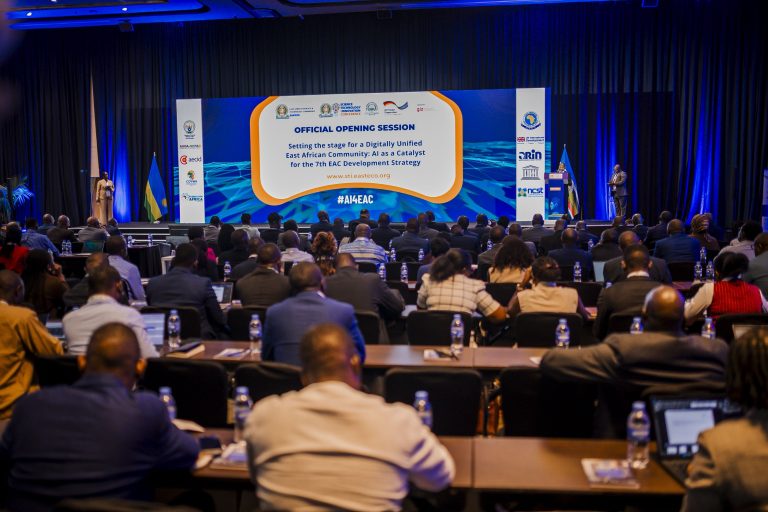
The issue is at the centre of the Africa Water and Sanitation Systems Leadership Symposium 2026, which opened in Kigali on August 17 and brings together policymakers, financiers, development partners and water sector experts to discuss investment, governance and reform.
The urgency is clear. United Nations estimates show that 2.2 billion people globally lacked safely managed drinking water in 2024, while 3.4 billion lacked safely managed sanitation. In Africa, the African Union estimates that more than 400 million people lack access to water for their daily livelihoods, while more than 800 million lack basic hygiene services.
With SDG 6 targeting universal access to water and sanitation by 2030, the question is whether Africa can close the gap in just four years.
From infrastructure to implementation
Speaking during the Symposium, H.E. Abdulla Ahmed Balalaa, Assistant Minister of Foreign Affairs for Energy and Sustainability of the United Arab Emirates (UAE), said the continent now needs to move beyond commitments and focus on delivery.
“The challenge before us is no longer one of ambition. The challenge, I say it again, is implementation.”
Balalaa called for stronger partnerships, financing, technology and political leadership, while arguing that water should be viewed as an economic opportunity as well as a development priority.
“Unlocking investment in water means unlocking investment in Africa’s future.”
He said the same focus on implementation should inform preparations for the 2026 UN Water Conference, to be held in Abu Dhabi in December and co-hosted by the UAE and Senegal.
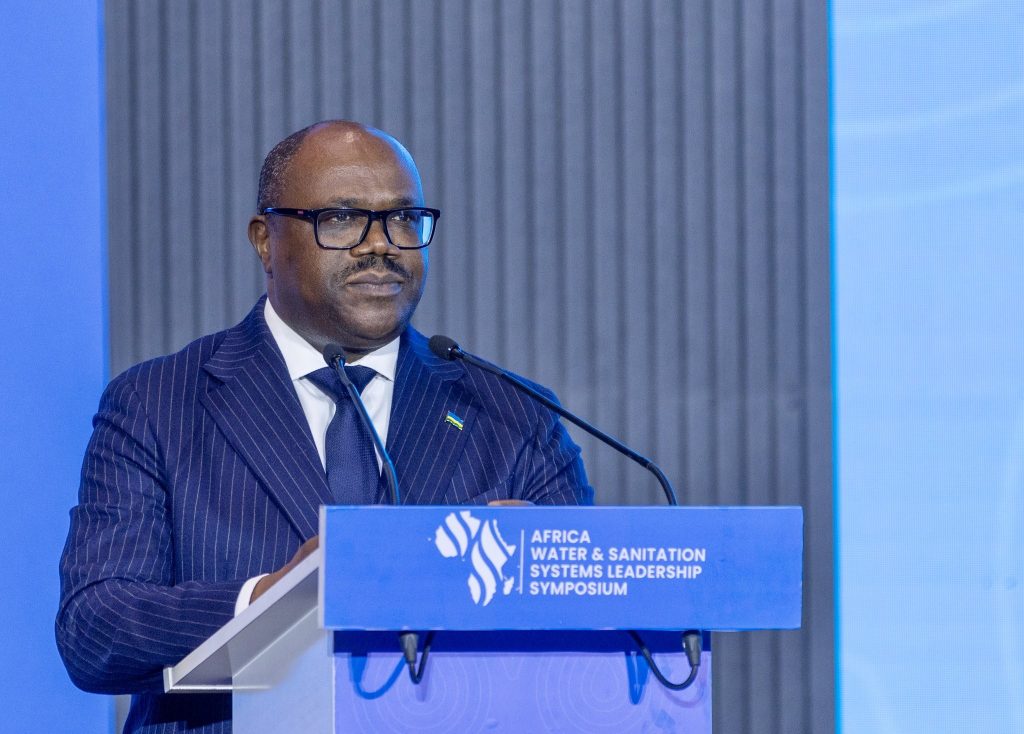
That focus on implementation is also being echoed by Rwanda, which is hosting the symposium. Prime Minister Justin Nsengiyumva stressed that building infrastructure is only the first step, and that its long-term performance is what ultimately matters
“Building infrastructure is important, but to a large extent, it is only the beginning. Ensuring that the built infrastructure functions effectively and reaches communities over the long term is the real measure of success.”
Rwanda plans to increase treated water production capacity from more than 367,000 cubic metres per day in 2026 to over 688,000 cubic metres per day by 2029. It also aims to reduce non-revenue water, which is water produced but lost before reaching consumers, from about 35 per cent to 25 per cent by 2029.
The targets illustrate the wider challenge facing Africa: building infrastructure is only useful if systems remain operational, affordable and accessible to communities.
Africa’s financing challenge
The African Union estimates that Africa faces an annual investment shortfall of about US$30 billion in meeting its water and sanitation goals.
The challenge extends beyond constructing new infrastructure. Water systems require long-term financing for maintenance, repairs, electricity, skilled personnel and management.
According to the AU Commissioner for Agriculture, Rural Development, Blue Economy and Sustainable Environment Moses Vilakati, African countries have already invested heavily in water infrastructure, but the focus must now shift towards ensuring those investments continue to deliver.
“Building infrastructure is important, but to a large extent, it is only the beginning.”
Vilakati identified strong institutions, effective governance, sustainable financing and accountable leadership as critical to keeping water systems functional.
The 2030 and 2063 deadlines
The water crisis also has implications beyond the 2030 SDG deadline. The African Union’s Agenda 2063 provides the continent’s long-term development framework, while the Africa Water Vision 2063 and Policy provide a specific framework for advancing water and sanitation within that broader vision.
The need for action is reinforced by the health sector. A recent WHO-UNICEF report found that only 40 per cent of healthcare facilities globally met basic sanitation standards in 2025, falling to just 23 per cent in sub-Saharan Africa.
For African leaders, the message from Kigali is increasingly about closing the gap between what is promised and what people experience.
With four years left to 2030, the measure of progress will not simply be how many boreholes, pipelines or treatment plants are built, but whether households, schools, hospitals and businesses can rely on safe water and sanitation every day.
FOLLOW LIVE EVENTS: