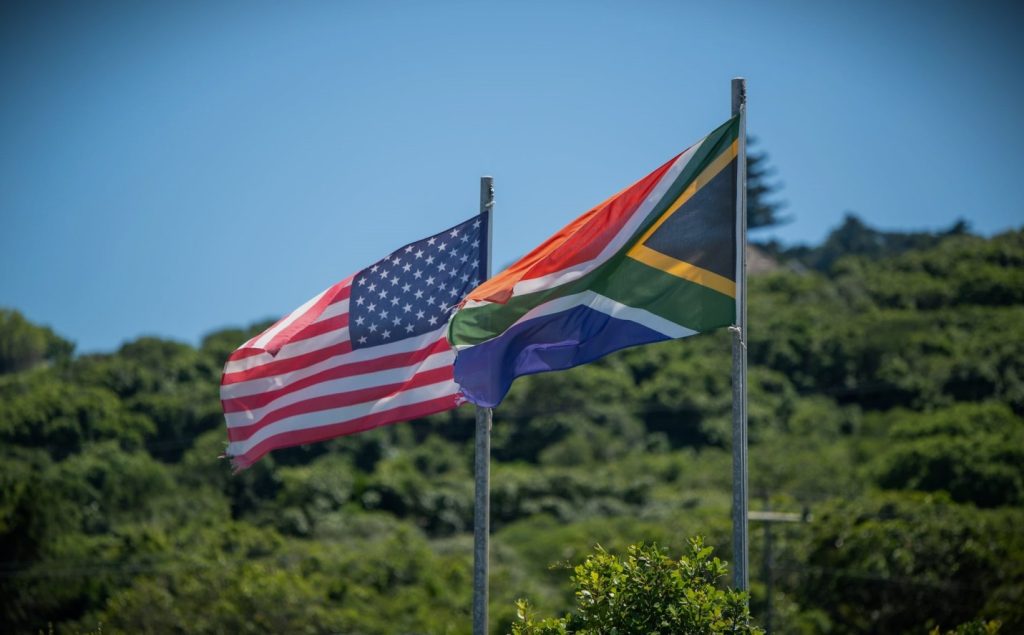
The U.S. National Institutes of Health (NIH) has lifted its ban on funding research projects in South Africa, reversing a policy introduced after President Donald Trump ordered U.S. agencies in February 2025 to halt foreign aid and assistance to the country.
The decision follows an internal review led by NIH Director Jay Bhattacharya, which concluded that NIH research grants do not constitute foreign aid and therefore fall outside the scope of the executive order.
Bhattacharya argued that the U.S. Congress has specifically authorised the NIH to participate in international research collaborations and that the agency’s research funding is not governed by the Foreign Assistance Act.
The move could help restore a research partnership between the United States and South Africa that has developed over several decades, particularly in the fields of HIV and tuberculosis.
South Africa is a major international centre for clinical research because of its significant HIV and TB burden, established scientific institutions and capacity to conduct large-scale clinical trials.
The funding freeze had put numerous research programmes and clinical trial sites at risk, with researchers warning that prolonged disruption could lead to staff losses, reduced research activity and the weakening of scientific infrastructure built over decades.
The impact extended beyond individual projects. South African researchers and institutions participate in international studies whose findings contribute to the development of treatments and prevention strategies used around the world.
The NIH’s decision could therefore allow affected collaborations to resume and help research institutions begin rebuilding capacity disrupted during the funding freeze.
However, the restoration does not represent a new $450 million U.S. funding commitment to South Africa. The figure refers to the estimated scale of funding the country stood to lose following broader U.S. funding cuts affecting NIH programmes and other U.S.-supported health and research initiatives.
Conditions remain
The restored NIH funding will come with conditions.
According to the internal guidance, research conducted in South Africa must have a clear scientific justification for being carried out outside the United States and must have potential relevance to understanding, improving or protecting the health of Americans.
Projects will also remain subject to NIH scientific review, State Department review and U.S. regulations governing international awards.
Some restrictions remain in place. South African researchers continue to be excluded from certain training and career-development programmes administered through the NIH’s Fogarty International Center.
That limitation could affect broader efforts to develop scientific capacity across Africa, given the role Fogarty programmes have historically played in supporting researchers and research institutions on the continent.
The NIH reversal therefore represents a significant reopening of U.S.-South African scientific cooperation, but it does not amount to a complete restoration of the research relationship that existed before the funding disruption.
For South African universities, research institutions and scientists affected by the freeze, the immediate challenge will be rebuilding programmes, expertise and research capacity that took years to establish.