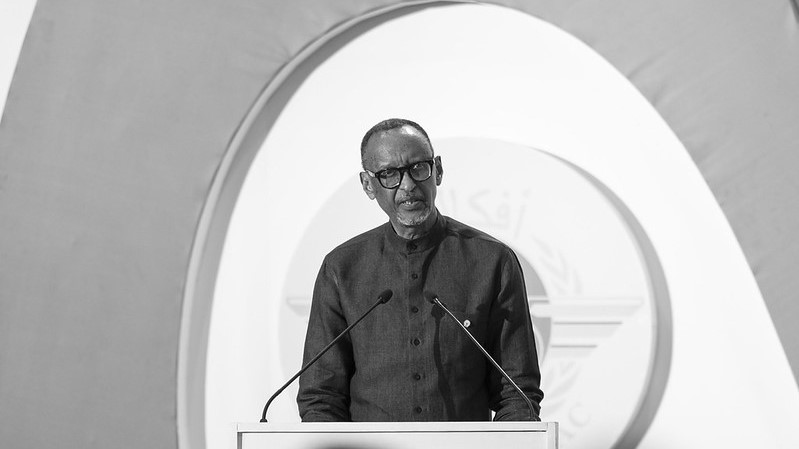
President Paul Kagame has urged African leaders and aviation stakeholders to move from discussion to action in efforts to improve air connectivity across the continent.
Speaking at an aviation conference in Lomé, Togo, Kagame said Africa has long spoken about integration, trade and free movement, but has not yet fully delivered the practical steps needed to make them work.
He said poor connectivity continues to hold back the continent’s economic potential, making travel between African cities costly, slow and inefficient. In many cases, he noted, passengers are forced to connect through other continents even when flying between African destinations.
Kagame said the Single African Air Transport Market offers a strong framework for change, but warned that it must now be backed by clear timelines, measurable outcomes and stronger political commitment.
He also called for greater investment in aviation infrastructure, including airports, maintenance facilities and fuel supply chains, saying the sector should be seen as a strategic driver of growth rather than a risk.
The President further highlighted the need to reduce high taxes and fees on air travel, and to align regulations across countries to make the market more predictable and efficient.
Using Rwanda as an example, Kagame pointed to the country’s open visa policy as evidence that removing barriers can boost tourism, business activity and air links.
He said Africa’s growing young population will play an increasingly important role in shaping the continent’s future, making it urgent for governments to create the right conditions for trade, innovation and mobility.
Kagame concluded by calling on delegates to use the convention as a platform for practical consensus and real progress toward a more connected Africa.