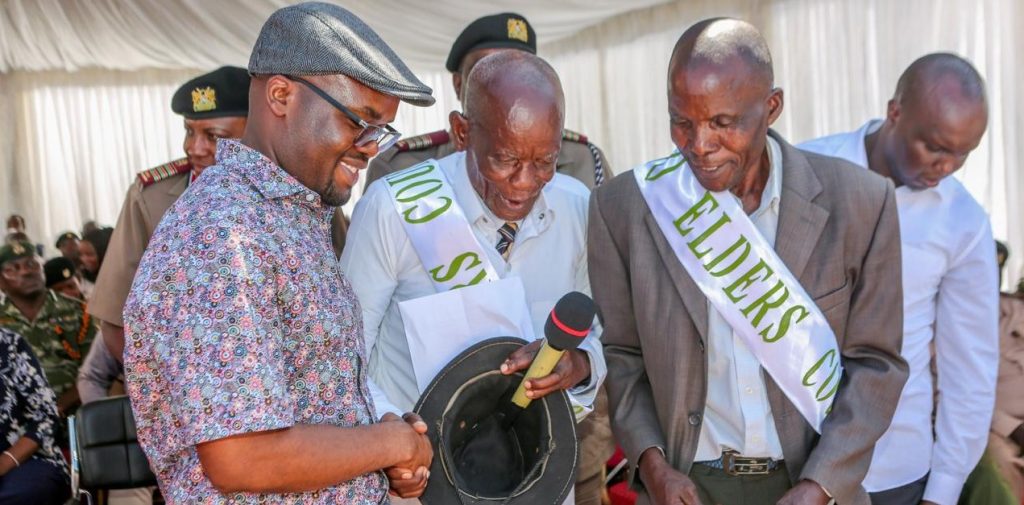
After serving as a village elder for 20 years, Josiah Chege Mwangi says he has spent much of that time using his own money to carry out government duties.
Chege, a Mzee wa Mtaa from Ainabkoi Sub-county in Uasin Gishu County, welcomed President William Ruto’s newly announced support package for village elders, saying it is the first significant recognition of the role they play at the grassroots.
“For the longest time, we have been spending from our own pockets to serve the government. The KSh 3,000 monthly stipend is a good start, but it is not enough to cover the costs we incur while serving our communities,” he said.
Chege suggested that the government should consider increasing the monthly stipend to around KSh 10,000 to help cover transport, communication and other operational expenses. He also called for all village elders to be fully enrolled in the Social Health Authority (SHA), with the government paying their health insurance contributions.
President William Ruto announced a new support package for village elders across Kenya, introducing a monthly stipend, smartphones, leadership training and health insurance cover in a move aimed at strengthening grassroots administration.
The package is designed to enhance the role of village elders, who serve as the first point of contact between communities and the government by resolving disputes, mobilising residents and supporting local administration.
While making the announcement, President Ruto said the initiative recognises the critical role village elders play in maintaining peace, promoting cohesion and facilitating the delivery of government services at the community level.
Under the programme, village elders will receive a monthly stipend, smartphones to improve communication and reporting, leadership training to strengthen their capacity, and health insurance cover to support their welfare.The government says equipping village elders with digital tools will improve coordination between local communities and government agencies while enhancing the delivery of public services.
For years, village elders have served voluntarily or with limited support despite playing a key role in conflict resolution, community mobilisation and implementation of government programmes at the grassroots.
The new package is expected to improve their working conditions and formally recognise their contribution to local governance, although many, like Chege, believe further support will be needed to enable them to serve their communities more effectively.
The announcement comes as the government continues to roll out reforms aimed at strengthening service delivery and accelerating digital transformation across public institutions.