Only four in 10 healthcare facilities worldwide met basic sanitation standards in 2025, raising concerns about the safety and quality of healthcare, according to a new report by the World Health Organization (WHO) and UNICEF.
The report found that 11 per cent of healthcare facilities had no sanitation services at all, leaving an estimated 936 million people without access to sanitation in healthcare settings.
The findings are contained in the WHO-UNICEF Joint Monitoring Programme report on water, sanitation, hygiene, environmental cleaning and healthcare waste management. It is the first time global estimates have been produced for basic sanitation services in healthcare facilities.
Sub-Saharan Africa faces a wider gap
The situation is particularly concerning in sub-Saharan Africa, where only 23 per cent of healthcare facilities met the basic sanitation standard. The figure compares with 55 per cent in Central and Southern Asia, highlighting significant regional disparities in access to safe and adequate sanitation.
The report stresses that having a toilet does not automatically mean a healthcare facility meets basic sanitation requirements.
Facilities must have usable toilets that serve patients and staff, including provisions for women and girls and people with limited mobility. The standards also consider whether facilities have separate toilets and appropriate menstrual hygiene provisions.
Water and hygiene services also fall short
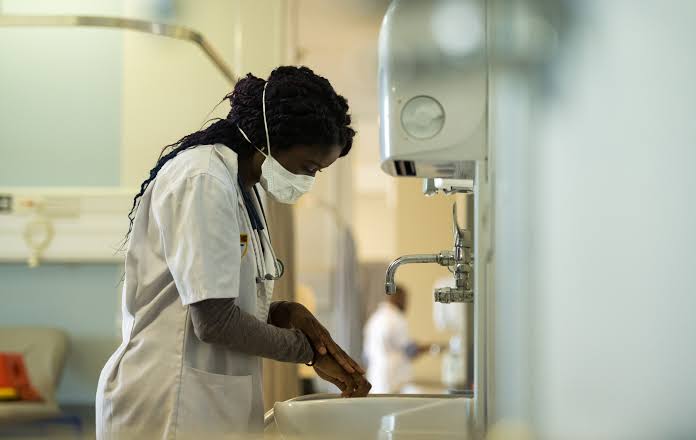
Sanitation is only one part of the challenge. Globally, an estimated 85 per cent of healthcare facilities had basic water services in 2025, while 72 per cent had basic hygiene services and 71 per cent had basic healthcare waste management.
Environmental cleaning also remains another major weakness. Only 59 per cent of facilities met the basic environmental cleaning standard, which includes having appropriate cleaning procedures and trained personnel.
The report found that 18 per cent of facilities met neither requirement. Together, these facilities serve an estimated 1.5 billion people. The situation is more difficult in the world’s least-developed countries, where only 24 per cent of healthcare facilities met the basic environmental cleaning standard.
Implications for patient safety
The gaps are not simply an infrastructure problem. Poor sanitation and inadequate cleaning can increase the risk of infections within healthcare facilities and contribute to the spread of antimicrobial resistance.
The risks can be particularly serious for women giving birth, newborns, children, people with disabilities and healthcare workers.
WHO and UNICEF are urging governments to improve how they monitor water, sanitation and hygiene services in healthcare facilities.
Instead of simply counting whether a toilet, water point or other infrastructure exists, monitoring should increasingly establish whether these services are functional, safe, accessible, reliable and adequately maintained.
The African context
The report comes as African water and sanitation leaders gather in Kigali for the Africa Water and Sanitation Systems Leadership Symposium, which is taking place from August 17 to 21.
The meeting is focused on strengthening financing, governance and institutions so that investments in water and sanitation translate into services that communities can rely on.
For healthcare systems, the WHO-UNICEF findings underline the stakes.
A hospital can have doctors, medicines and modern equipment, but without safe water, adequate sanitation and proper cleaning, the environment itself can put patients and healthcare workers at risk.
The challenge, therefore, is not only to build more healthcare facilities, but to ensure that the facilities already serving communities have the basic systems required to provide safe and dignified care.