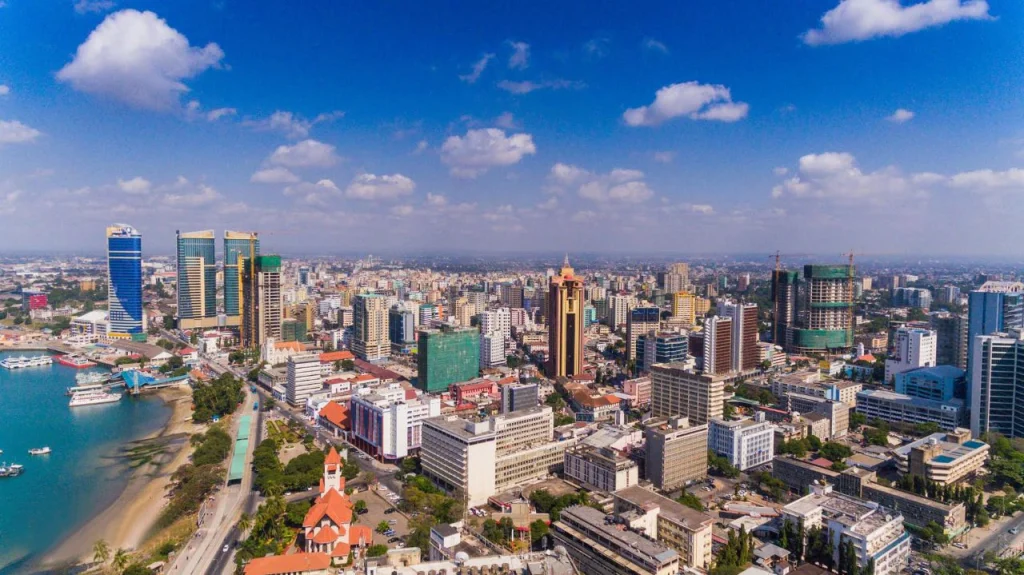
Tanzania’s economy is maintaining a strong growth trajectory, but the country faces a major challenge in ensuring that economic expansion translates into better-paying and more productive jobs for its population, according to a new World Bank Tanzania Economic Update.
The report projects Tanzania’s economy to grow by 6.1 percent in 2026, following 5.9 percent growth in 2025, with growth expected to average 6.5 percent over the medium term. Services, particularly finance, trade and transport, have been among the main drivers of the expansion, alongside increased government spending around the 2025 elections.
The World Bank says Tanzania has maintained macroeconomic stability, with inflation remaining within the Bank of Tanzania’s 3–5 percent target range. Public debt is estimated at about 49 percent of GDP, while government revenue has exceeded targets in the 2026 fiscal year, reflecting improvements in domestic resource mobilisation.
However, the report highlights a number of risks that could affect the country’s growth outlook.
External pressures remain a concern
The World Bank says Tanzania’s current account deficit widened to 2.5 percent of GDP in 2026, driven in part by higher global energy prices and rising freight costs linked to conflict in the Middle East.
While strong gold exports provide some protection against external shocks, the report warns that Tanzania remains exposed to changes in global commodity prices, energy costs and international trade conditions.
The performance of some key sectors is also a concern. Mining output has been affected by maturing mines and limited new investment, while agriculture continues to face challenges linked to inefficiencies in input markets, including the distribution of fertiliser.
The World Bank recommends maintaining fiscal discipline to keep debt sustainable while preserving resources for essential public services and development investment. It also calls for greater export diversification beyond gold and tourism, alongside stronger investment in agriculture and industry.
Tanzania’s challenge is not simply creating jobs
A central focus of the new report is employment. The World Bank says Tanzania does not have a shortage of jobs as much as it has a shortage of quality jobs.
Nearly 69 percent of working-age Tanzanians are employed, but many are earning insufficient incomes because they work in low-productivity agriculture or informal activities. The report says limited foundational skills also prevent many workers from moving into more productive and better-paying employment.
Women face additional barriers, including occupational segregation, unpaid care responsibilities and limited access to training, leaving them disproportionately concentrated in lower-quality jobs.
The report also highlights weaknesses in programmes designed to help vulnerable people acquire skills and move into better employment, saying many remain small, fragmented and unable to reach enough people.
Private sector growth is key
On the demand side, the report points to limited growth in Tanzania’s formal business sector as a major obstacle to the creation of quality jobs.
Only 12 percent of registered firms in Tanzania are young, compared with 38 percent in Rwanda, which the World Bank says signals relatively weak entrepreneurial dynamism. Businesses also face challenges including complicated registration processes, limited access to long-term finance, weak systems for dealing with business failure and insecure land rights.
The World Bank says removing these barriers would make it easier for productive firms to invest, expand and employ more workers.
Its recommendations include simplifying business registration through digital platforms, strengthening the legal framework, expanding access to finance and making land records more accessible digitally.
Building a workforce for better opportunities
The report also calls for stronger investment in the workforce.
The World Bank recommends redesigning social protection programmes so they can help people develop skills and transition into better jobs. It also says workforce programmes should account for women’s needs by incorporating measures such as childcare and flexible working arrangements.
For the millions of Tanzanians working informally, the report recommends formally recognising and certifying skills acquired through experience, allowing workers to access better employment opportunities.
The World Bank says Tanzania’s strong economic performance provides a foundation for further development, but sustaining inclusive growth will depend on action on two fronts: creating an environment in which private businesses can grow and generate quality jobs, and equipping workers with the skills needed to benefit from those opportunities.
The bigger economic question
The latest assessment presents a mixed picture for Tanzania: a growing economy, controlled inflation and improving domestic revenue mobilisation on one side, but persistent weaknesses in productivity, private-sector dynamism and job quality on the other.
The World Bank argues that stronger growth alone will not be enough to significantly reduce poverty and improve living standards. The key test will be whether Tanzania can turn economic expansion into productive employment, higher incomes and broader opportunities for its population.