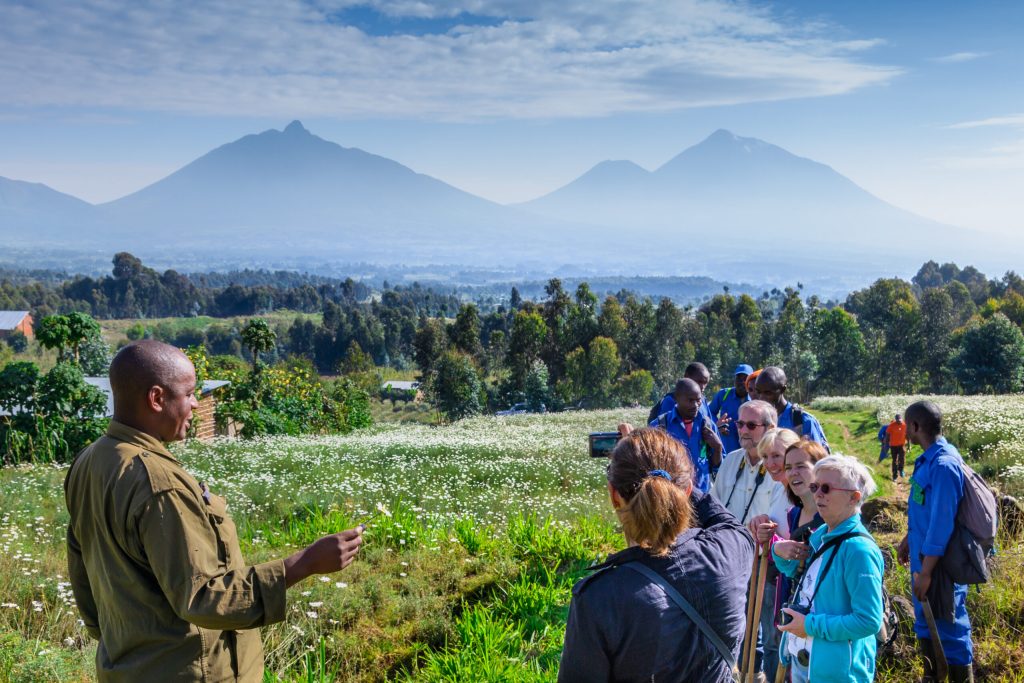
As the world marks World Tourism Day on September 27, Rwanda’s tourism industry offers a striking example of how a country can use tourism, conservation and international events to reshape its global image and generate economic opportunities.
For Rwanda, the journey has unfolded over more than three decades.
In the aftermath of the 1994 Genocide against the Tutsi, the country’s tourism sector, like much of the economy, faced the challenge of rebuilding from a severely disrupted foundation. Over the years that followed, Rwanda increasingly positioned tourism as part of its broader economic recovery and development strategy.
At the centre of that transformation was the mountain gorilla.
Volcanoes National Park became Rwanda’s flagship tourism destination, attracting international visitors to the Virunga mountains. Conservation efforts were increasingly connected with tourism revenue and community development, helping establish wildlife protection as an economic as well as environmental priority.
The annual Kwita Izina gorilla naming ceremony, launched in 2005, became one of the most visible expressions of that approach, bringing international attention to Rwanda’s conservation efforts.
But Rwanda’s tourism story has since expanded well beyond gorilla trekking.
From gorillas to a broader tourism economy
The development of Akagera National Park, Nyungwe National Park and Gishwati-Mukura National Park has broadened the country’s nature and wildlife offering, giving visitors opportunities ranging from savannah safaris and chimpanzee trekking to hiking and forest experiences.
At the same time, Rwanda has deliberately developed other segments of the tourism economy.
Kigali has emerged as a destination for conferences and international meetings, supported by facilities such as the Kigali Convention Centre, a growing hospitality sector and improving international connectivity.
Sport has also become part of Rwanda’s tourism and destination-promotion strategy. The country has hosted major international competitions, including the UCI Road World Championships, while partnerships around football and basketball have placed Rwanda in front of global audiences.
These developments have helped change the way Rwanda is presented to international visitors: not only as a wildlife destination, but also as a place for business, events, culture, adventure and sport.
Tourism as an economic engine
The transformation is also visible in the numbers.
Rwanda recorded $685 million in tourism revenue in 2025, alongside about 1.49 million visitor arrivals. The country’s MICE sector (meetings, incentives, conferences and exhibitions) contributed $94.7 million during the year.
The figures reflect a deliberate effort to attract visitors who contribute significantly to the economy while encouraging longer and more diverse tourism experiences.
Yet the mountain gorilla remains central to Rwanda’s high-value tourism model.
Recent travel expenditure data shows that gorilla-related spending continues to account for a significant share of holiday tourism expenditure, demonstrating how conservation remains closely connected to the country’s tourism economy.
Why World Tourism Day matters for Rwanda
World Tourism Day, observed every year on September 27, is an opportunity to look beyond visitor numbers and consider what tourism means for communities, economies and destinations.
For Rwanda, tourism has increasingly become part of a larger story about conservation, investment, employment, international connectivity and national branding.
The country’s experience also highlights the importance of balancing tourism growth with environmental protection and community benefits. Revenue-sharing programmes around protected areas have sought to ensure that communities living near national parks also benefit from tourism.
Three decades after Rwanda began rebuilding from its darkest period, tourism now occupies a very different position in the country’s economy and international profile.
From the mountain gorillas of the Virunga landscape to Kigali’s conference centres, from Akagera’s savannahs to international sporting events, Rwanda’s tourism industry has evolved from a relatively narrow wildlife offering into a diversified sector connecting conservation with business, culture, sport and global travel.
On this World Tourism Day, that evolution is not simply a story about attracting more visitors. It is a story about how Rwanda has used tourism as one of the tools of its wider transformation and how the sector continues to shape the country’s place on the global tourism map.