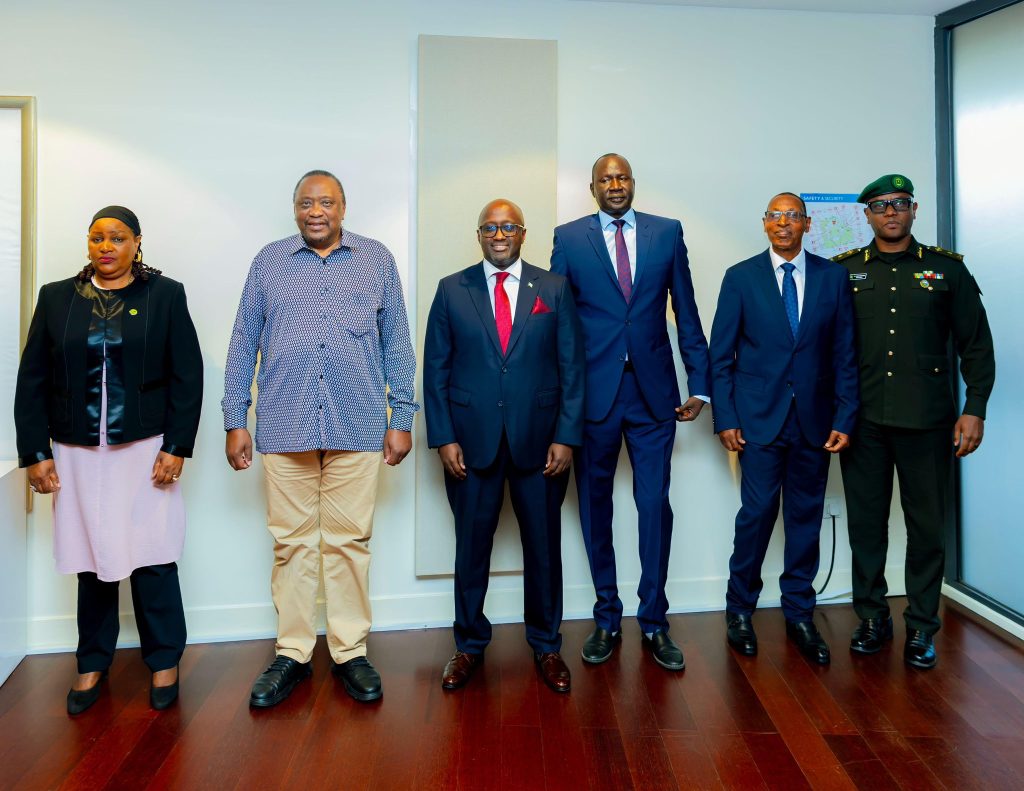
Rwanda has received former Kenyan President Uhuru Kenyatta, a member of the African Union Panel of Facilitators supporting the peace process in eastern Democratic Republic of Congo, as diplomatic efforts to address the regional conflict continue.
Kenyatta was received in Kigali on October 6 by Rwanda’s Minister of Foreign Affairs and International Cooperation, Olivier Nduhungirehe, alongside other senior government officials.
The discussions focused on the work of the AU Panel of Facilitators and ongoing efforts to advance the African Union-led peace process aimed at addressing the conflict and broader security challenges in eastern DRC.
The meeting comes as the AU intensifies diplomatic engagement with key actors in the region. In July, the AU Panel of Facilitators adopted a six-month roadmap to strengthen coordination and advance the peace process, with priorities including dialogue, security matters, humanitarian access and reconciliation.
Kenyatta’s visit to Kigali also comes amid a renewed regional diplomatic push. On October 5, he travelled to Goma alongside former Botswana President Mokgweetsi Masisi and former Ethiopian President Sahle-Work Zewde, where the delegation held discussions with the leadership of the AFC/M23 movement. The talks focused on efforts to find a political solution to the conflict in eastern DRC.
The AU Panel of Facilitators is chaired by former Nigerian President Olusegun Obasanjo and includes former heads of state from Kenya, Botswana, Ethiopia and the Central African Republic. The panel is part of the African Union’s efforts to support dialogue and bring greater coherence to the various peace initiatives addressing the crisis in eastern DRC.
Rwanda has remained a key party in regional diplomatic efforts surrounding the conflict. Its government has participated in several international and regional processes seeking to address security concerns, including the broader diplomatic framework involving Rwanda and the DRC.
The latest consultations come as the AU seeks to keep diplomatic channels open with the different stakeholders and strengthen coordination among the various peace initiatives.
For Kigali, engagement with the AU Panel provides an opportunity to reaffirm the importance of an African-led approach to resolving the conflict, while for the facilitators, consultations with regional governments are aimed at gathering perspectives and supporting a pathway toward a sustainable political settlement.
The AU’s continued engagement follows its broader push to align the different diplomatic tracks and preserve momentum toward peace and stability in the Great Lakes region.