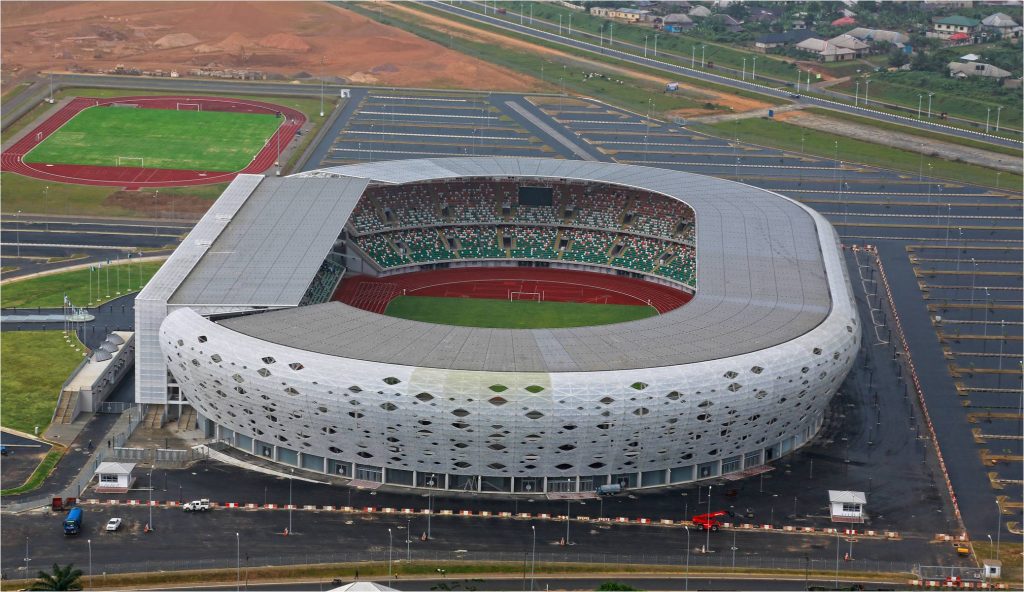
If Lionel Messi were to play in Nigeria tomorrow, there is reportedly only one venue in the country where the match could currently be sanctioned: the Godswill Akpabio Stadium in Uyo.
One stadium, in a country of more than 230 million people and Africa’s largest economy. Nigeria has approximately 26 stadiums, four of them owned by the federal government and the rest spread across the states. They were built with public money, for public use and, in many cases, with ambitions of hosting major international competitions.
But many have become expensive reminders of a model that is no longer working.
The Moshood Abiola National Stadium in Abuja has a capacity of about 60,500. The National Stadium in Lagos holds roughly 45,000, while the Liberty Stadium in Ibadan has around 25,000 seats.
Nigeria built these facilities. It hosted major competitions in them. Then, in many cases, it failed to build the economic ecosystems needed to keep them active.
A stadium may host an event several times a year. For the rest of the calendar, it can sit largely empty while still requiring security, maintenance and public expenditure.
That is the real problem.
Nigeria does not necessarily have a stadium problem. It has a stadium model problem.
From monuments to economies
For decades, stadiums have been treated primarily as monuments — symbols of national pride that governments build and unveil.
But a stadium by itself is expensive infrastructure.
The more sustainable model is to make the stadium the anchor of a wider sports and entertainment district.
That means combining the stadium with hotels, restaurants, retail outlets, conference and exhibition facilities, gyms, cinemas, sports academies, residential developments, commercial space and transport infrastructure.
The result is an ecosystem that can generate economic activity throughout the year rather than only when a match is being played.
My friend Nicolas Pompigne-Mognard, founder of African Collaborations Group, calls this model Victory District™.
I call it common sense.
Consider the Moshood Abiola National Stadium in Abuja. The site already has the infrastructure and location to become something much larger than a football venue. Instead of treating the stadium as an isolated facility, Nigeria could transform the surrounding area into an integrated sports and entertainment district.
The stadium could be renovated and upgraded to meet international standards. Hotels could serve visiting teams and spectators. Conference and exhibition facilities could attract business events. Restaurants, retail and entertainment venues could operate throughout the week. Sports academies and sports-science facilities could develop Nigeria’s next generation of athletes.
A transport hub could connect the district to the wider city. The objective would be simple: people should have reasons to visit the district every day, not only on matchdays.
The model already exists
This is not an entirely new idea.
Sports-led developments in cities such as London and Los Angeles demonstrate how major venues can become anchors for much larger commercial ecosystems.
The wider sports-club economy around Zamalek in Cairo also illustrates how sports institutions can generate economic activity beyond the field of play.
Nigeria does not have to copy any of these models exactly. It needs to develop a model suited to its own cities, population, sporting culture and commercial environment.
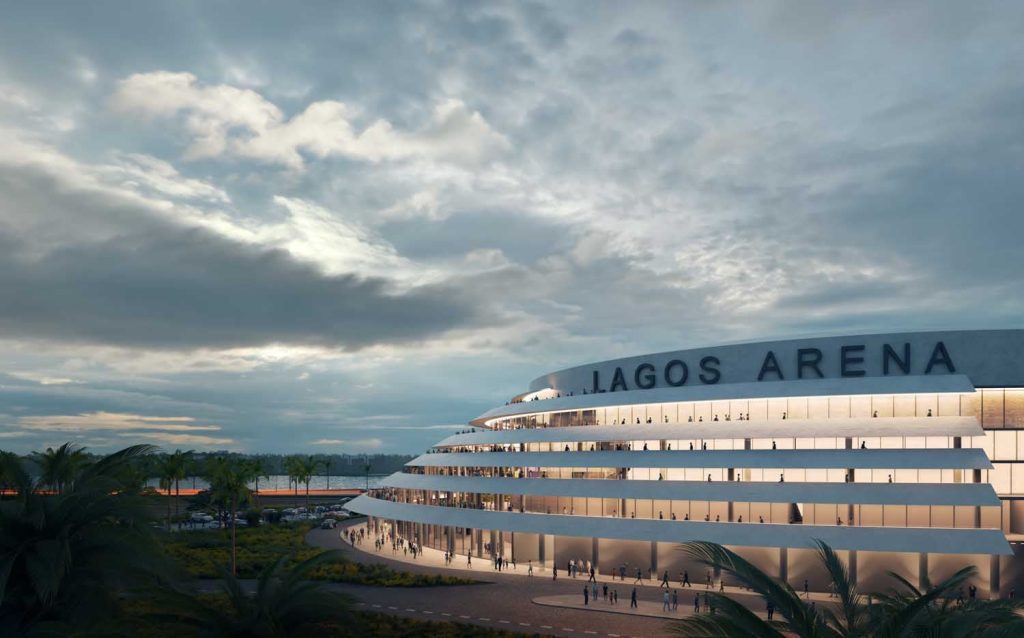
Building a Nigerian sports economy
President Bola Ahmed Tinubu has given the National Sports Commission, led by Chairman Shehu Dikko, a mandate to develop Nigeria’s sports economy.
That ambition cannot be separated from infrastructure. But Nigeria should ask a different question before approving the next stadium project:
How will this facility make money when there is no match?
The answer should be part of the design from day one.
Nigeria has previously set ambitious targets for developing sports infrastructure and positioning itself to host major international competitions. But ambition alone does not create facilities capable of meeting international standards.
Every new investment should therefore be judged not only by how impressive the building looks when completed, but by whether it can attract events, generate employment, support businesses and sustain its own operations.
The opportunity in Abuja
The Moshood Abiola National Stadium should be an obvious starting point. Rather than spending another cycle repairing an isolated stadium, Nigeria could use the Abuja site to demonstrate what a modern African sports district can look like.
A successful project could create a template that could then be adapted in Lagos, Ibadan, Kano, Port Harcourt and other major cities. The objective should not simply be to have more stadiums. The objective should be to build more functioning sports economies.
Africa has the population, sporting talent and growing entertainment markets to support them. What has often been missing is the infrastructure model that connects those assets to sustainable commercial activity.
The expertise to develop such models is increasingly available. African Collaborations Group, which emerged from the infrastructure work associated with FIFA’s Task Force for Infrastructure Development in Africa, is among the organisations promoting integrated sports and entertainment districts on the continent.
Nigeria’s question is whether it will keep building stadiums as standalone projects or use its existing infrastructure as the foundation for something bigger.
It is time to stop building stadiums as monuments and start building districts as economies. And the Moshood Abiola National Stadium in Abuja could be the place to begin.
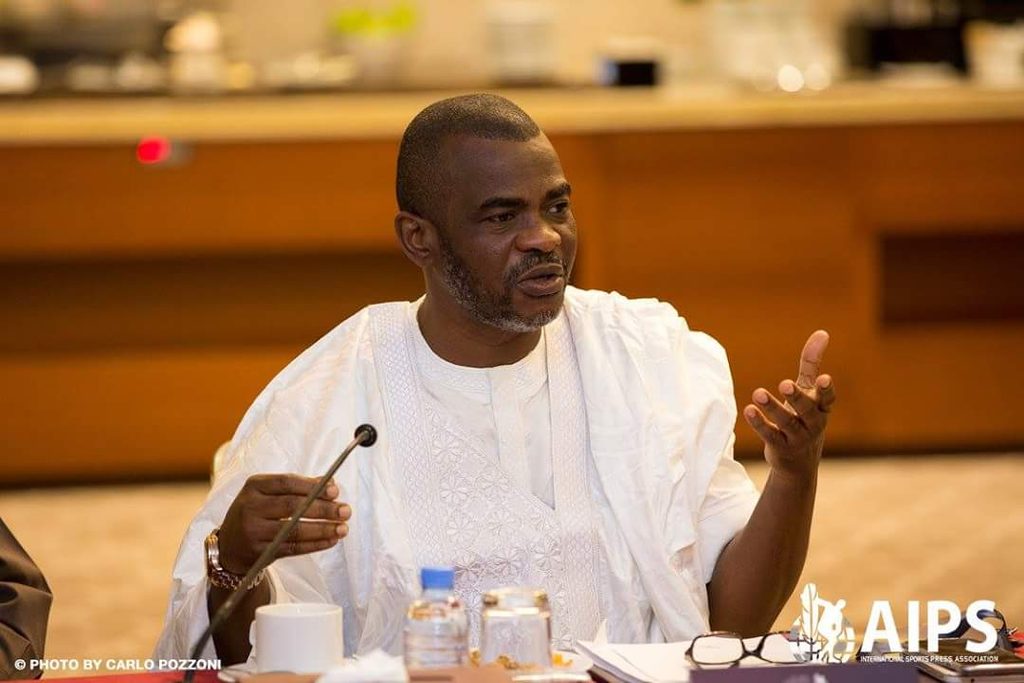
Mitchell Obi is the former President of AIPS Africa, the African arm of the International Sports Press Association, and a veteran Nigerian sports journalist and broadcaster.