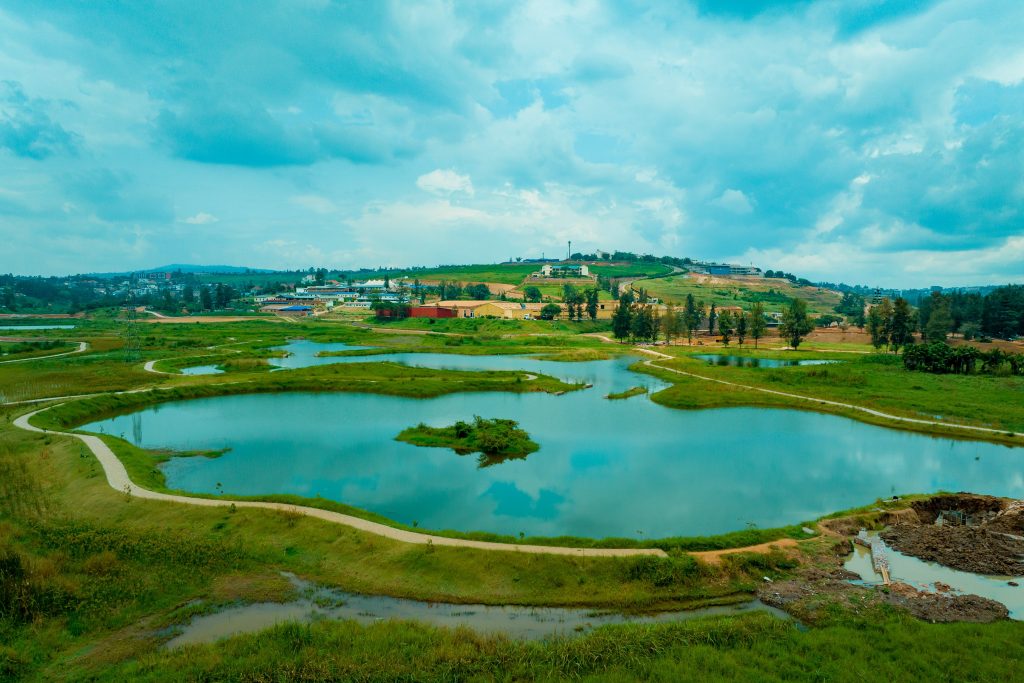
Rwanda has generated about $1.5 million from the sale of carbon credits as the country expands its carbon market, with 29 projects registered across several sectors, according to the Rwanda Environment Management Authority (REMA).
Faustin Munyazikwiye, Deputy Director-General of REMA, disclosed the figures on September 16 during a press briefing ahead of the Carbon Markets Africa Summit, scheduled to take place in Kigali from October 13 to 15, 2026.
“So far, REMA has registered 29 projects on the carbon market, which are at different stages of development,” Munyazikwiye said.
The projects cover areas including land conservation, agriculture, forestry, electric mobility, waste management and renewable energy. Some have reached the stage of selling credits, while others are undergoing independent verification.
Rwanda launched its carbon market framework in 2023 to establish rules for companies and project developers seeking to generate and trade carbon credits.
A carbon credit generally represents one tonne of carbon dioxide equivalent that has been avoided, reduced or removed from the atmosphere. Credits can be purchased by companies, governments and other organisations seeking to support emissions-reduction or carbon-removal activities.
Before credits generated in Rwanda can be traded, projects are required to undergo verification by independent auditors to establish the claimed emissions reductions or removals.
Carbon credit prices currently range from approximately $14 to $45 per tonne, depending on factors including the type of project and the verification status of the credits.
Under Rwanda’s carbon market arrangements, the government receives a share of revenues generated from eligible projects, with Munyazikwiye saying part of the proceeds from credits already sold has gone to government coffers.
Rwanda has also signed a cooperation agreement with Singapore that provides a framework for the purchase of eligible carbon credits generated by projects in Rwanda, potentially creating an international market for locally generated credits.
The growth of the market comes as African countries seek to attract climate finance while using carbon markets to support projects that reduce greenhouse gas emissions and protect natural resources.
For Rwanda, the expansion of registered projects represents an effort to link environmental conservation with investment and climate finance, while establishing systems to ensure that credits entering the market represent independently verified emissions reductions or removals.