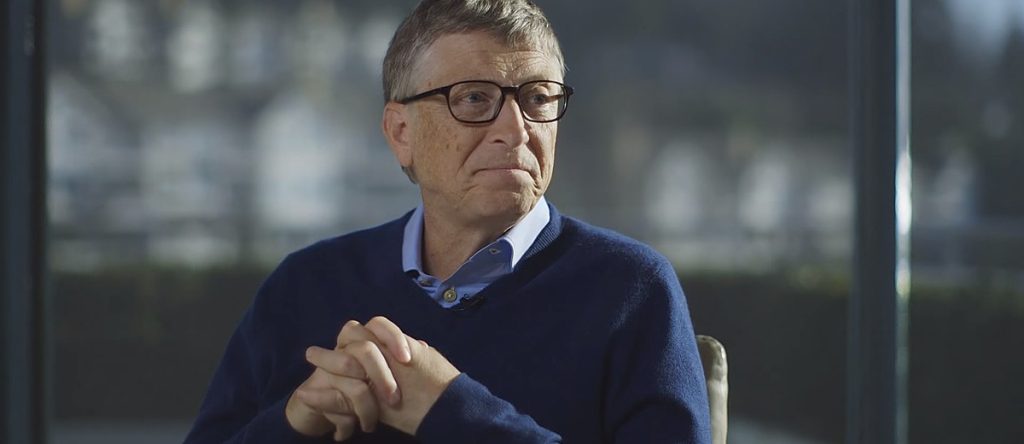
Bill Gates, Chair of the Gates Foundation, is visiting Rwanda to learn from the country’s progress in healthcare, digital innovation and economic development, describing Rwanda as an example of how long-term investment in people and institutions can transform lives.
Speaking ahead of his visit in an interview with CNBC Africa, Gates said Rwanda’s achievements demonstrate that sustained investments in primary healthcare, education and innovation can deliver measurable results.
“What stands out to me is not one particular innovation, but the way the country’s long-term investments in people, strong institutions and delivery are translating into real progress,” Gates said.
He noted that since 2000, Rwanda has reduced deaths among children under five by 80 percent and maternal deaths by 85 percent, achievements he attributed to investments in primary healthcare, community health workers and institutions such as the Rwanda Biomedical Centre (RBC).
The visit comes as African countries face declining international development assistance while seeking to build stronger, more self-reliant health systems and economies.
A Long-Standing Partnership
The Gates Foundation has worked with Rwanda for more than two decades, supporting programmes in maternal and child health, immunization, nutrition, malaria prevention, agricultural development, financial inclusion and digital health.
The foundation has also partnered with the Government of Rwanda to strengthen disease surveillance, improve vaccine delivery, expand access to modern healthcare and promote the use of data-driven decision-making across the health sector.
More recently, the partnership has expanded into artificial intelligence and digital public infrastructure, supporting Rwanda’s ambition to become one of Africa’s leading innovation hubs.
One of the latest initiatives is the Rwanda AI Scaling Hub, backed by the Gates Foundation with $17.5 million to accelerate the use of artificial intelligence in healthcare, agriculture and education. The foundation is also supporting the Horizon 1000 programme, which aims to equip 1,000 primary healthcare facilities with AI-powered tools by 2028.
Gates praised Rwanda’s National Health Intelligence Center, which integrates health records, disease surveillance, supply chain information and workforce data to help authorities make faster and more informed public health decisions.
Investing in Africa’s Future
Beyond healthcare, Gates said Africa’s greatest strength lies in its young population. By 2040, the continent is expected to have the world’s largest working-age population, presenting what he described as one of the century’s biggest economic opportunities if governments continue investing in education, innovation and technology.
He said artificial intelligence has the potential to improve education, healthcare and agriculture, but stressed that it should be used to strengthen, not replace, human expertise.
“AI should strengthen human capability rather than replace it,” Gates said.
He also highlighted Rwanda’s growing pharmaceutical and medical manufacturing sector, pointing to TDMK, which has produced more than 22 million syringes since 2024 and secured a UNICEF contract for 150 million more, helping strengthen Africa’s medical supply chains.
The Gates Foundation has pledged to invest $200 billion globally over the next two decades, with the majority of that funding expected to support projects across Africa.
For Gates, Rwanda represents more than a development success story. He said the country’s experience shows how African-led leadership, supported by strategic partnerships, can deliver lasting improvements in health, innovation and economic opportunity.
“The most effective partnerships are those that align behind national priorities bringing resources where they’re needed, while African governments and institutions lead the way,” Gates said.