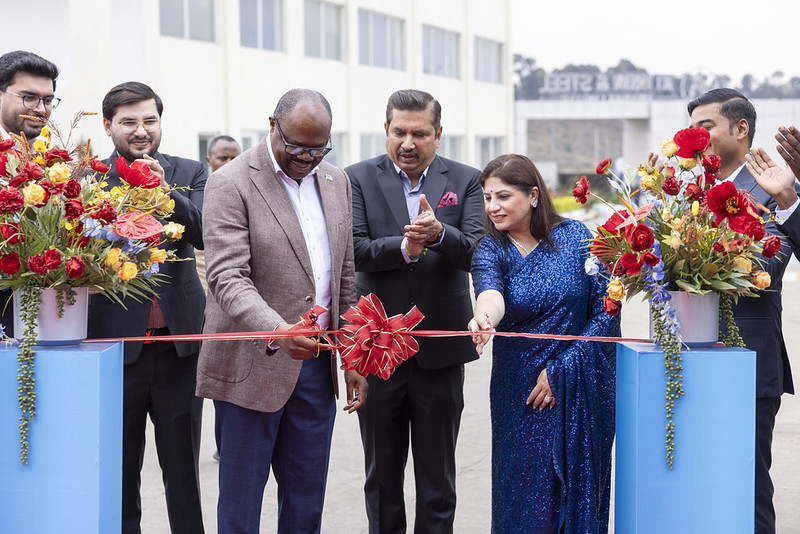
Rwanda has inaugurated its first integrated steel manufacturing plant, marking a new phase in the country’s efforts to expand domestic industrial production and reduce dependence on imported steel.
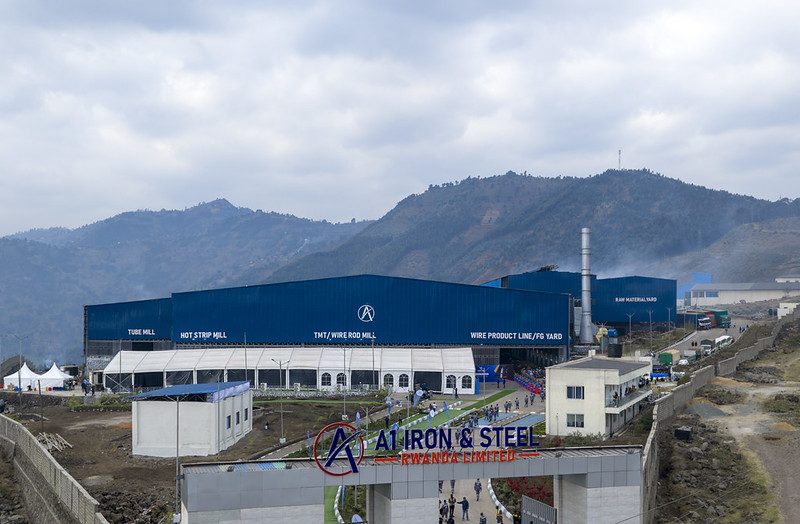
Prime Minister Justin Nsengiyumva inaugurated the A1 Iron & Steel Rwanda Ltd facility in Musanze Industrial Park on Friday, September 11. The plant began production in April 2026 and has a planned annual capacity of about 250,000 tonnes of steel products.
Backed by Indian investors, the facility processes locally mined iron ore into finished steel products, including reinforcement bars, wire rods, hollow sections, channels, flat bars, binding wire, nails, welding rods, tubes and chain-link fencing.
The production process uses the direct reduced iron (DRI) route, followed by steel melting and billet casting before the material is processed into downstream products.
Nsengiyumva said the investment should help Rwanda capture more value from its natural resources by processing iron ore locally rather than relying heavily on imported finished steel.
“By processing locally sourced iron ore into finished steel products here in Rwanda, this plant helps us move up the value chain and capture more of the value our own economic development creates.”
The Prime Minister, however, said establishing the factory was only the beginning, challenging the company to ensure the facility operates at high capacity and continuously improves productivity.
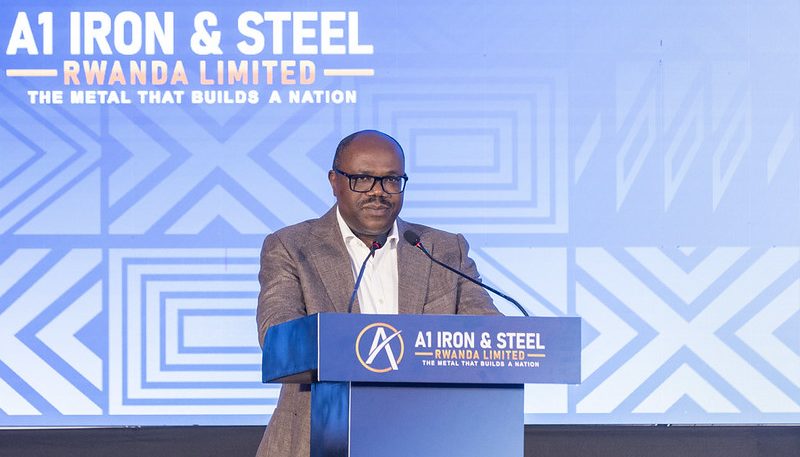
“Building industrial plants is only the first step,” Nsengiyumva said, arguing that the economic impact of such investments ultimately depends on how efficiently their production capacity is used.
The government said it would continue supporting the investment through infrastructure, energy, skills development and an appropriate regulatory environment.
Reducing steel imports
The factory comes as Rwanda seeks to reduce its dependence on imported construction materials. Rwanda imported more than $150 million worth of steel products in 2025, according to figures cited at the inauguration.
Trade and Industry Minister Antoine Kajangwe said the new facility could reduce the country’s steel import bill by approximately $100 million, while keeping more economic value within Rwanda through local production, employment and value addition.
The plant is expected to create around 1,000 direct jobs and 2,500 indirect jobs. It currently employs about 700 workers, most of them Rwandans, with Indian specialists providing technical expertise and skills transfer in areas including metallurgy and quality control.
A1 Iron & Steel Managing Director Himanshu Tiwari said the investment was established to add value to Rwanda’s natural resources, strengthen domestic manufacturing, reduce reliance on imported steel and position the country as a regional producer.
“This is not simply the inauguration of a factory. Today, we are inaugurating a new chapter in Rwanda’s industrial journey,” Tiwari said.
The company also plans to develop the skills of Rwandan workers in advanced manufacturing, automation and industrial operations as production expands.
From traditional ironworking to modern steelmaking
The investment also carries historical significance for Rwanda’s Northern Province, where ironworking has long been part of the region’s cultural and economic history.
Northern Province Governor Maurice Mugabowagahunde said traditional communities in the region historically produced iron products, including weapons and agricultural tools.
He cited traditional iron hoes known as amasuka y’amaberuka and the iron production museum at Ku Kirenge in Rulindo as examples of the region’s connection to ironworking.
The modern plant in Musanze represents a shift from traditional iron production to industrial-scale steel manufacturing, with the facility designed to process raw materials into finished products for Rwanda’s construction and infrastructure sectors.
Steel is widely used in roads, bridges, buildings, factories, power and water infrastructure, agriculture and real estate, making domestic production strategically important as Rwanda’s construction and urbanisation needs continue to expand.
Regional ambitions
Beyond supplying the domestic market, the government expects A1 Iron & Steel to eventually support exports to neighbouring countries and other regional markets.
The plant is also expected to contribute to the development of Musanze Industrial Park as a hub for heavy industry and support Rwanda’s broader industrialisation objectives under the country’s second National Strategy for Transformation.
For the government, the challenge now extends beyond opening the factory. Ensuring consistent production, developing local industrial skills, improving productivity, and creating competitive products for regional markets will determine how much the investment contributes to Rwanda’s long-term industrial transformation.