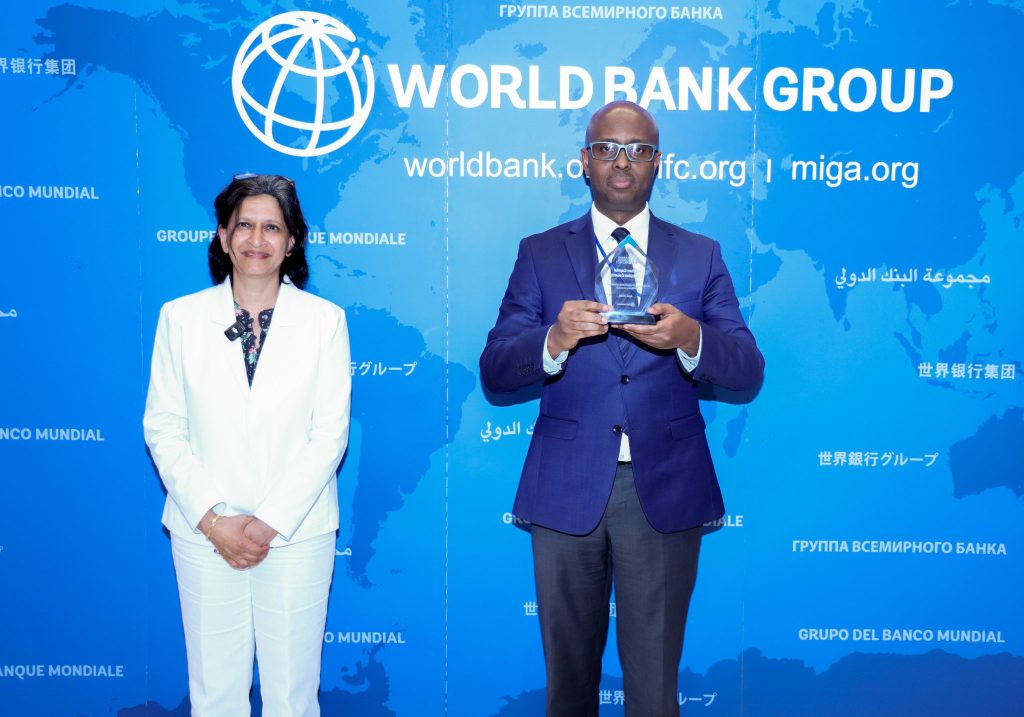
Rwanda’s recognition by the World Bank Group as a top performer on the expanded Human Capital Index Plus (HCI+) is more than a statistical achievement. It is a reminder that sustained investment in people remains one of the strongest foundations for national development.
The new ranking places Rwanda ahead of both the Sub-Saharan Africa average and the low-income country average, reflecting notable progress in health, education, and employment outcomes. With an HCI+ score of 157, Rwanda has once again positioned itself as a country that is not merely pursuing growth but trying to ensure that growth translates into better lives for its people.
That distinction matters.
Too often, development is measured only by roads built, buildings erected, or macroeconomic indicators that look impressive on paper. Yet the real test of progress is whether children survive and thrive, whether young people acquire usable skills, whether graduates find meaningful work, and whether investment in classrooms and clinics produces a stronger, healthier workforce. On those terms, Rwanda’s results are noteworthy.
The country’s performance across several indicators tells a compelling story. Survival to age 60 stands at 79%, school quality has reached 417 in Harmonized Learning Outcomes, and the tertiary completion ratio is 22.8%. Youth employment, wage employment among young people, and adult wage employment all outperform regional averages by a wide margin. These figures suggest that Rwanda’s human capital strategy is not limited to access alone; it is increasingly about effectiveness, transition, and productivity.
That progress did not happen by accident. It reflects years of policy attention to health systems, education reform, and job creation. It also speaks to a broader national philosophy that sees human development not as a social expense, but as an economic necessity. A country that invests in its people is, in effect, investing in its own resilience.
Still, the recognition should not be mistaken for a finish line. Rwanda’s own goal of reaching upper-middle-income status by 2035 will demand even deeper gains in learning outcomes, labor market quality, and inclusive opportunity. The challenge ahead is not just to maintain momentum, but to ensure that the benefits of growth are felt evenly, and that young people in particular are equipped to move from schooling into decent, productive work.
That is where the expanded HCI+ becomes especially useful. By looking beyond basic enrollment or health access, it forces policymakers to ask a harder question: are countries building human capital that actually translates into economic value and social mobility? Rwanda’s strong showing suggests that, at least in important areas, the answer is increasingly yes.
In many ways, this recognition is a vote of confidence in a long-term development model that places people at the center. It is also a message to the region: when governments consistently invest in health, education, and skills, the returns can be substantial.
Rwanda’s performance on the HCI+ should therefore be seen not only as an achievement to celebrate, but as evidence of what disciplined, people-centered policy can achieve. The task now is to build on it.