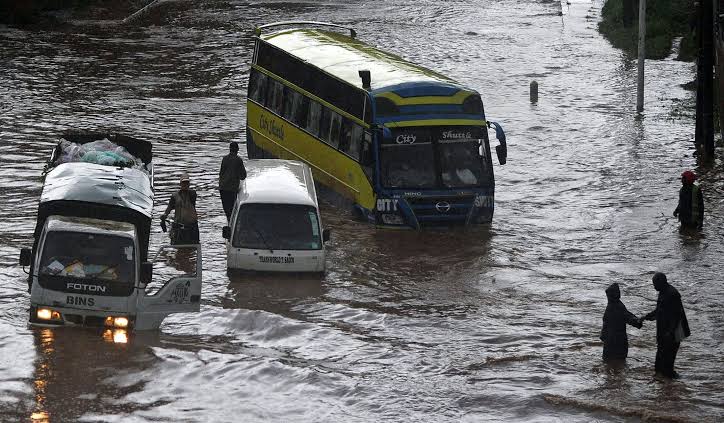
Recurring flooding in Nairobi is driven by more than just heavy rainfall; poor urban planning, inadequate drainage, loss of wetlands, and weak flood-risk management are worsening the crisis, according to a new report by the World Resources Institute (WRI).
The issue brief, Flooding in Nairobi’s Informal Settlements: Advancing Equitable and Resilient Solutions, identifies the city’s topography, low-permeability volcanic soils, unplanned development in flood-prone areas, fragmented governance, weak enforcement of land-use regulations, and limited investment in climate resilience as key factors behind repeated flooding.
The report highlights the growing scale of the crisis, noting that floods in 2024 displaced nearly 21,000 families, damaged more than 90 kilometres of roads and nine bridges, and contributed to more than 147,000 cases of waterborne diseases.
In March 2026, flooding claimed 37 lives in less than three weeks, further exposing Nairobi’s vulnerability and the need for long-term solutions.
Speaking during the launch, Dr Selly Kimosop, Principal Secretary in the Ministry of Environment and Climate Change, said the increasing frequency and severity of floods demand an urgent and coordinated response.
“The increasing frequency and severity of floods in Nairobi demand urgent, coordinated, and innovative responses rooted in resilience and sustainability,” Kimosop said.
“This gathering demonstrates our collective commitment to turning knowledge into action and transforming challenges into opportunities for resilient development. It is now time to move beyond discussions and take action.”
Using flood modelling, mapping, exploratory surveys, and discussions with 98 households in Kibera, Mukuru Viwandani, and Mathare, WRI examined the causes and impacts of flooding in Nairobi’s informal settlements.
The study found that many residents lost livelihoods, homes, and personal belongings. They also reported gaps in early warning systems, evacuation support, preparedness, and community involvement in flood-risk management.
Community representative Mary Wamaitha said her family had been affected by repeated floods between 2024 and 2026, with the most recent disaster leaving her homeless.
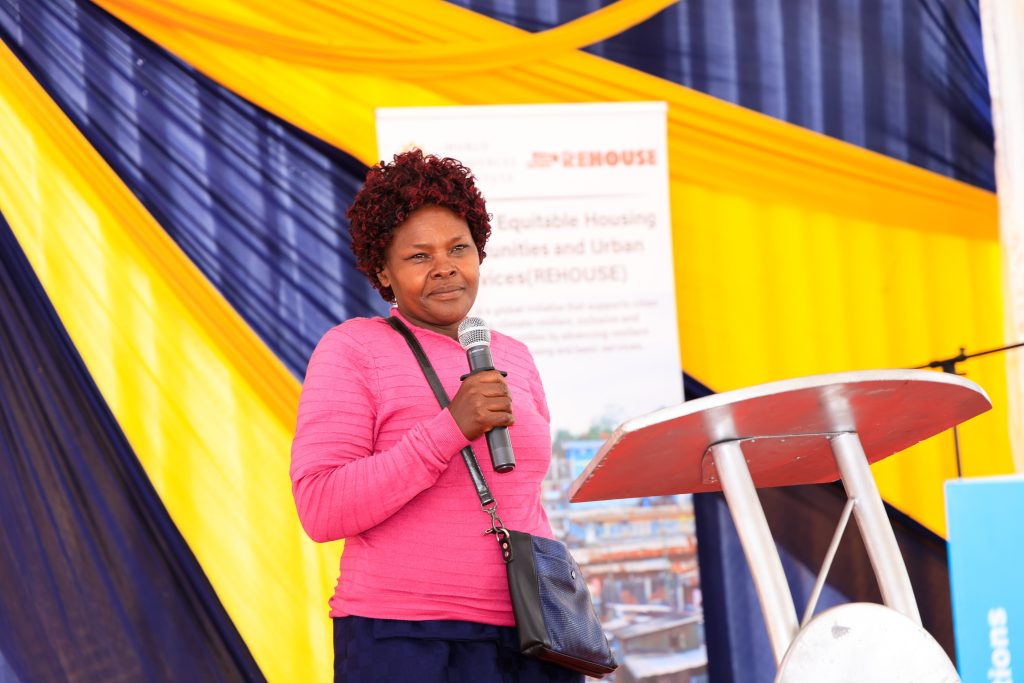
“I have been affected by floods since 2024. We received an alert from the Red Cross, but we did not move because we did not expect the 2026 floods to be worse than those of 2024,” Wamaitha said.
“My house was swept away, and I now live in a hall with my children because we are homeless. My children have suffered from waterborne diseases, while others have been forced to leave school because of the floods.”
Her experience reflects the report’s findings that flooding has far-reaching social, economic, health, environmental, and psychological consequences. Women, children, older persons, and persons with disabilities were identified as among those facing the greatest challenges because of barriers to accessing information, evacuation support, and recovery assistance.
Wanjira Mathai, Managing Director for Africa and Global Partnerships at WRI, said the effects of environmental disasters on mental health are frequently overlooked.
“Flooding deeply affects communities, yet the impact of environmental crises on mental health is often overlooked,” Mathai said.
“Communities are often the first to recognise the warning signs of flooding. They know when the risks are increasing and can warn us before disaster strikes. Resilience is not only about policies. It is reflected in the decisions we make, how and where we build, and who we are building for.”
The report says flooding should no longer be treated only as an environmental challenge but as a wider urban issue linked to housing, sanitation, public health, infrastructure, and social resilience.

David Ong’are, Director of Compliance at the National Environment Management Authority, said residents and communities directly affected by flooding must be involved in decision-making and the development of solutions.
“Communities affected by flooding must be part of the decision-making process and involved in identifying practical solutions. Residents are tired of repeated discussions that do not translate into action,” Ong’are said.
To support long-term action, WRI and the Nairobi Rivers Commission launched the Nairobi Rivers Nature-based Solutions Strategic Framework, a guide to help the city design, finance, implement, and scale projects that reduce climate risks while restoring ecosystems.
The framework focuses on four major challenges facing Nairobi: flooding, urban heat, biodiversity loss, and air pollution.
It identifies interventions that promote river restoration, wetland protection, improved green spaces, biodiversity conservation, public health, gender equity and social inclusion, and a better quality of life.
“Nairobi’s rivers cannot be restored through isolated projects or short-term interventions,” said Bishop Margaret Wanjiru, Chairperson of the Nairobi Rivers Commission.
“Through this framework, the Commission and its partners now have a shared, evidence-based roadmap to coordinate action across the river basin, direct investment to priority areas, and track results.”

She said restoring river corridors could help reduce flood risks, improve public health, support livelihoods, and transform waterways into safe and productive urban assets.
During the launch, WRI signed Memoranda of Understanding with the Nairobi City County Government and the Kenya Forestry Research Institute to strengthen cooperation on climate action, research, data sharing, knowledge transfer, nature-based solutions, restoration projects, capacity building, resource mobilisation, and climate finance.