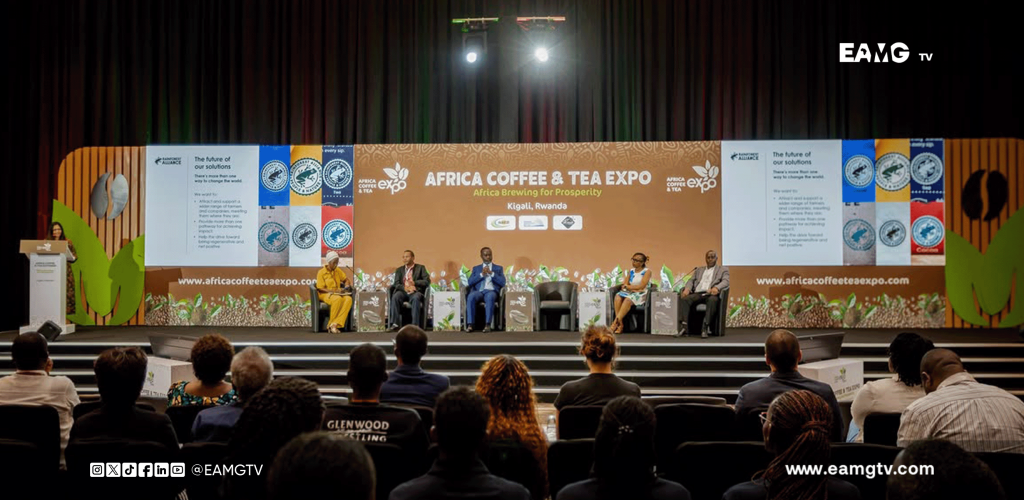
African leaders and industry players are calling for the continent to move beyond exporting raw coffee and tea, arguing that greater investment in local processing and value addition is key to creating jobs, increasing farmers’ incomes, and retaining more wealth within Africa.
The message was at the center of discussions during the Africa Coffee and Tea (ACT) Expo 2026, held in Kigali from 8–10 July. The event brought together producers, exporters, buyers, policymakers, investors, and researchers to explore ways of strengthening Africa’s coffee and tea value chains through trade, innovation, and investment.
Speaking at the expo, Rwanda’s Minister of Agriculture and Animal Resources, Dr. Telesphore Ndabamenye, said Africa must take greater ownership of products it grows and consume more of them locally while investing in industries that process them.
“Let us at least drink our own coffee and tea with pride. And let us build together the value chains that turn our shared heritage into shared prosperity,” he said.
His remarks reflect a broader push across Africa to shift from exporting raw agricultural commodities to producing finished products that generate higher incomes, create skilled jobs, and increase export earnings.
That message was echoed by Donal Murphy, Chief Executive Officer of Rwanda Farmers Coffee Company, the producer of Gorilla’s Coffee, who said African countries continue to lose much of the economic value of their coffee and tea because most processing takes place overseas.
“The importance of moving away from not instead of but in addition to selling raw materials is that we should be selling more value-added tea and coffee from the African market,” Murphy said.
“We should continue exporting raw materials, but we also need to sell a much bigger percentage as finished products, like Gorilla’s Coffee, for example.”
Africa is one of the world’s largest producers of coffee and tea, supplying global markets with millions of bags of coffee and hundreds of thousands of tonnes of tea every year. Yet much of the roasting, packaging, branding, and retailing that generate the highest profits takes place outside the continent.
Murphy said expanding value addition would benefit not only exporters but also cooperatives, smallholder farmers, processors, baristas, and young entrepreneurs entering the industry.
“Opportunity in this sector isn’t limited to large exporters,” he said, adding that every stage of the value chain has the potential to create employment and improve livelihoods.
Organisers say the ACT Expo is designed to accelerate that transformation by connecting African producers with international buyers and investors while promoting innovation, sustainability, financing, and regional trade.
As African governments seek to diversify their economies and reduce dependence on raw commodity exports, industry leaders say investing in value addition could help the continent capture a greater share of the multi-billion-dollar global coffee and tea market while ensuring more of the economic benefits remain with African farmers and businesses.