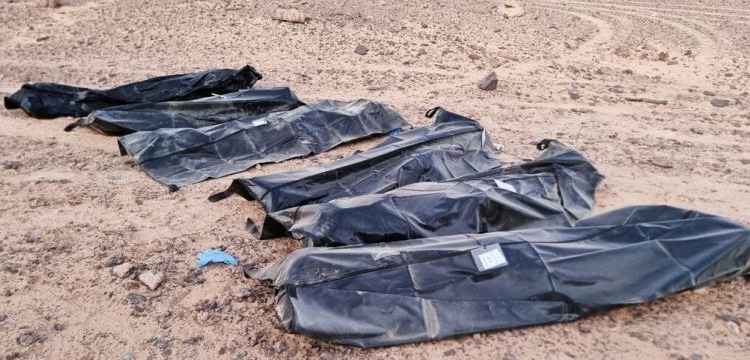
Libyan security authorities have recovered the bodies of at least six migrants in the country’s southeast after their vehicle broke down while crossing a remote desert area, according to the Alwahat Security Directorate.
The bodies were discovered about 200 kilometres northwest of the town of Jalu, with authorities finding two victims inside the abandoned vehicle and three others roughly four kilometres away. Another body was located about 10 kilometres from the vehicle after security teams followed footprints in the desert.
Authorities said 19 other migrants were rescued on Sunday in connection with the incident, although the location of their rescue was not disclosed.
According to documents found with the vehicle, its owner was a Chadian national. The Directorate said the owner’s brother, who was among those rescued, reported that another vehicle travelling with the group had taken fuel from the stranded vehicle before continuing the journey.
The incident highlights the extreme dangers faced by migrants travelling across Libya’s vast desert in search of routes towards Europe. Many migrants from sub-Saharan Africa cross remote and inhospitable areas where breakdowns, extreme heat, dehydration and a lack of access to emergency assistance can quickly become fatal.
Libya has remained a major transit point for migrants fleeing conflict, poverty and instability, with many attempting to reach Europe through the Mediterranean. The migration route has remained particularly dangerous since the fall of former Libyan leader Muammar Gaddafi in 2011, when the country’s instability contributed to the expansion of migrant smuggling networks.
The latest deaths also underscore the risks that occur before migrants even reach the Mediterranean, as journeys through the Sahara can involve hundreds of kilometres of isolated terrain with limited access to water, fuel or medical assistance.
Libyan authorities continue to conduct operations to locate stranded migrants and recover victims in remote desert areas, but the scale and isolation of the country’s migration routes make search-and-rescue efforts particularly challenging.