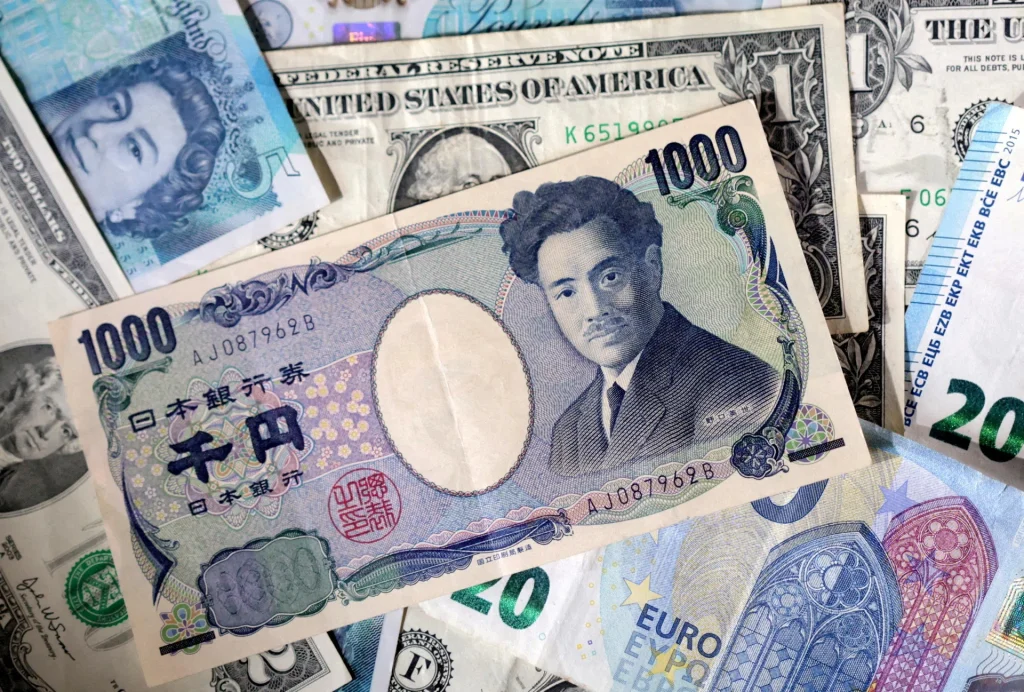
The U.S. dollar edged lower on Tuesday but remained close to a 13-month high, while the Japanese yen weakened to its lowest level against the dollar since 1986 as investors awaited fresh economic data from the United States.
Currency markets are closely watching the release of the U.S. nonfarm payrolls report later this week, which is expected to provide further insight into the strength of the labor market and influence expectations for future interest rate decisions by the Federal Reserve.
Although the dollar eased slightly during trading, it continued to draw support from expectations that U.S. interest rates could remain elevated for longer if economic data continues to show resilience and inflationary pressures persist.
The Japanese yen came under renewed pressure, falling to its weakest level in nearly four decades. The currency has been weighed down by the widening gap between U.S. and Japanese interest rates, as the Bank of Japan maintains a relatively accommodative monetary policy compared with the Federal Reserve’s tighter stance.
The yen’s continued depreciation has renewed speculation that Japanese authorities could intervene in foreign exchange markets if volatility intensifies or the currency weakens further.
Financial markets remain sensitive to incoming U.S. economic indicators, with investors assessing whether the Federal Reserve has room to keep borrowing costs higher or begin easing monetary policy later in the year.
Analysts say the outcome of this week’s employment data could shape market expectations for interest rates, bond yields, and global currency movements in the weeks ahead.