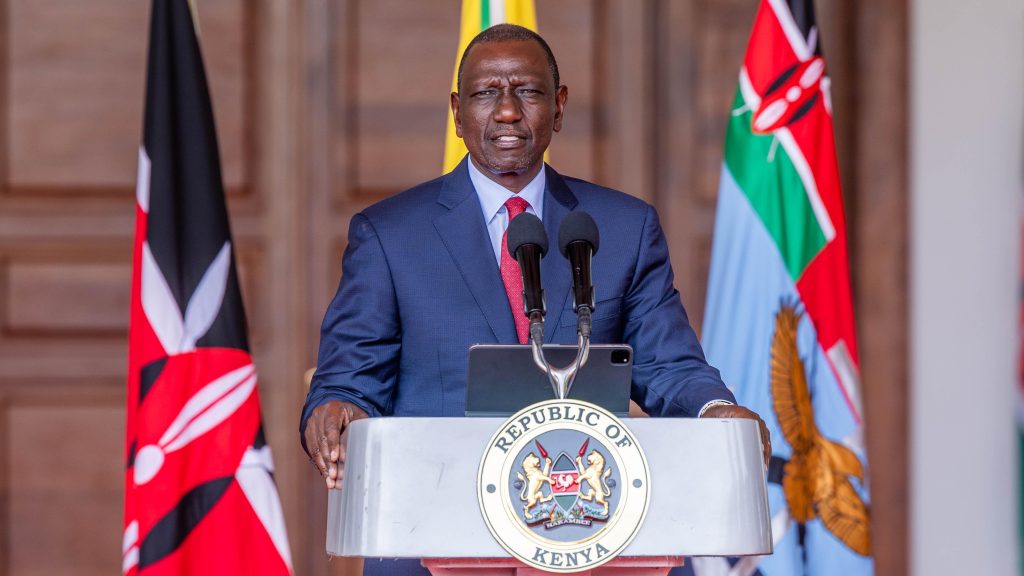
President William Ruto has ordered foreign nationals engaged in hawking and other small-scale trading activities in Kenya to stop, saying the government will take measures to protect local traders from what he described as unfair competition.
Ruto made the remarks on Wednesday, September 2, after meeting representatives of Micro, Small and Medium Enterprises (MSMEs) at State House in Nairobi, where traders raised concerns over foreign nationals operating businesses that compete directly with local hawkers and small-scale retailers.
The President said a Bill currently before Parliament seeks to restrict foreign nationals from participating in certain categories of trade. He urged traders and other stakeholders to engage with the proposed legislation to ensure that loopholes allowing foreigners to operate in restricted areas are addressed before the Bill is passed.
Ruto said the government would also take administrative action while Parliament considers the legislation, indicating that measures targeting foreign nationals engaged in small-scale trading could begin as early as next week.
The President also drew a distinction between Kenya’s efforts to attract foreign investment and the participation of foreign nationals in informal and small-scale retail activities.
He said investment policies were intended to attract capital, create employment and support economic growth, rather than encourage foreign nationals to relocate to Kenya to operate as hawkers.
Ruto further directed National Assembly Majority Leader Kimani Ichung’wah to engage the Principal Secretary for Immigration to establish the conditions attached to permits issued to foreign investors and traders operating in the country.
The directive comes amid increasing concerns from Kenyan small-scale traders about competition from foreign nationals in parts of the retail and informal economy.
The proposed legislative changes could determine which categories of commercial activity remain open to foreign nationals and how immigration and business permits are enforced, as the government seeks to balance protection of local enterprises with its broader policy of attracting foreign investment.