

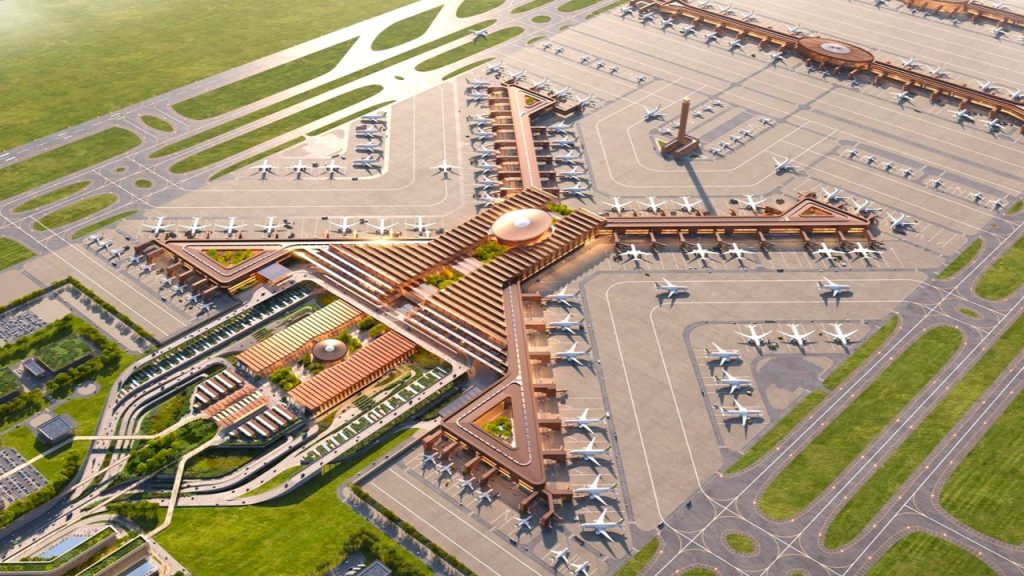
Ethiopia is investing $12.5 billion in a massive airport project that could reshape Africa’s aviation sector and position Addis Ababa as one of the world’s major air transport hubs.
The ambitious Bishoftu International Airport project, developed as the future main gateway for Ethiopian Airlines, is designed to handle tens of millions of passengers annually while creating a new airport city combining aviation, tourism, logistics, retail, and urban development.
At the centre of the airport will stand the Central Beacon, a tower-like architectural feature with a 60-metre interior atrium, which designers say will become the tallest structure of its kind inside any airport worldwide.
The terminal design is being led by Zaha Hadid Architects, in partnership with DAR, drawing inspiration from Ethiopia’s landscapes and cultural heritage.
A New African Aviation Powerhouse
Ethiopian Prime Minister Abiy Ahmed Ali laid the foundation stone for the airport on January 10, 2026, officially marking the beginning of construction.
The first phase of Bishoftu International Airport is expected to be completed by 2032 and will include:
- Capacity to handle 60 million passengers annually
- Four runways
- Parking facilities for up to 270 aircraft
- Approximately 660,000 square metres of terminal space
The airport’s capacity could later expand beyond 100 million passengers per year, surpassing current passenger volumes at Africa’s busiest airports.
The project is expected to support Ethiopia’s growing tourism industry, international trade, diaspora travel, and Ethiopian Airlines’ expanding global network.
A $12.5 Billion Investment
The estimated cost of the project has increased from earlier projections of between $7.8 billion and $10 billion as the scope expanded.
Ethiopian Airlines plans to contribute 30% of the financing, while the remaining funds will come from development banks, commercial lenders, and private investors.
The African Development Bank has committed $500 million and is supporting efforts to mobilise additional financing for the project.
The airport city surrounding the terminal will cover about 61 hectares, with nearly 800,000 square metres of planned developments, creating a major economic zone beyond traditional airport operations.
Bringing the Great Rift Valley Into the Airport
Beyond its size, the project aims to redefine the airport experience through a nature-inspired design.
The terminal will feature a central green spine inspired by Ethiopia’s Great Rift Valley, a region known for its geological importance and links to some of the earliest evidence of human history.
According to Zaha Hadid Architects, the airport garden will recreate elements of the Rift Valley landscape, including grass areas, rocks, streams, and trees relocated during construction.
The garden will connect different passenger areas, including arrivals, departures, transfer zones, and public entrances, creating what designers describe as a unique airport environment accessible throughout the year.
The concept places Bishoftu alongside some of the world’s most recognised airport destinations, including Singapore’s Jewel Changi Airport and Hamad International Airport’s gardens in Doha.
A New Chapter for African Connectivity
If completed as planned, Bishoftu International Airport could become one of the largest aviation facilities in the world and strengthen Ethiopia’s role as a key connection point between Africa, Asia, Europe, and the Middle East.
The project reflects Ethiopia’s broader ambition to build infrastructure capable of supporting economic growth while turning the country into a leading global aviation hub.
