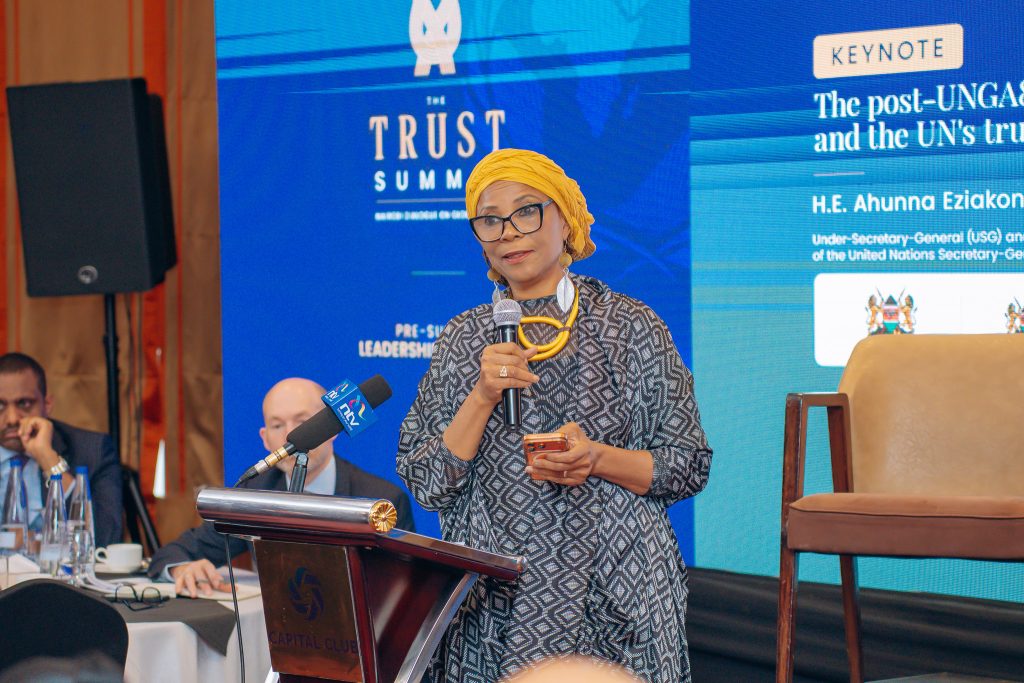
Global institutions will struggle to win back public confidence unless Africa is given a real say in shaping international decisions, the United Nations’ senior adviser on Africa said on Thursday, arguing that trust in multilateralism now depends on whether institutions keep the promises they make.
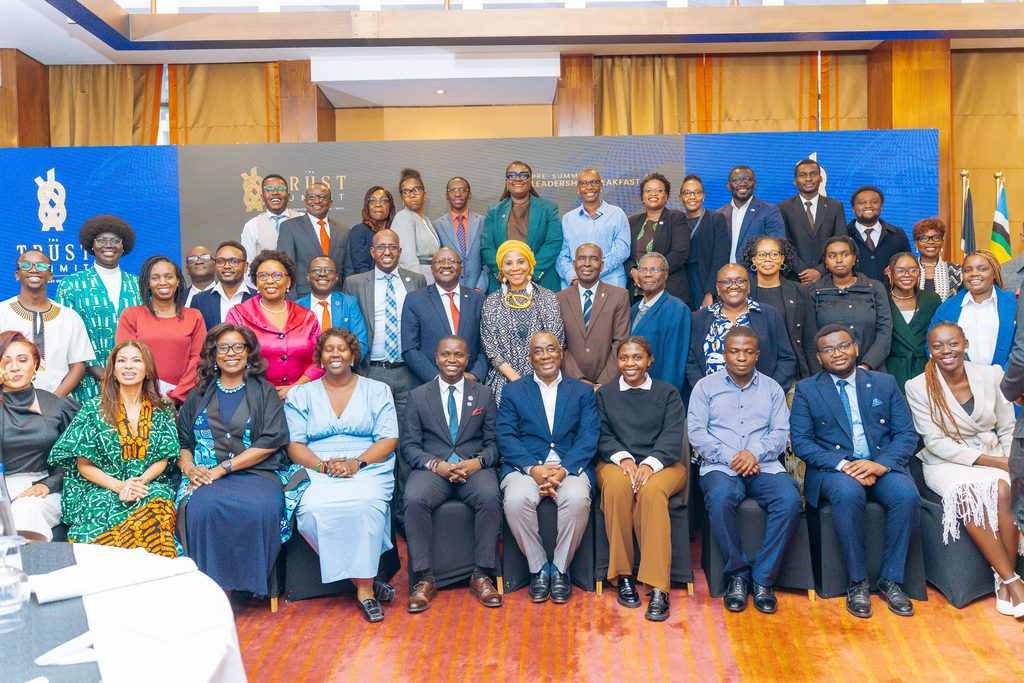
Ahunna Eziakonwa, UN Under-Secretary-General and Special Adviser on Africa to Secretary-General António Guterres, made the case at a leadership meeting in Nairobi held ahead of the inaugural Trust Summit, which the Kenyan capital hosts from 21 to 23 October.
“Africa is not asking for a seat at someone else’s table anymore. Africa is a co-architect of a system that is renewed, and not only repaired,” Eziakonwa said. “The starting point for trust is to treat Africa as a shaper of our common future, and not as a recipient of global change.”
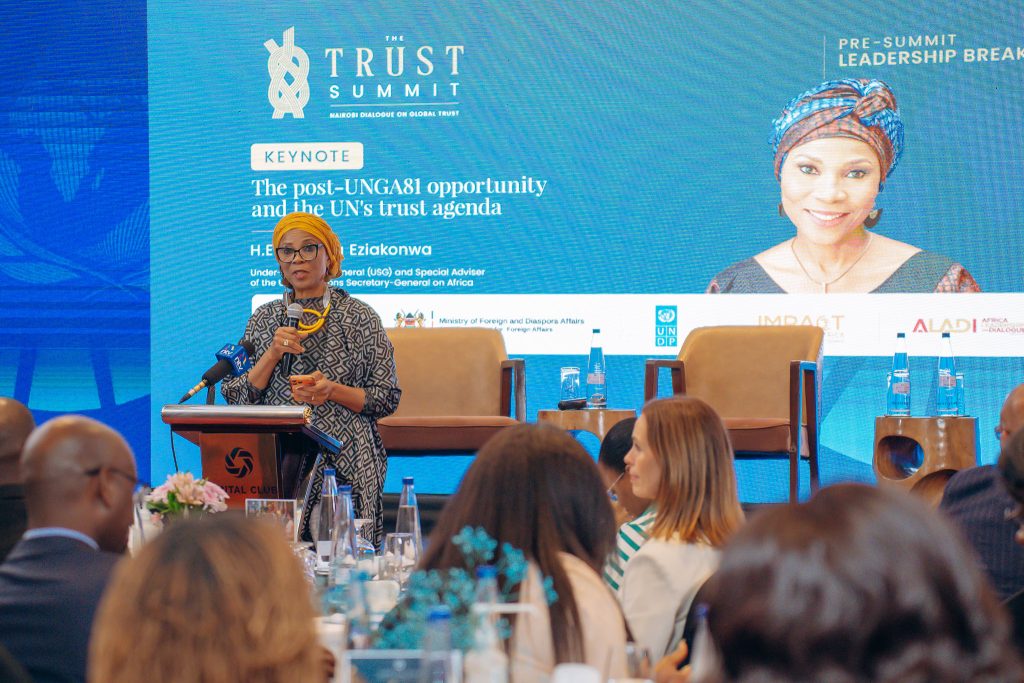
Eziakonwa, a Nigerian national who took up the post on 1 August after nearly eight years leading the UN Development Programme’s Regional Bureau for Africa, paired the continent’s long-standing demand for a fairer international order with a challenge closer to home. African governments, she said, must hold international partners to their commitments while also becoming more accountable to their own citizens, including by delivering on pledges in agriculture, education and public services.
Trust, she argued, is earned through measurable results rather than statements of intent.
“Trust is not rebuilt by grand declaration. It’s rebuilt by commitment, one commitment after another, each with a named owner, a timeline, and a date on which we report back,” she said, adding that the Nairobi Call to Action and its framework for action were designed to do exactly that.
A credibility gap
Her remarks come as multilateral institutions face sustained questions over their credibility, over how influence is distributed in global decision-making, and over the gap between international pledges on climate finance and development assistance and the money that is eventually delivered.
The scale of the problem is considerable. The UN’s World Social Report 2025 found that more than half of the world’s population has little or no trust in their government, with mistrust rising across all age groups. For Africa, the cost is also financial: a 2023 UNDP study estimated that African countries pay roughly $75 billion a year in additional interest because of how lenders and credit rating agencies perceive African risk.
Opening the door
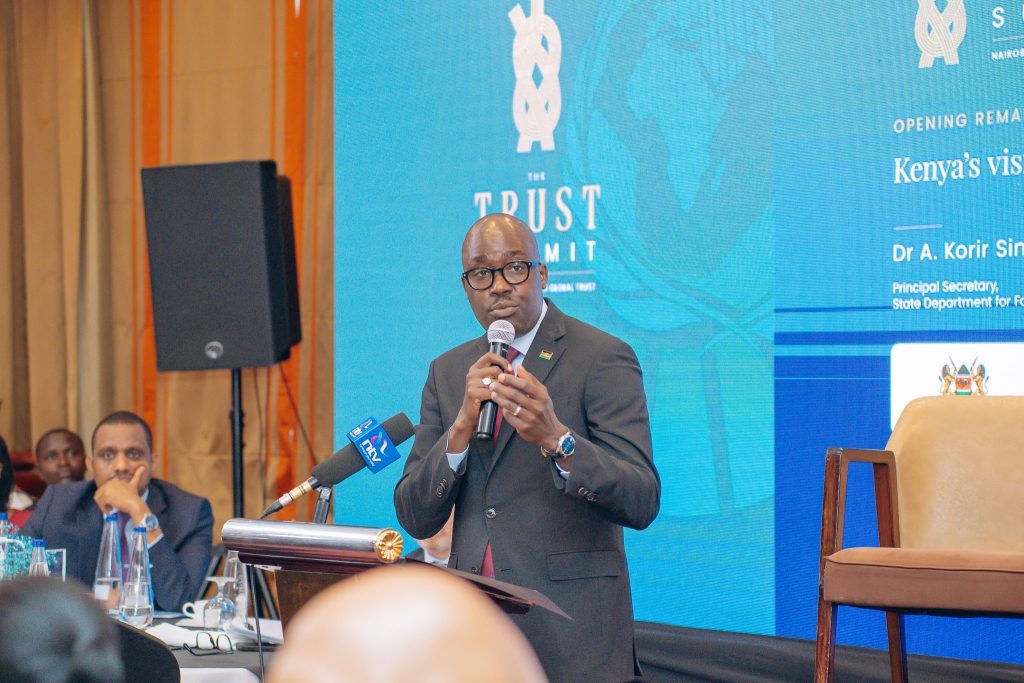
Kenya’s Principal Secretary for Foreign Affairs, Abraham Korir Sing’Oei, said rebuilding trust would require established institutions to open their decision-making to a wider range of actors, including those outside government.
“If we are serious about rebuilding trust, states must open the door to greater engagement with society, and large institutions must make room for non-state actors,” Sing’Oei said. “That is what the Trust Summit is designed to be: a space where we are co-creators and co-equals in building a more trustworthy future.”
Young people, whose economic prospects and political participation will be shaped by decisions taken now, were also singled out. Deborah Ndanu Nzomo, secretary-general of Kenya Model United Nations, said institutions could not expect the confidence of young people without first showing confidence in them.
“The future of multilateralism depends not only on whether young people believe in its institutions, but also on whether those institutions demonstrate that they believe in young people,” Nzomo said. “Trust must be mutual.”
From pledges to tracking
Organisers say the summit is intended to move the debate from principle to practice. Planned outputs include a Nairobi Statement on Global Trust for Sustainable Development and Peace, a summit outcome report, a Trust Barometer dashboard tracking levels of trust, a report on Africa’s trust landscape, and pillar-specific policy recommendations with implementation pathways and accountability mechanisms.
A joint task force, to be set up by Kenya’s State Department for Foreign Affairs, Strathmore University and the Open Government Partnership, is meant to track, verify and report on progress against resolutions agreed at the summit.
Whether those mechanisms produce lasting change will depend on the willingness of governments and institutions to make specific commitments, publish their progress and accept scrutiny when targets are missed, the same standard Eziakonwa set out in her own remarks.
For Africa, the stakes go beyond restoring confidence in individual institutions. They concern the continent’s ability to help write the rules of international cooperation while ensuring that its own governments earn the trust of the people they represent.
About the summit
The Trust Summit: Nairobi Dialogue on Global Trust runs from 21 to 23 October 2026 under the theme “Weaving Trust: Binding Strands for a Stronger Global Order”. Participation is by invitation and is expected to include serving and former heads of state, ministers, heads of multilateral institutions, diplomats, business and civil society leaders, academics, media executives and faith-based institutions.
Discussions are organised around four thematic pillars: the future of multilateralism; rebuilding democracy and trust in public institutions; trust as an economic asset; and information integrity and trust in the digital age.
The summit is convened by Kenya’s Ministry of Foreign and Diaspora Affairs through the State Department for Foreign Affairs; the Executive Office of the President through the Office of the Chief of Staff and Head of the Public Service; the Open Government Partnership; Strathmore University; UNDP Kenya; the Ford Foundation; and Konrad Adenauer Stiftung, in partnership with the Institute of Public Finance.