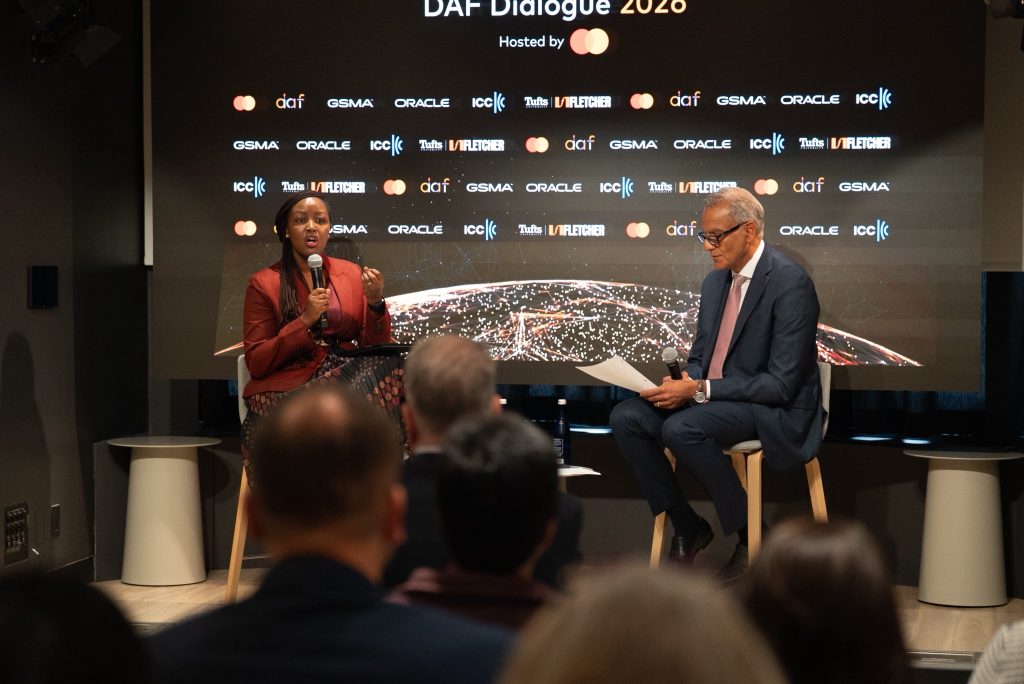
Rwanda’s Minister of ICT and Innovation, Paula Musoni, has outlined the country’s approach to digital transformation, artificial intelligence and digital sovereignty during a fireside conversation examining the role of pragmatism in shaping digital policy.
Speaking in a session titled “Can Pragmatism Save Digital Policy From Local Politics?”, moderated by Ambassador Richard Verma, Musoni discussed Rwanda’s digital transformation journey and the importance of ensuring that technology delivers practical development outcomes.
She highlighted artificial intelligence as a tool that should be applied to real-world challenges across sectors, with a focus on putting practical solutions into the hands of teachers, farmers, nurses and learners.
The discussion also examined Rwanda’s approach to digital sovereignty, particularly how countries can engage with international technology partners while maintaining the capacity and flexibility to make their own future decisions.
Musoni emphasised that partnerships should deliver the intended outcomes while also helping build local capabilities and preserving Rwanda’s ability to make independent choices about its digital future.

Rwanda has increasingly positioned digital technology and artificial intelligence as tools for development, with government initiatives seeking to integrate technology into public services and sectors including agriculture, education and healthcare. Recent remarks by Rwanda’s ICT leadership have similarly stressed practical applications of AI rather than treating the technology only as a future opportunity.
The conversation comes amid growing international discussions over AI governance, data, digital sovereignty and the role of global technology partnerships, as countries seek to benefit from emerging technologies while strengthening domestic digital capacity.
For Rwanda, the approach presented by Musoni puts the emphasis on ensuring that digital transformation is connected to everyday development needs, from improving services to supporting professionals and strengthening the country’s ability to shape its own technological direction.