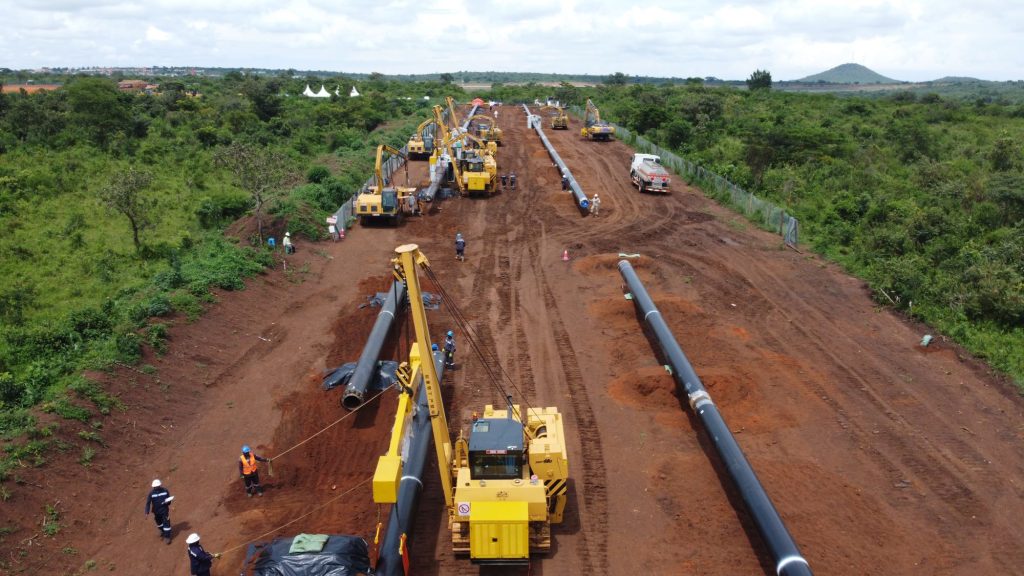
A group of Ugandan farmers has filed a legal challenge in the United Kingdom High Court against the East African Crude Oil Pipeline (EACOP), arguing that the project poses serious environmental risks and could harm communities affected by its construction.
The East African Crude Oil Pipeline, commonly known as EACOP, is a 1,443-kilometre (897-mile) heated pipeline being built to transport crude oil from Uganda’s oil fields in the Lake Albert region to the Port of Tanga on Tanzania’s Indian Ocean coast for export to international markets. The project is valued at several billion dollars and is one of the largest cross-border energy infrastructure developments currently underway in Africa.
In their case, the farmers are asking the UK High Court to consider Ugandan environmental and constitutional laws when assessing the responsibilities of companies involved in the project. They argue the pipeline has resulted in land acquisition affecting local communities and could threaten critical water sources, biodiversity, and protected ecosystems.
According to the claimants, more than 100,000 people could be directly or indirectly affected by the pipeline through land acquisition and environmental impacts.
The case is the latest legal challenge facing EACOP, which has attracted international attention from environmental groups and human rights organizations. Critics argue the project could contribute to climate change, disrupt wildlife habitats, and negatively affect the livelihoods of communities living along the pipeline route.
Supporters of the project, including the governments of Uganda and Tanzania, say EACOP will unlock Uganda’s commercial oil reserves, create thousands of jobs, attract foreign investment, and generate export revenue that could support long-term economic development.
The pipeline is being developed by a consortium led by TotalEnergies and China National Offshore Oil Corporation (CNOOC), alongside the governments of Uganda and Tanzania.
Legal experts say the outcome of the UK case could have broader implications for multinational companies operating overseas, particularly regarding whether they can be held accountable in foreign courts for alleged environmental and human rights impacts linked to international infrastructure projects.
The UK High Court is expected to decide whether the case will proceed to a full hearing.