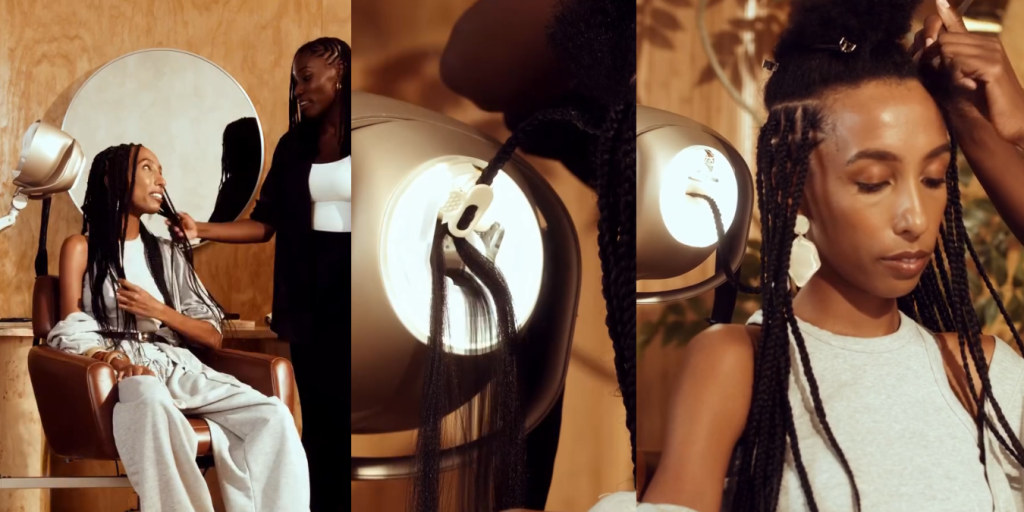
Nigerian-American engineer and entrepreneur Yinka Ogunbiyi has unveiled the first public demonstration of HaloBraid, a robotic hair-braiding assistant designed to help professional stylists complete individual braids up to five times faster.
The demonstration, shared on the company’s social media on October 28, shows the device performing the repetitive weaving stage of braiding after a stylist manually prepares and starts each braid.
Unlike a fully automated hair-styling machine, HaloBraid is designed to work alongside professionals. Stylists remain responsible for sectioning the hair, applying products and starting each braid before the device takes over the weaving process. They then complete the final styling.
Ogunbiyi developed the idea during the COVID-19 lockdown in 2020 after spending four days braiding her own hair. The experience inspired her to explore how engineering could reduce the time and physical effort involved in traditional braiding.
She later co-founded the company with David Afolabi, a fellow Harvard graduate. The team has spent years developing and testing prototypes, with feedback from professional hairstylists helping shape the device.
The startup secured US$7 million in seed funding in a round led by Seven Seven Six, the venture capital firm founded by Reddit co-founder Alexis Ohanian. HaloBraid has also reported more than 7,000 salons on its waiting list.
The company says the technology could help salons serve more clients while reducing the repetitive hand movements associated with long braiding sessions, which can contribute to physical strain and occupational injuries.
However, the innovation has also sparked debate about the role of automation in a practice deeply connected to Black identity, culture and creativity. While some have welcomed its potential to ease the physical demands on braiders, others have questioned whether machines can preserve the artistry and personal touch of hairstyling.
HaloBraid’s approach is to keep the stylist at the centre of the process, positioning the device as an assistant rather than a replacement.
The company is preparing a phased introduction involving selected stylists and salons. Its performance in everyday salon settings will help determine whether the technology can deliver its promised time savings while accommodating different hair textures and braiding styles.