Nairobi – Kenya has taken a decisive step in its preparations to co-host the 2027 Africa Cup of Nations, signaling both financial commitment and institutional readiness as the country positions itself on the continental stage.
A Financial Signal of Intent
In a statement issued by the Ministry of Youth Affairs, Creative Economy and Sports, Cabinet Secretary Salim Mvurya confirmed that the government has fully met its financial and institutional obligations to the Confederation of African Football. Central to this milestone is the remittance of a $30 million hosting fee, a critical requirement that not only fulfills contractual obligations to CAF but also reinforces Kenya’s credibility and readiness to deliver a tournament of continental significance.
A Regional Bet with Continental Stakes
Kenya will co-host AFCON 2027 under the Pamoja bid alongside Uganda and Tanzania, marking a historic return of the tournament to East Africa after decades. The scale of the opportunity is immense. AFCON remains one of the most watched sporting events on the continent, with recent editions drawing global audiences in the hundreds of millions. The 2023 tournament in Côte d’Ivoire, for instance, recorded a cumulative global audience exceeding one billion viewers, underlining the competition’s reach and commercial power.
The Kenyan government is positioning the tournament as more than a football event. According to the statement, it reflects the commitment of President William Ruto to leverage sport as a driver of economic growth, youth empowerment, job creation, and international prestige, while positioning Kenya as a premier destination for global sporting events.
What History Tells Us About the Economic Stakes
Past tournaments offer a useful lens into both the potential and the risks. South Africa’s hosting of the 2010 FIFA World Cup, while larger in scale, generated an estimated $3.6 billion in economic impact and left behind significant infrastructure investments. Egypt’s AFCON 2019 injected hundreds of millions of dollars into the local economy through tourism and services, while Côte d’Ivoire’s 2023 edition saw over $1 billion invested in stadiums, transport networks, and urban upgrades.
These examples illustrate a consistent pattern. Major tournaments can unlock short-term economic gains through tourism, hospitality, and global visibility, but their long-term value depends heavily on how effectively infrastructure and systems are integrated into broader national development strategies. This is the balance Kenya and its co-hosts will need to strike.
From Infrastructure to Execution
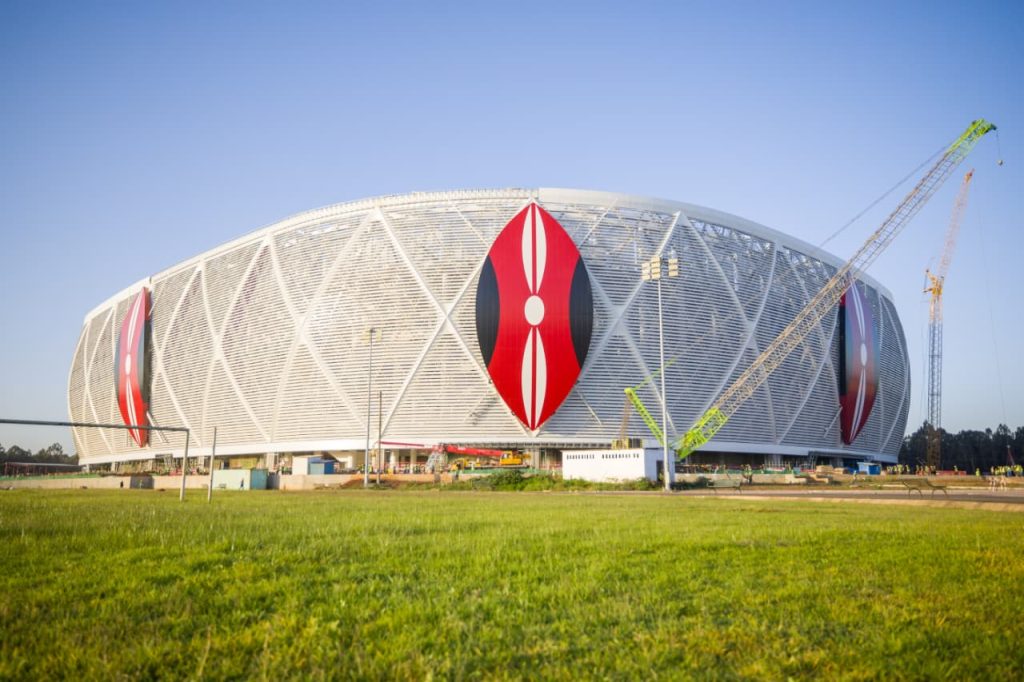
Following a recent CAF inspection, Kenya is now entering an accelerated implementation phase. The government has committed to fast-tracking the construction and upgrading of match venues and training facilities while strengthening transport and logistics systems and ensuring compliance with international safety, security, and broadcast standards.
A restructured Multi-Agency Local Organizing Committee has been established to coordinate efforts across government and the private sector, reflecting the complexity of delivering a tournament of AFCON’s magnitude. The emphasis is not only on building infrastructure but on ensuring that institutions are aligned with the scale, urgency, and precision required.
The Real Test: Systems, Not Stadiums
Beyond physical infrastructure, the success of AFCON 2027 will hinge on systems-level coordination across East Africa. Authorities have indicated plans to convene discussions aimed at establishing a harmonized framework to support tournament delivery, including visa facilitation, coordinated tax exemptions, and streamlined customs and clearance processes for goods and services linked to the tournament.
This shift is significant. It signals recognition that modern sporting events are as much about seamless movement, regulatory alignment, and operational efficiency as they are about stadiums and match-day experience. If implemented effectively, these measures could enhance cross-border mobility, extend tourism flows across the region, and deepen economic integration.
Opportunity, Risk, and the Delivery Challenge
AFCON tournaments typically deliver immediate economic benefits through increased visitor arrivals, higher hotel occupancy rates, and expanded demand for transport and services. However, they also carry risks, particularly around cost overruns, delayed projects, and underutilized infrastructure after the event.
Kenya’s early fulfillment of its financial obligations and its emphasis on institutional coordination suggest an attempt to avoid these pitfalls. The real test, however, lies in execution. The coming months will determine whether timelines are met, systems are aligned, and investments translate into tangible outcomes.
A Defining Moment for East Africa
For Kenya, Uganda, and Tanzania, AFCON 2027 represents an opportunity to demonstrate that East Africa can deliver at global standards, coordinate across borders effectively, and leverage sport as a catalyst for economic transformation.
The $30 million payment to CAF marks an important milestone, but it is only the beginning. What follows will determine whether AFCON 2027 becomes a defining success story for the region – or a missed opportunity.