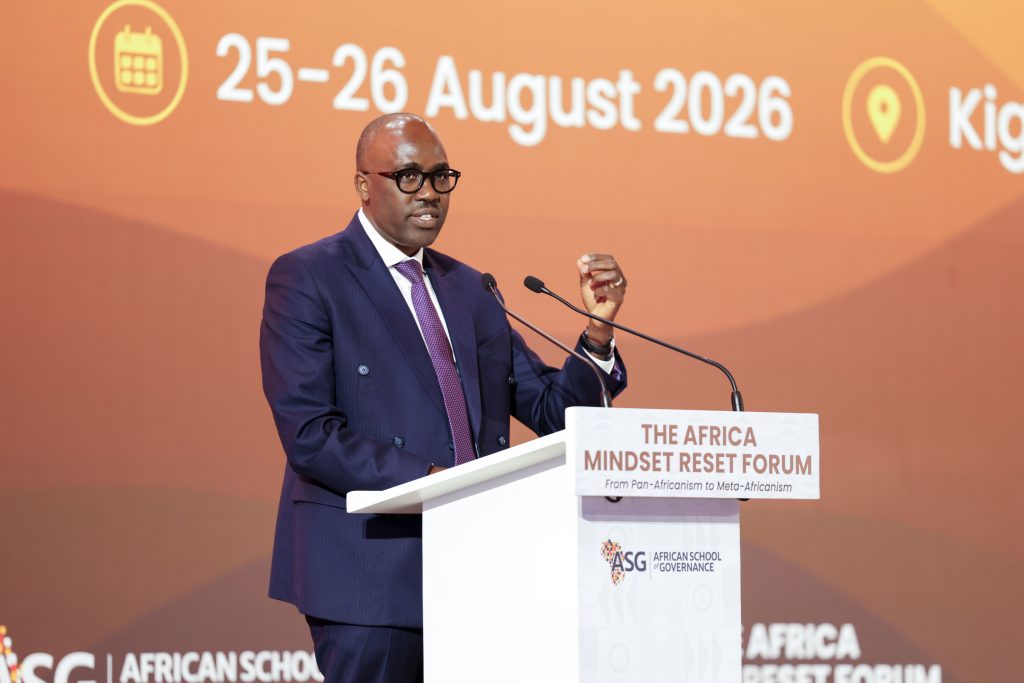
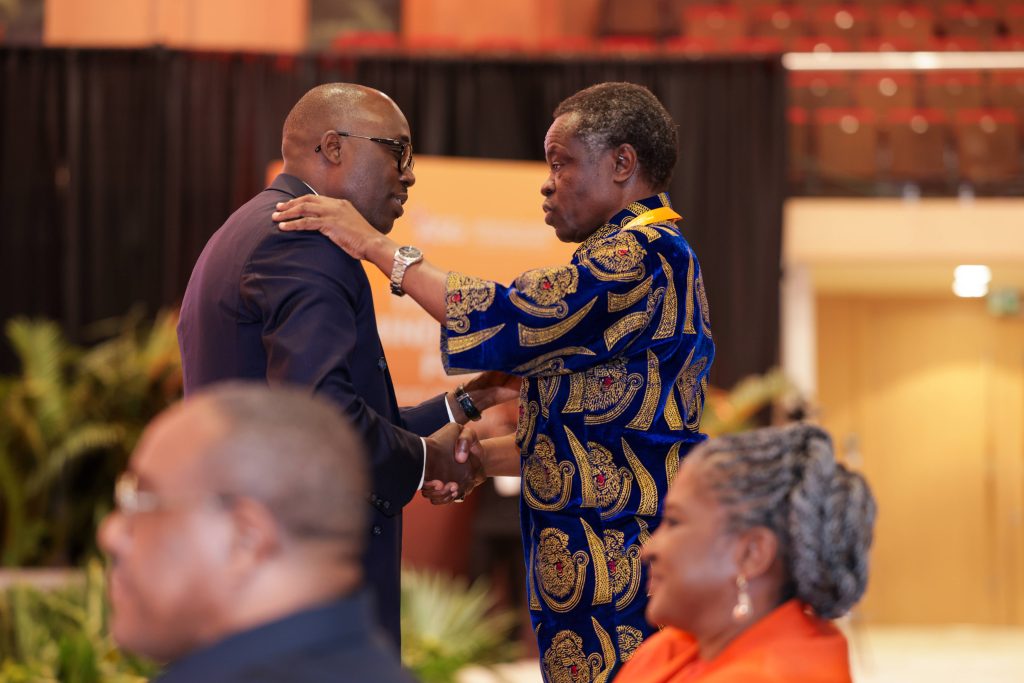
A few days ago, I sat in a room in Kigali, at the Africa Mindset Reset Forum convened by the African School of Governance, and listened to my former professor PLO Lumumba deliver a searing assessment of the continent’s condition. It would have been easy to leave that room believing Africa is a bleak case, that little is changing. I do not share that view. What I see, increasingly, is a continent whose leaders are developing an acute awareness, not just of the problem, but of what Africa has to offer the world. The Forum itself made the point in its own language: the shift from fixed to growth, from pessimism to possibility, from reactive to proactive but no mindset shift of that kind – growth, openness, agency – can take root in a vacuum of trust vacuum. The question is no longer whether Africa can change its mindset. It is whether that mindset can take root without first addressing an older, more stubborn obstacle: the absence of trust.
It is my contention that one of Africa’s most consequential reforms will not be a policy, a treaty or a trade corridor. It will be the extent to which we can forge mutual trust.
The binaries that hold all of us back
We tend to think of mindset reset in terms of physical barriers: infrastructure gaps, capital constraints, logistics. But the more consequential barriers are conceptual. We have long organised our thinking around binaries: us versus them, host versus refugee, autochthon versus settler, one bloc versus another. These are not neutral descriptions of reality; they are mental abstractions that make cooperation harder and collective action more difficult, weakening the social fabric both within nations and between them.
A few recent examples from Kenya’s own experience show what becomes possible once such divisions are set aside.
Consider refugees. Kenya has hosted close to 800,000 refugees, most of them African, for nearly thirty years. For long stretches of that history, many countries treated displacement as a security threat, holding refugees at the margins of national life. But many of the people in our camps grew up in Kenya; they are not, in any meaningful sense, outsiders. The Shirika Plan brings host communities and refugees together, integrating refugees into local economies and public services, and reflects a shift toward durable solutions built on self-reliance rather than indefinite containment.
Consider also the weighty matter of climate finance. For years, the global conversation has been framed as a dichotomy: the industrialised world bore historical responsibility, so the rest of the world should follow the same carbon-intensive path to growth already taken elsewhere. That framing did not, on its own, solve the problem of how to grow cleanly today. In 2023, African leaders gathered in Nairobi at the Africa Climate Summit and moved past it. They launched the Africa Green Industrialization Initiative to convert the continent’s renewable energy potential into climate-smart growth, expand regional value chains, and position Africa as a hub for sustainable trade.
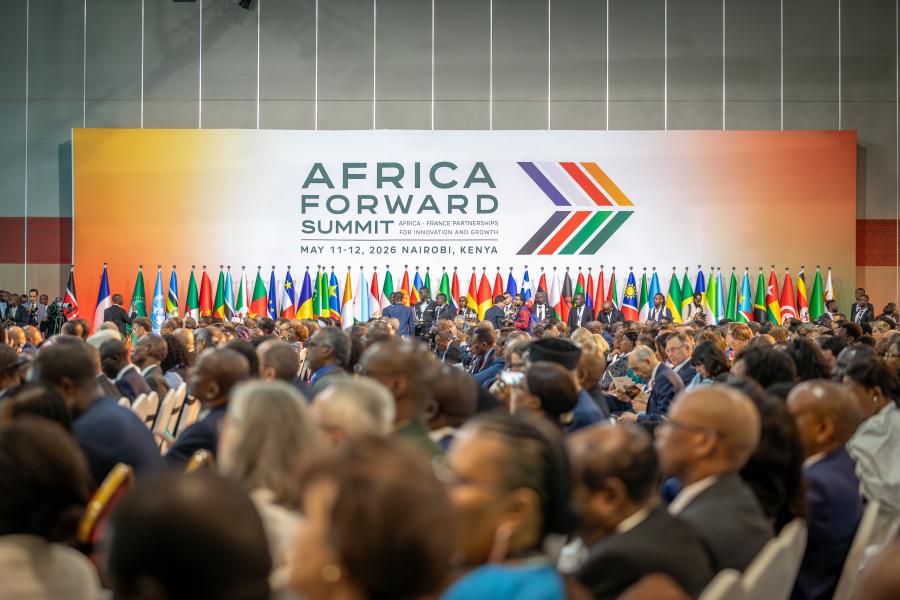
A third example: Kenya was asked to host the France-Africa summit, ordinarily convened for Francophone Africa. Some asked how an Anglophone country could host a Francophone gathering. Our view was simple: there is no Francophone Africa and no Anglophone Africa, only one Africa, and the divisions between us add real costs to how we do business with each other. Out of that summit was the spotlight given to ATIDI, the Africa Trade and Investment Development Insurance instrument, designed to de-risk African capital using African capital: our own pension and insurance funds financing our own infrastructure, rather than relying solely on external debt. Its capital base, originally targeted at $2 billion, now stands at roughly $883 million, with new commitments from the African Development Bank, Côte d’Ivoire, Kenya and many more. Unsurprisingly, the G7 Summit held in June in France strongly endorsed ATIDI and called on countries to capitalize it further.
A deficit that belongs to everyone
These are Kenya-specific examples, but the diagnosis is not uniquely African. The trust deficit is global; Africa is simply where its consequences are most visible.
The United Nations’ World Social Report 2025 found that more than half the world’s population expresses little or no trust in its own government, with mistrust rising across every age group and region. The 2025 Edelman Trust Barometer found that 68 percent, 69 percent and 70 percent of respondents believe business, government leaders and journalists, respectively, are misleading them. As I noted in Kigali, the Afrobarometer data tells a similar story here on the continent, and you could feel the anxiety it produces in a room full of young people.
For African economies, this deficit carries a measurable cost. The UNDP estimates that subjectivity in sovereign credit ratings costs African countries some US$75 billion a year, in excess interest and in financing that never arrives at all. UNCTAD puts Africa’s average cost of financing at 11.6 percent, some 8.5 percentage points above the US risk-free benchmark. Before regional harmonisation, it could take up to two years to register a single medical product in one East African country; a regional pilot cut that timeline by more than half, simply by getting regulators to trust and recognise each other’s reviews. None of this is a judgment on any one institution. It is what happens when systems have not yet built enough confidence in one another to work together.
I regard trust not as a sentimental concern to be addressed after the “real” economic reforms, but as an economic reform in its own right. It shapes borrowing costs, regional integration and investment flows. It shapes multilateralism too: shared institutions function only to the extent that states trust one another and trust the institutions themselves. Where that trust weakens, whether through funding withdrawal or geopolitical fragmentation, the capacity for collective action on climate, pandemics and conflict weakens with it. That is a structural challenge facing the whole international system, not any single region of it.
What next?
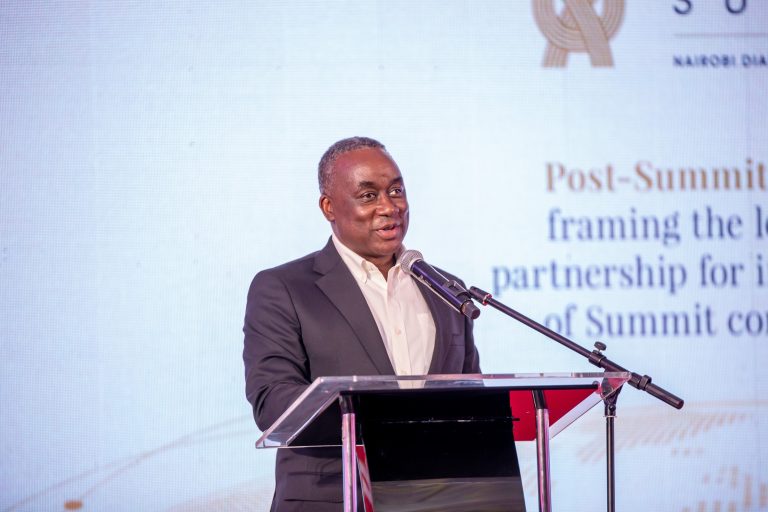
This is why, from October 21 to 23, Kenya will convene The Trust Summit in Nairobi under the theme “Weaving Trust: Binding Strands for a Stronger Global Order.” It is convened by the State Department for Foreign Affairs, together with the Open Government Partnership, Strathmore University, UNDP Kenya, the Ford Foundation, the Konrad Adenauer Stiftung, the Institute of Public Finance and the Africa Leadership and Dialogue Institute. The effort is in line with the ambitions of the United Nations Pact for the Future.
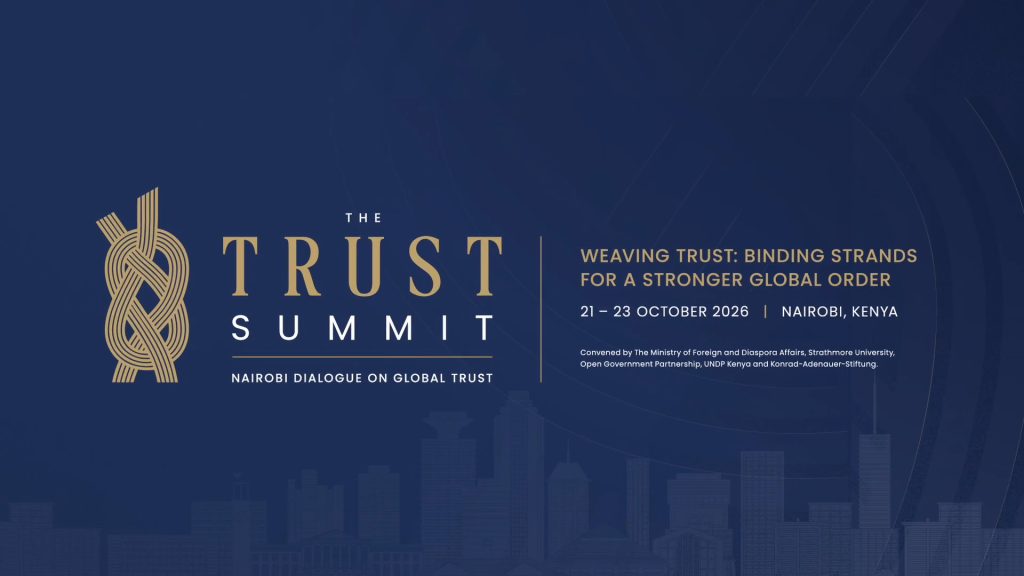
The summit will bring together high-level policymakers, regulatory institutions, business and civil society leaders, and young people from across Africa and beyond. Together, they will move past diagnosing the trust deficit toward practical, time-bound commitments across four pillars: restoring trust in multilateralism, renewing the democratic social contract, examining the economics of trust and safeguarding information integrity in this disruptive digital age. Its deliverables are concrete: a Nairobi Statement on Global Trust for Sustainable Development and Peace, and a joint task force to track follow-through. A Trust Barometer will function as an ongoing dashboard of trust indicators, alongside a dedicated report on the drivers of Africa’s trust landscape.
Framing trust in economic terms may seem to strip it of its moral weight. I would argue the opposite: it is precisely because trust is measurable, in the cost of capital and the speed of regulatory approval, that it deserves the same rigour we bring to any other reform agenda.