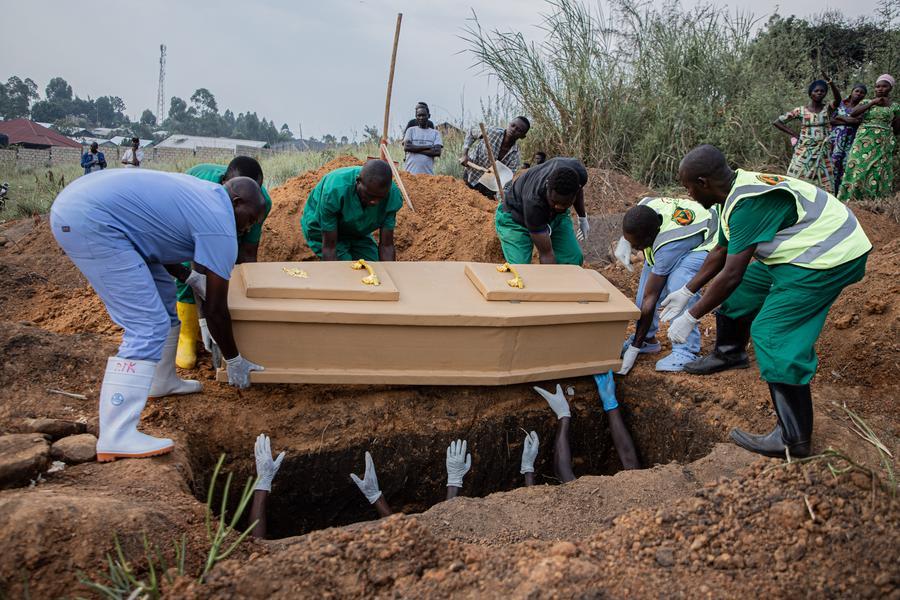
The Ebola outbreak caused by the Bundibugyo virus in the Democratic Republic of Congo (DRC) is nearing the 2,000-case mark, with health authorities warning that unknown transmission chains are making efforts to contain the virus more challenging.
According to the latest Ebola situation update released on 15 July 2026, the Democratic Republic of Congo had recorded 1,963 confirmed Ebola cases, including 719 deaths. The figures are based on surveillance data collected up to 12 July 2026.
A total of 736 patients are currently hospitalized in isolation, while 333 people have recovered from the disease. The outbreak has continued to expand, with 31 new confirmed cases and 10 additional deaths reported in the latest period.
The newly reported infections were detected in Ituri and North Kivu provinces, which remain the most affected areas as response teams work to identify cases, trace contacts and break chains of transmission.
The World Health Organization (WHO) has issued renewed warnings over the pace of the outbreak, describing the situation as a serious emergency requiring urgent action. Health officials say a significant number of new infections are linked to unknown chains of transmission, making it difficult to determine how the virus is spreading within communities.
“This is a fire,” WHO officials warned, emphasising the need for rapid action to strengthen surveillance, testing, treatment and community engagement.
Ituri province remains the hardest-hit region, accounting for 1,772 cases and 608 deaths reported across 26 of its 36 health zones.
In North Kivu, health authorities have recorded 177 cases, including 100 deaths, across 11 health zones. Additional infections have been reported in South Kivu, Haut-Uele and Tshopo provinces, bringing the total number of affected health zones across the five provinces to 42 out of 140.
Despite the continued spread, health teams say progress has been made in monitoring people who have been exposed to the virus. About 81.5 percent of identified contacts are currently under follow-up in Ituri and North Kivu.
The outbreak has also affected neighbouring Uganda, where authorities have reported 20 confirmed cases, including two deaths.
Uganda has not recorded a new confirmed case since 21 June 2026, and 16 patients have recovered. However, health officials remain alert because 15 of the confirmed cases were linked to travel from DRC, while five were associated with local transmission.
The situation has raised concerns across East Africa because of the movement of people and goods across borders, prompting countries in the region to strengthen disease surveillance and preparedness measures.
The outbreak has also resulted in imported cases outside Africa. In May 2026, a US citizen infected with the Bundibugyo virus was medically evacuated to Germany for treatment. France later reported another imported case on 24 June 2026, linked to travel from an affected area in DRC.
On 10 July 2026, the United States Centers for Disease Control and Prevention (CDC) confirmed that a US citizen working with a humanitarian organisation in DRC had tested positive for the virus. The patient was evacuated to Germany on 13 July 2026 for specialised medical care.
Health agencies say the risk to populations outside affected areas remains low, but continued monitoring is necessary due to international travel and movement between regions.
Ebola is a highly infectious viral disease transmitted through direct contact with the blood or bodily fluids of infected people or animals. The Bundibugyo virus strain can cause severe illness, including fever, weakness, vomiting, diarrhoea and, in advanced cases, bleeding and organ failure.
Health officials say controlling the outbreak depends on early detection, rapid treatment, effective contact tracing and cooperation from affected communities. However, challenges including gaps in surveillance, population movement and misinformation continue to complicate response efforts.
With cases approaching 2,000 and new infections still emerging through unidentified transmission routes, the Ebola outbreak in DRC remains one of the most serious public health emergencies facing the region