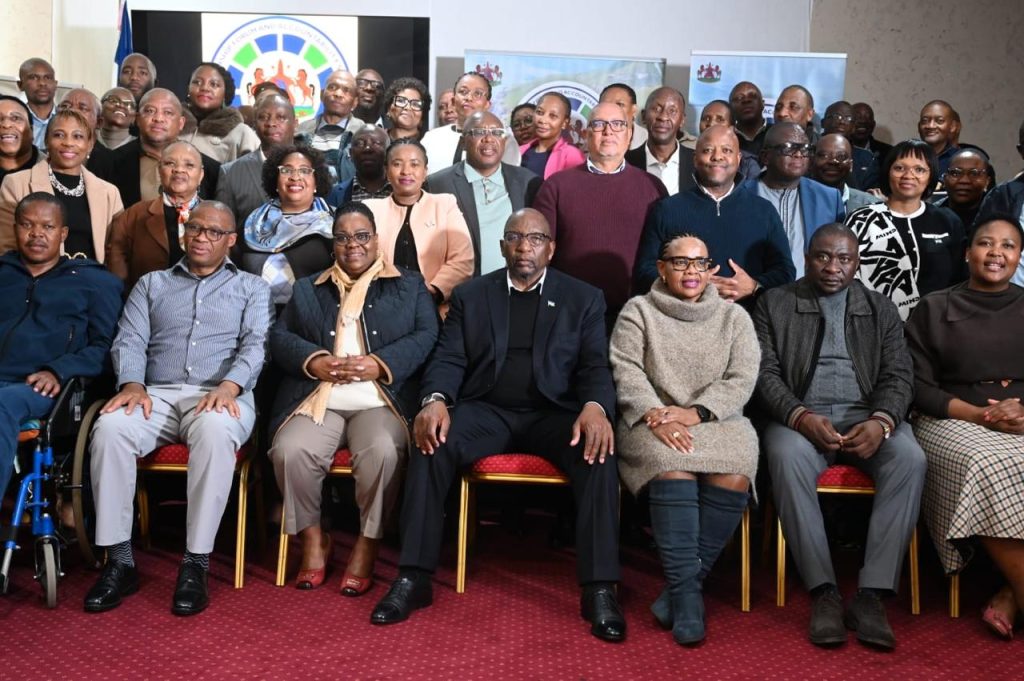
Lesotho has launched its 2026 National Accountability Summit, a three-day forum aimed at strengthening governance, improving public service delivery, and enhancing accountability through a citizen-centred approach inspired by Rwanda’s Umushyikirano model.
The summit, running from July 1 to 3, has brought together senior government officials, policymakers, public servants, development partners, civil society representatives, and citizens to assess government performance, address development challenges, and identify practical solutions to improve public services.
The Government of Lesotho is convening the summit with implementation support from Rwanda Cooperation, reflecting growing collaboration between the two countries in governance and public sector reform. The initiative draws inspiration from Rwanda’s Umushyikirano, an annual National Dialogue Council that brings together the President, Cabinet ministers, public institutions, local leaders, civil society, the private sector, and citizens to openly discuss national priorities, review government performance, and hold public institutions accountable. Widely regarded as one of Rwanda’s flagship governance platforms, Umushyikirano promotes transparency, citizen participation, and direct engagement between leaders and the public.
Officials say adopting elements of the Umushyikirano model will help strengthen citizen engagement, improve transparency, and reinforce accountability in Lesotho’s public sector while supporting more responsive and inclusive governance.
The summit follows a leadership retreat held in Teyateyaneng, where government officials reviewed progress across key development sectors and assessed priorities for future reforms.
During the forum, the government highlighted achievements in public service delivery, including the training of 7,500 community health workers, the electrification of 59 villages, and the construction of 141 classrooms as part of efforts to improve healthcare, education, and access to essential services.
Despite these gains, leaders acknowledged persistent challenges, particularly high youth unemployment and increasing secondary school dropout rates linked to teenage pregnancies and early marriages.
Working sessions are also focusing on strengthening human capital development, promoting economic decentralization, improving public service delivery, and enhancing transparency and accountability within independent oversight institutions.
The summit underscores the growing partnership between Rwanda and Lesotho and highlights the role of South-South cooperation in sharing governance innovations and public sector best practices across Africa.