

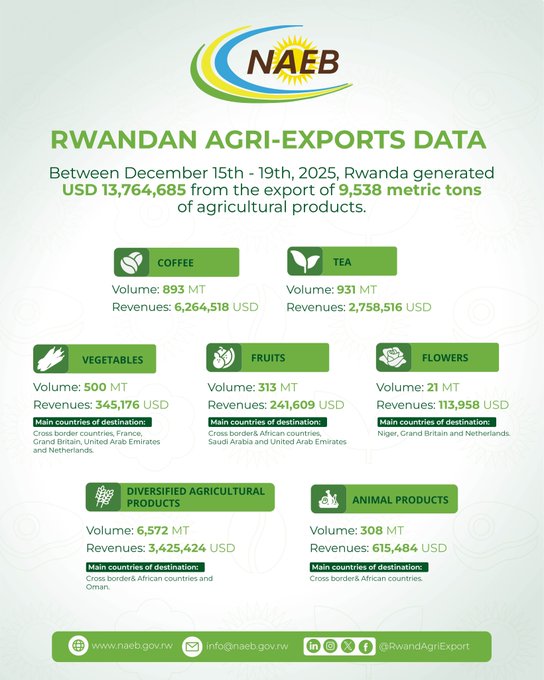
Rwanda’s agricultural export sector is closing the year on a strong note after generating USD 13.76 million from the export of 9,538 metric tons of agricultural products between December 15 and 19, 2025, according to data released by the National Agricultural Export Development Board (NAEB).
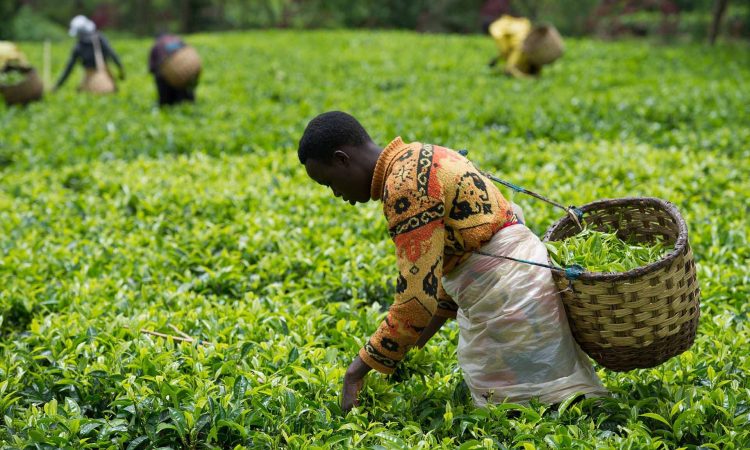
The earnings were driven mainly by Rwanda’s traditional export commodities, with tea generating USD 2.76 million from 931 metric tons, while coffee earned USD 2.26 million from 893 metric tons. Diversified agricultural exports contributed the largest share, bringing in USD 3.42 million from 6,572 metric tons, reflecting Rwanda’s ongoing strategy to broaden its export base.
Other products also posted notable returns during the period. Vegetables earned USD 345,176 from 500 metric tons, fruits generated USD 241,609 from 313 metric tons, flowers brought in USD 113,958 from 21 metric tons, and animal products contributed USD 615,484 from 308 metric tons. Rwanda’s exports reached key markets including Europe, the Middle East, and cross-border African destinations.
Beyond export volumes and revenues, NAEB says the performance underscores the role of farmer empowerment in sustaining the sector. Through the Private Sector Agriculture and Climate (PSAC) Project, NAEB has supported over 4,000 women and youth, organized in 250 community groups, to produce and distribute more than 13 million coffee, tea, and horticulture seedlings across 13 districts in the past two years.
To support seedling production, more than RWF 2 billion has been disbursed under the project, contributing to improved household incomes and long-term productivity in export-oriented value chains.
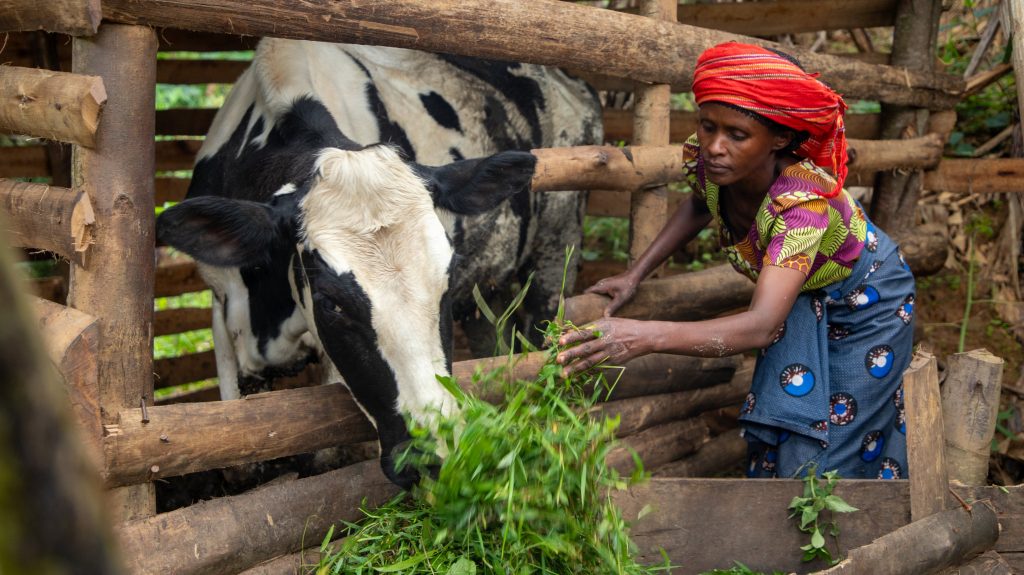
One beneficiary, Zawadi Akimana from Rwanda’s Western Province, said income earned from seedling production enabled her to strengthen her household economy by investing in livestock and other sustainable income-generating activities, highlighting the broader social impact of the program.
As the year comes to a close, NAEB says continued investment in inclusive production systems, quality inputs, and market access remains central to Rwanda’s efforts to sustain agri-export growth and strengthen the livelihoods of farmers who drive the sector.


