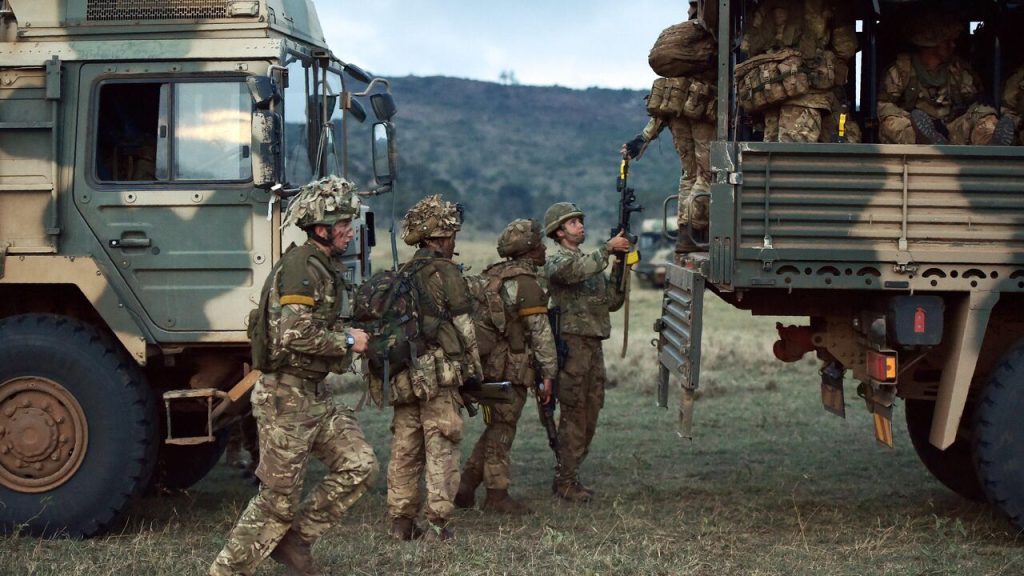
Kenya’s parliament has accused the British Army Training Unit in Kenya (Batuk) of decades-long misconduct, including sexual abuse, killings, environmental damage, and violations of human and labor rights. Batuk has been operating in central Kenya for decades, training over 1,000 Kenyan soldiers annually, while thousands of British troops are sent to Kenya for exercises. Despite the long-standing cooperation, local communities and parliamentary committees say the presence of foreign troops has sparked serious controversy.
A 94-page report by Kenya’s parliamentary Committee on Defence, Intelligence, and Foreign Relations, following a two-year inquiry, documented extensive testimony from victims, community leaders, civil society organizations, and government agencies. The report cited multiple allegations, including killings, assaults, maimings, public fights, and fatal traffic incidents involving Batuk soldiers. Communities in Laikipia and Samburu counties described the soldiers as being increasingly seen as an occupying presence rather than development partners, drawing comparisons to colonial injustices.
Among the most notorious cases highlighted was the 2012 murder of Agnes Wanjiru, whose body was found in a hotel septic tank in Nanyuki nearly three months after she had allegedly spent time with British soldiers. The pursuit of justice in her case has been slow, with alleged interference by Batuk personnel. A former British soldier accused of her murder was recently arrested in the UK and is facing extradition to Kenya, though he denies the charges.
Another high-profile case involved the 2012 killing of herder Tilam Leresh, allegedly by a Batuk sergeant. No arrests or prosecutions have taken place in either Kenya or the UK, though the British Ministry of Defence has expressed openness to investigating any new evidence.
The report highlighted disturbing trends of sexual misconduct, including allegations of rape and sexual violence against women from the Samburu and Maasai communities. Survivors reported that cases were often dropped or mishandled by local authorities, leaving many victims without access to justice. Witnesses described incidents of public indecency, disorderly conduct, and violent sexual behavior, sometimes involving intoxicated soldiers. The inquiry also documented cases of abandoned children fathered by British soldiers who returned home, leaving mothers to face stigma and financial hardship.
Environmental concerns were also raised. MPs reported that Batuk had not conducted required environmental and social impact assessments for training exercises, with residents citing respiratory problems, miscarriages, livestock deaths, and injuries from leftover ordnance. One ranger reportedly died after bringing home unexploded ordnance, while a child lost both arms and an eye after encountering another. There were also concerns over potential use of white phosphorus, known for causing severe injuries. Batuk defended itself, citing independent environmental audits showing compliance with Kenyan regulations.
The parliamentary panel criticized Batuk for refusing to appear before the committee, citing diplomatic immunity. The UK Ministry of Defence said it had addressed concerns raised during the inquiry, while the UK High Commission reaffirmed its willingness to investigate new allegations.
The committee concluded that the existing defence cooperation agreement between Kenya and the UK is “structurally flawed,” noting it does not explicitly classify murder as an offense outside the course of official duty, creating barriers to justice. Oversight mechanisms were described as largely ineffective.
To address these issues, the committee recommended amending the agreement to include a visiting forces code of conduct, zero-tolerance rules for gender-based violence, environmental obligations, and civilian oversight. It also urged Kenya’s defence ministry to negotiate with the UK to ensure mechanisms hold Batuk soldiers accountable for child support and other responsibilities.