Greece has announced a sweeping plan to ban access to social media for children under the age of 15 starting January 1, 2027, in a bold move aimed at tackling rising concerns over youth mental health and digital addiction.
Prime Minister Kyriakos Mitsotakis said the decision was driven by growing evidence linking excessive social media use to anxiety, sleep disorders, and the addictive design of online platforms. In a video message, he emphasized that Greece intends to lead by example, positioning itself among the first countries to adopt such strict protections for minors.
The move has strong domestic backing. An opinion poll conducted by ALCO in February found that nearly 80% of respondents support the ban. The government has already taken steps in this direction, including banning mobile phones in schools and introducing parental control tools to limit screen time.
Under the new policy, social media platforms will be required to enforce age restrictions or face penalties under the Digital Services Act, which allows fines of up to 6% of global turnover for non-compliance. However, Greece currently lacks the authority to independently compel platforms to verify users’ ages, instead urging companies and parents to cooperate within existing EU frameworks.
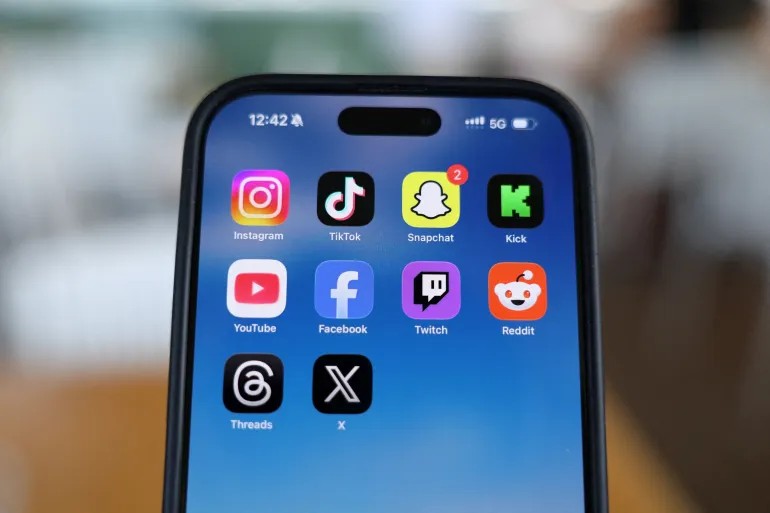
The initiative follows a similar landmark decision by Australia, which became the first nation to ban social media access for children under 16 in December. Platforms such as TikTok, YouTube, Instagram, and Facebook are affected. While companies like Meta and Snapchat have raised concerns about the effectiveness of such bans, they have pledged compliance with regulatory requirements.
Greece is also pushing for broader regional action. In a letter to Ursula von der Leyen, Mitsotakis called for a coordinated European Union response, proposing a unified “digital age of majority” at 15, mandatory age verification systems, and a harmonized enforcement framework across the bloc by the end of 2026.
Other countries, including the United Kingdom, France, Denmark, Poland, and Malaysia, are also tightening regulations or considering similar restrictions, signaling a growing global shift toward stricter digital governance for minors.
What This Means for Africa
Greece’s decision could have ripple effects across Africa, where internet penetration and social media use among young people are rapidly increasing. Platforms like TikTok, Instagram, and Facebook dominate youth engagement across countries such as Kenya, Uganda, Nigeria, and South Africa.
While most African nations have yet to introduce age-based restrictions on social media, concerns around misinformation, cyberbullying, online addiction, and mental health are becoming more prominent. Governments and regulators across the continent are increasingly exploring digital safety frameworks, though enforcement remains a challenge due to limited infrastructure and regulatory capacity.
If the European Union adopts a unified approach, as Greece is advocating, global tech companies may be forced to implement stricter age verification systems worldwide. This could indirectly shape policies in Africa, where regulators often align with international standards.
Experts suggest that African countries could take a more localized approach, focusing on digital literacy, parental awareness, and platform accountability rather than outright bans. However, Greece’s move adds momentum to a growing international debate: how to balance digital access with the protection of young users in an increasingly connected world.
As the conversation evolves, Africa may soon face critical decisions on whether to follow, adapt, or chart its own path in regulating children’s access to social media.