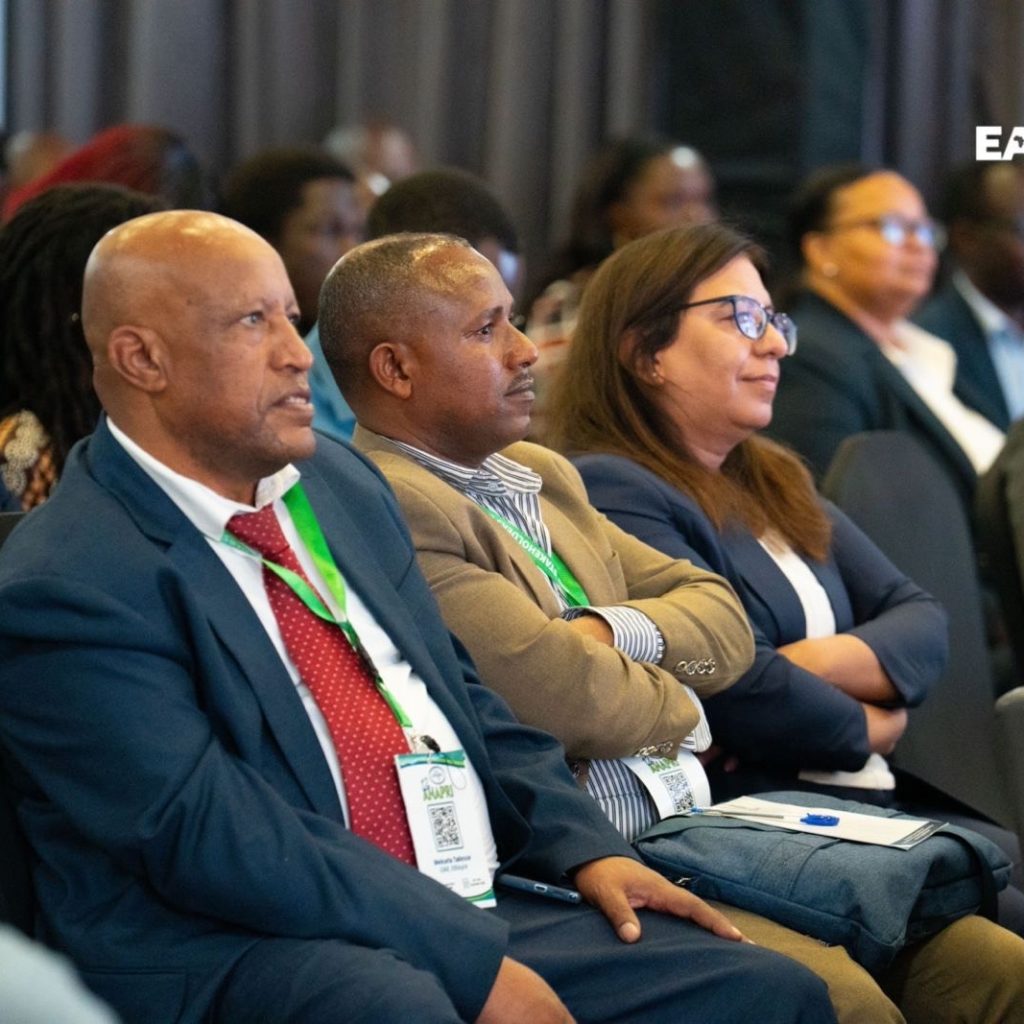
The 12th African Network of Agricultural Policy Research Institutes (ANAPRI) Stakeholders Conference concluded in Kigali with a strong call for African governments and policy researchers to strengthen evidence-based policymaking to accelerate the transformation of the continent’s agri-food systems.
RELATED: Experts Call for Strategic Action to Bridge Research and Implementation in Africa’s Agriculture
The three-day meeting that ran from November 4 to 6 brought together over 500 participants — both in person and virtually — from more than 90 countries, including policymakers, researchers, and private sector representatives. The conference focused on the theme “Driving Africa’s Food Systems Transformation: Strategic Investments, Resilient Policies and Global Partnerships.”
In his opening address, Rwanda’s State Minister of Agriculture, Dr. Telesphore Ndabamenye commended ANAPRI for creating a platform that connects research and policymaking. He emphasized the urgency of data-driven decision-making as Africa faces the dual challenges of climate change and food insecurity.
“For Africa to achieve food security and resilience, our decisions must be guided by solid evidence and collaboration,” Ndabamenye said.
Throughout the sessions, participants explored key issues including funding, climate resilience, food systems transformation, and systems thinking. Panel discussions emphasized how policies could better support smallholder farmers, agribusinesses, and food value chains across the continent.
Michael Ameh, Chief Excutive Officer of the Hemam Synergy Ltd, one of the participants, who attended the conference on personal initiative, said the event provided valuable insights into policy impacts on rural development.
“I just decided to come, and when I saw the conference notice, I decided to join and self-sponsor. But I think this has been one of the best conferences I’ve attended, especially around the theme of policy and its impact on agricultural development, not just in Nigeria but across the continent,” Ameh said.
He added that the discussions on robust policy frameworks and the role of governments in shaping agricultural growth were at the heart of the conference.
Beyond the plenary discussions, the conference offered a space for partnerships and bilateral talks aimed at turning research findings into concrete policies. Participants stressed the importance of collaboration between research institutions, governments, and the private sector.
“We have had enlightening discussions on systems thinking and tools to translate analytical work into concrete action on the ground,” Mark Kofi Fynn, Regional Policy Officer of the FAO noted.
“To track progress, ANAPRI and its partners must strengthen partnerships, agree on concrete actions, and monitor achievements following the conference,” he added.
The emphasis on actionable outcomes was echoed in sessions on foresight exercises, where experts demonstrated how forward-looking analysis can help governments anticipate policy challenges and prepare long-term solutions for the agri-food sector.
The Kigali conference also provided an avenue for new partnerships to take shape. Several bilateral discussions were held between participating organizations and individual attendees.
One of the participants, Dr. Laurenda Todome reflected fruitful bilateral discussions during the conference.
“When I met the president of AFIDA, we realized there’s so much we can do together,” Todome shared. “AFIDA has a clear opinion on how government interventions can support or sometimes distort agricultural markets. As researchers, it’s our job to verify these hypotheses and come up with recommendations that serve both the private sector and governments.”
ANAPRI also formalized new partnerships by signing several Memoranda of Understanding (MoUs) with key institutions, including the Sustainable Agriculture Foundation, Academia, and AFIDA.
In his closing remarks, Dr. Antony Chapoto, Executive Director of ANAPRI, highlighted the steady growth in conference participation and encouraged greater involvement of women in future editions.
“This year we recorded over 500 participants, 69 percent joining virtually and 31 percent attending in person, which reflects the growing strength of this platform as a space for policy dialogue,” Dr. Chapoto noted. “In terms of gender representation, 32 percent of participants were women, and 68 percent were men, and we are committed to improving this balance in future sessions.”