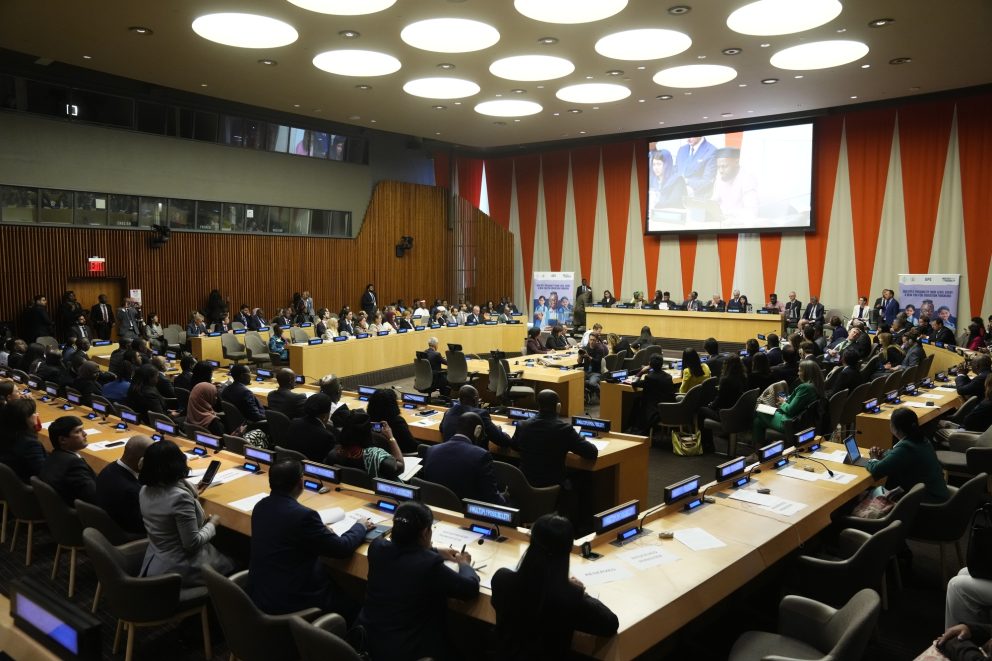
Global leaders have rallied behind a new push to finance education in lower-income countries, with about $3.5 billion in commitments and pledges announced during a high-level event at the United Nations General Assembly.
The Multiply Possibility campaign, led by Italy and Nigeria in partnership with the Global Partnership for Education (GPE), aims to mobilize financing and partnerships to strengthen education systems at a time when around 270 million children and young people remain out of school.
The financing announced includes $2.1 billion in confirmed and anticipated pledges from sovereign donors to GPE, alongside an initial $1.4 billion in co-financing commitments from development finance institutions, philanthropic organizations and private-sector partners.
The co-financing includes $1 billion from development finance institutions and $400 million from philanthropic and private-sector partners. Through GPE’s financing model, such resources can be leveraged alongside GPE grants to attract additional funding for education programmes.
Partner countries also announced $471 billion in domestic education financing commitments, representing a planned 32% increase in spending by 2030. Governments said they would also work to improve efficiency, direct resources toward children facing the greatest barriers and strengthen education systems against economic, climate and other shocks.
The campaign comes as education systems face pressure from population growth, climate-related disruptions, conflict and economic uncertainty. In lower-income countries, governments are also under pressure to equip young people with skills needed for economies increasingly shaped by technology and artificial intelligence.
“Quality education is the pathway to inclusive growth and lasting peace,” Nigerian President Bola Ahmed Tinubu said, urging greater support for GPE and improved access to education, particularly for girls.
Italian Prime Minister Giorgia Meloni, who co-hosted the campaign with Tinubu, said Italy would double its contribution to GPE for the 2026–2030 cycle.
The event was co-chaired by Italian Deputy Prime Minister and Foreign Minister Antonio Tajani and Nigerian Vice President Kashim Shettima. Nigeria’s Education Minister Tunji Alausa and Italy’s Minister of Education and Merit Giuseppe Valditara delivered closing remarks.
Nobel Peace Prize laureate Malala Yousafzai, co-founder of Malala Fund, also addressed the gathering, emphasizing the role of international cooperation in expanding access to education.
The campaign is intended to support GPE’s 2026–2030 strategy, which targets education improvements for about 750 million children and young people in more than 90 low- and lower-middle-income countries if the partnership is fully financed.
Former Tanzanian President Jakaya Kikwete, who chairs the GPE Board, said the commitments represented a starting point for continued efforts to mobilize political support, partnerships and resources for education.
The September 23 event at UNGA marked the culmination of the Multiply Possibility financing campaign, which was launched by Italy and Nigeria with GPE during the previous UN General Assembly session.
With additional pledges expected, GPE and its partners now face the task of translating the commitments into sustained financing and measurable improvements in access, learning and education systems across participating countries.