When Rwanda discusses the future of football, the conversation often starts at the top: the national team,
professional clubs, coaches, academies, federation structures and budgets. Those questions matter. But
they may come too late in the development chain.
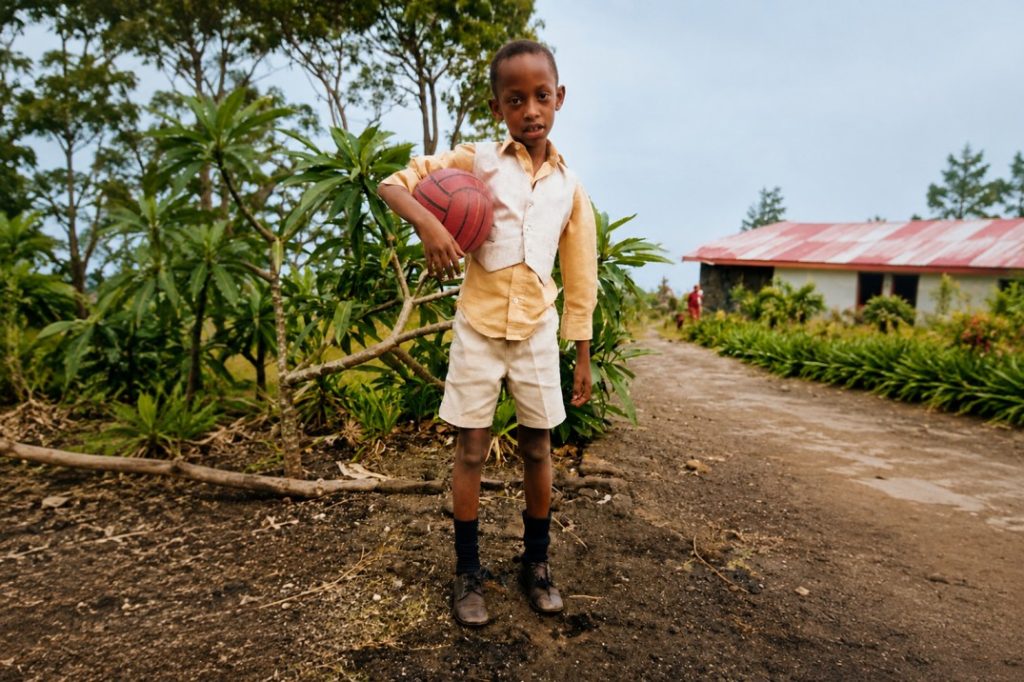
Before a country produces professional footballers, it must first produce children who play. And before
children can play regularly, safely and freely, they need somewhere close to home where play is normal –
not an occasional event.
My argument is simple: Rwanda should treat neighborhood playgrounds and small community sports
facilities as part of the country’s long-term sports-development infrastructure. They are not a substitute for
academies, coaching or professional clubs. They are the broad base from which those systems can draw
talent.
Club Rafiki: a local example of the principle
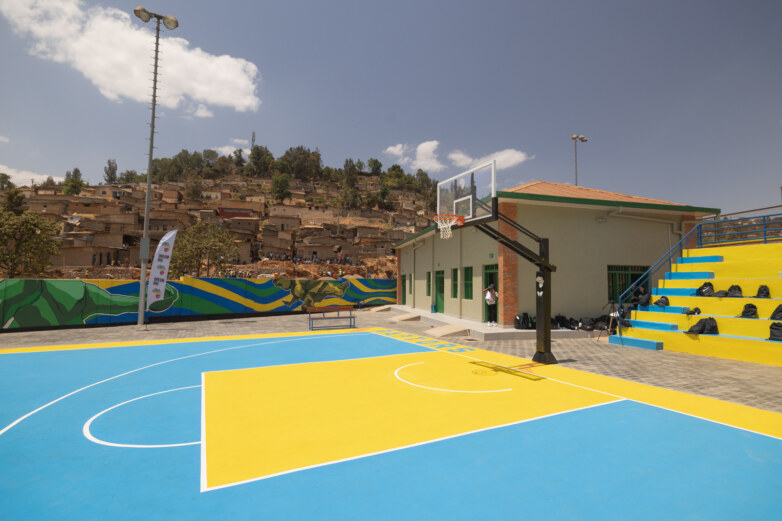
We do not have to look only to Europe or North America for the idea. Club Rafiki in Nyamirambo offers a
local example of what a community sports space can represent. Giants of Africa documents the Club
Rafiki Court as one of its Rwanda court projects, with material from both 2017 and 2022. The important
lesson is not that every neighborhood must reproduce Club Rafiki exactly. It is that a dedicated, visible
and accessible place for sport can become part of community life.
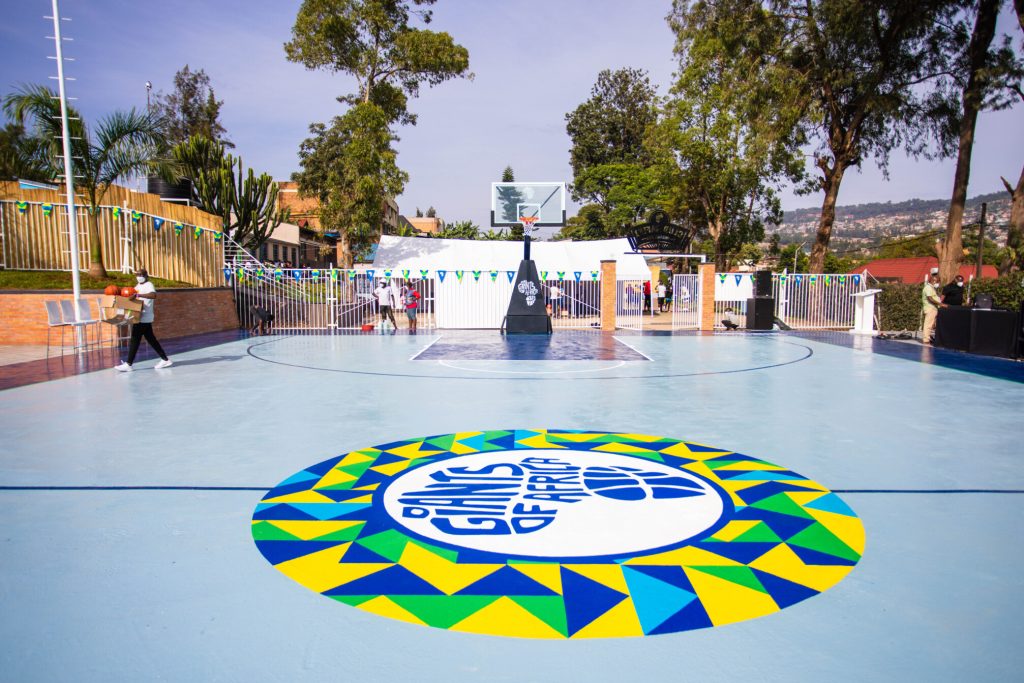
A neighborhood facility does not need to be a stadium. Depending on the available land, it can combine a
small football pitch, a basketball or multipurpose court, children’s play equipment, benches, shade, basic
lighting and safe pedestrian access. The objective is not luxury. The objective is access.
Football talent needs somewhere to reveal itself
Talent is often discussed as something that scouts discover. In reality, talent first needs an
environment in which it can appear. A child discovers ball control, speed, confidence, creativity or
leadership by playing repeatedly with other children. Those abilities are strengthened through hundreds
and eventually thousands of ordinary hours of play.
If opportunities to play are scarce, the talent pipeline narrows before formal scouting even begins. But if
many neighborhoods give children regular access to sport, the base of the pyramid becomes much wider.
Schools, community coaches and local competitions can then identify promising players; academies and
clubs can provide the next level of structured development.
This is why the football question should not only be, “Who will coach the national team?” It should also be,
“Where are our seven-, nine- and twelve-year-olds playing today?”
Kigali already plans for parks and sport
The Kigali City Master Plan provides a useful planning foundation. Its zoning system identifies P1 as
“Parks and open spaces” and P2 as “Sport and Eco tourism.” The City has also stated that green and
recreational space is part of its long-term vision, and in an earlier public statement said that 6% of Kigali
had been set aside for recreational spaces in the new master plan.
That creates an opportunity for a practical next step: a transparent, public inventory of land designated for
parks, open space and sport. Residents should be able to understand what land exists in their sectors,
what has already been developed, what remains undeveloped, and which sites could realistically support
small community facilities.
The point is not to convert every P1 or P2 parcel into a football pitch. Environmental protection, drainage,
conservation and other planning needs must remain respected. The point is to identify suitable locations
and turn planning intentions into places people can actually use.
Government does not have to finance every playground
A national or citywide network of community playgrounds does not necessarily require government to pay
for every facility. Government’s strongest role may be to protect suitable land, establish standards, simplify
legitimate approvals, coordinate transparently and ensure that facilities intended for the public remain
genuinely accessible.
Private companies can become partners through Corporate Social Responsibility. Banks,
telecommunications companies, insurers, construction firms, hotels and other businesses could finance
construction, equipment or maintenance. Where Rwanda’s tax framework permits, policymakers could
examine appropriate incentives for verified community investments.
In return, companies receive reasonable public recognition and can point to a tangible contribution to the
communities in which they operate. Government reduces the pressure on public finances, while residents
receive infrastructure that improves daily life.
The return is bigger than football
The success of a playground should not be measured only by how many professional footballers it
produces. A child who never becomes an athlete can still gain enormously from regular physical activity,
friendships, teamwork, discipline, competition and confidence.
Parents gain places to spend time with their children. Teenagers gain constructive spaces to meet.
Neighborhoods gain shared places where people who might otherwise live beside one another without
interacting can build community.
This is how a sporting culture becomes sustainable: not only through major tournaments and stadiums,
but by making movement, play and competition part of ordinary childhood.
Start with a measurable pilot
Kigali does not need to transform every neighborhood at once. A pilot could begin in a small number of
sectors. Identify suitable public land; adopt several affordable standard designs; invite transparent private-
sector sponsorship; involve schools and local communities in programming; and establish clear
maintenance responsibilities.
Then measure the results: How many children use each facility? How often? Are girls participating? Which
sports attract the most interest? Are schools and community teams using the space? What does
maintenance cost? Are local coaches identifying promising young athletes?
Successful models can be improved and replicated. Over time, the ambition could be straightforward:
every child should have reasonable access to a safe place to play.
A question worth asking
Rwanda has shown that organized systems and long-term planning can turn limited resources into
meaningful results. Community sport deserves the same practical thinking.
The solution to Rwanda’s football ambitions will not come from playgrounds alone. Coaching, competition,
school sport, academies, club development and good administration all matter. But without a broad culture
of everyday play, the system begins with too few children.
Before asking where Rwanda’s next great footballer will come from, perhaps we should ask a more basic
question: where are our children playing today? Club Rafiki gives us a glimpse of the principle. The opportunity is to take that principle beyond one facility and make accessible community sport a normal part of neighborhoods across Kigali – and, eventually,
across Rwanda.