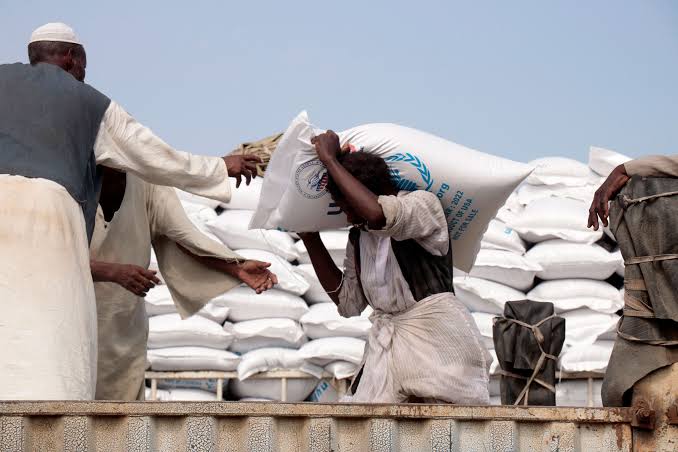
Nearly 49 million people across East Africa are expected to require humanitarian assistance this year as conflict, climate shocks, disease outbreaks and worsening food insecurity continue to deepen the region’s humanitarian crisis, according to the United Nations Office for the Coordination of Humanitarian Affairs (OCHA).
In its latest regional humanitarian update, OCHA estimates that 48.5 million people will need humanitarian support in 2026, with 40.5 million already experiencing severe food insecurity, an increase of 1.6 million people compared with the previous quarter.
The agency said the sharpest deterioration in hunger has been recorded in South Sudan, Sudan, Kenya and Tanzania, where a combination of conflict, economic hardship and extreme weather has left millions struggling to access sufficient food.
Beyond hunger, East Africa is also facing growing public health threats. OCHA warned that the ongoing Ebola outbreak in the Democratic Republic of Congo (DRC) continues to pose a regional risk despite remaining largely concentrated within the country. Health authorities across neighboring states remain on high alert to prevent cross-border transmission.
The report also highlights a sharp rise in cholera, with reported cases more than doubling to 12,400, while 457 Mpox cases have been recorded, particularly in flood-affected and displacement-prone communities where limited access to healthcare has heightened the risk of disease spread.
Meanwhile, forced displacement continues to rise across the region. OCHA says the number of refugees in East Africa has reached 6 million, driven largely by ongoing conflicts in Sudan, South Sudan and eastern DRC, placing additional pressure on host communities and humanitarian agencies.
The UN is calling for increased international support to address the growing needs, warning that without sustained funding and coordinated action, millions of vulnerable people could face worsening hunger, disease and displacement in the months ahead.