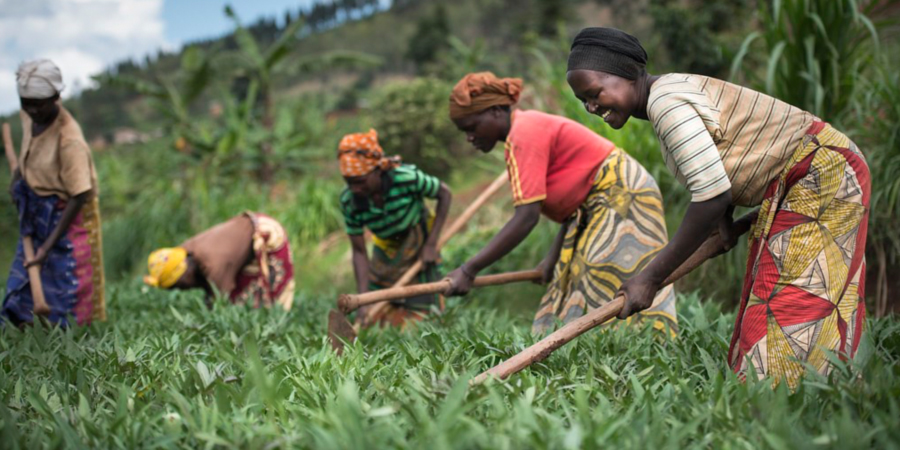
Rwanda’s agricultural productivity could face growing pressure after new data showed that fewer than four in ten farmers used improved seeds in 2025, raising concerns about crop yields, food security, and the country’s long-term agricultural goals.
According to the Seasonal Agricultural Survey – Annual Report 2025 by the National Institute of Statistics of Rwanda (NISR), the use of improved seeds remained low across all three farming seasons, dropping below 20 percent in Seasons B and C. Experts warn that limited adoption of high-quality seeds may slow efforts to boost production and strengthen resilience against climate shocks.
The survey, which covered 1,200 agricultural segments nationwide, found that only 37.3 percent of farmers used improved seeds during Season A, compared to 18 percent in Season B and 18.9 percent in Season C.
Despite the low uptake of improved seeds, the report shows strong reliance on fertilizers. More than 80 percent of farmers applied organic fertilizer in all three seasons, while between 55 percent and 66 percent used inorganic fertilizer. This widespread use supports soil fertility but may not deliver maximum yields without improved seed varieties.
NISR data also indicates that about 60 percent of Rwanda’s total land area was under agricultural use in both Seasons A and B of the 2024/2025 agricultural year. Over one million hectares were planted with seasonal crops in each season, underlining agriculture’s continued importance to the national economy and food supply.
Pesticide use varied significantly, with 41.9 percent of farmers applying pesticides in Season A, 36.6 percent in Season B, and a sharp increase to 67 percent in Season C. While pesticides can help reduce crop losses, the increase has raised questions about safe use, regulation, and potential environmental impact.
The agricultural year covered three main seasons: Season A from September 2024 to February 2025, Season B from March to June 2025, and Season C from July to September 2025. The survey aimed to track land use and input adoption to guide policy and investment decisions.
Agriculture remains a cornerstone of Rwanda’s economy, employing a large share of the population and supporting both domestic consumption and regional trade. Policymakers say increasing access to improved seeds, strengthening extension services, and promoting safe input use will be key to improving productivity and sustaining growth in the sector.