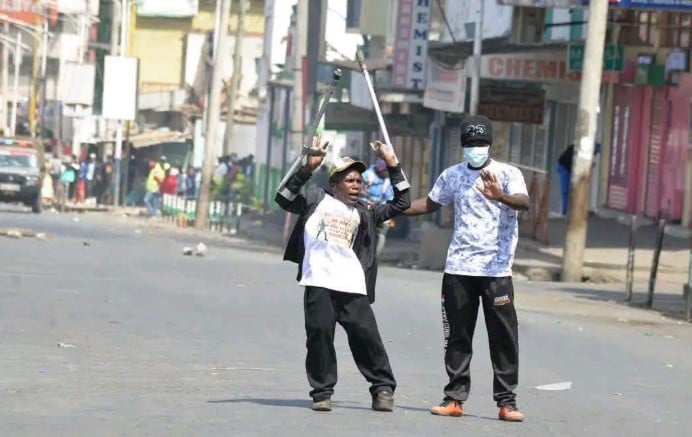
Two years after Kenya’s Gen Z-led protests forced the government to withdraw the controversial Finance Bill 2024, thousands of young people have once again taken to the streets.
The demonstrations are not only a commemoration of those who lost their lives during the historic protests but also a reflection of growing frustration among young people who believe many of the issues that sparked the movement remain unresolved.
What began in June 2024 as opposition to a Finance Bill quickly evolved into a broader demand for accountability, transparency, economic justice, and responsive leadership. The movement fundamentally changed Kenya’s political conversation, proving that a digitally connected generation could influence national policy without relying on traditional political structures.
According to Kenyan political analyst Innocent Musumbi, the Gen Z movement was driven by concerns that extended far beyond taxation.
“Gen Z protesters in Kenya opposed the Finance Bill 2024 because they viewed it as exploitative. They were also demanding accountability and transparency, especially in major government projects, action against corruption, a reduction in the bloated Cabinet and public wage bill, and scrutiny of the President’s frequent local and international trips,“ he explains.
Musumbi believes the protests achieved significant victories, forcing the government to respond to public pressure in ways few had anticipated.
“The protests bore fruit. The President declined to assent to the Finance Bill, dismissed some of his advisers, and reviewed several partnership deals involving companies such as Adani. Subsequent finance bills have also focused on reducing the cost of living,” he says.
However, those achievements came at a high cost. Dozens of young people lost their lives during the demonstrations, leaving many families still searching for justice and accountability.
As Kenyans marked the anniversary of the protests, familiar scenes unfolded across Nairobi and other towns. Roads leading into the Central Business District were barricaded, anti-riot police were deployed in large numbers, and clashes between protesters and security officers were reported in several areas. Tear gas once again filled parts of the capital as demonstrators attempted to march in memory of those who died during the 2024 protests.
Musumbi insists that the June 25 demonstrations are primarily about remembrance rather than politics.
“The June 25 protests are primarily a Gen Z initiative to commemorate those who died during the 2024 demonstrations, although some politicians are using them to advance their own political agendas,” he says.
He argues that some political leaders have attempted to associate themselves with a movement that has consistently sought to remain independent of traditional political interests.
“Some politicians are trying to hijack the process. We have seen leaders such as James Orengo, Edwin Sifuna, and others attempting to lead the protests despite Gen Z activists wanting politicians to stay away,” Musumbi adds.
The demonstrations have also generated significant discussion online. In one widely circulated video, comedian and content creator Erick Omondi is seen being arrested during the protests, a development that has sparked outrage among many young Kenyans on social media.
The symbolism of today’s demonstrations has not been lost on many observers. Two years after young Kenyans demanded accountability and paid for it with their lives, many believe the country is still grappling with the same issues that pushed thousands onto the streets in 2024.
Questions surrounding corruption, public spending, police accountability, youth unemployment, and governance continue to dominate public discourse. While the withdrawal of the Finance Bill marked a major victory for the movement, many activists argue that it addressed only one aspect of a much broader struggle.
For Benson Cheserek, a Kenyan living in North Carolina in the United States, the recurring protests point to a broader challenge facing not only Kenya but many African countries.
“One of the reasons Kenya continues to experience protests is that successive governments have failed to address the needs of young people. Africa has a vast workforce that remains largely untapped. Leaders need to find ways to ensure that young people, who make up a significant portion of the population, are actively involved in developing their countries,” Cheserek notes.
He argues that Africa possesses enormous potential through its natural resources, fertile land, and favorable climate, but that these advantages have not been fully leveraged to create opportunities for young people.
“Africa is a rich continent, endowed with vast mineral resources, arable land, and some of the most favorable climatic conditions in the world. However, these advantages have not been fully utilized to create opportunities for young people,” he says.
According to Cheserek, addressing youth unemployment and expanding economic opportunities could help reduce the frustrations that often fuel protests across the continent.
“Harnessing these opportunities would create employment, improve livelihoods, and help address some of the underlying causes of recurring protests,” he adds.
Despite the tensions witnessed during this year’s demonstrations, many observers believe the Gen Z movement has already secured one lasting achievement: changing how young people engage with politics. Through social media, civic action, and grassroots mobilization, a new generation of Kenyans demonstrated that political participation extends beyond elections and party politics.
Young people are increasingly using digital platforms, civic action, and public demonstrations to shape national conversations and challenge institutions they believe are failing them. The movement has inspired similar conversations across Africa about governance, accountability, and citizen participation.
Yet the economic pressures that fueled the protests have not disappeared. Youth unemployment remains high, the cost of living continues to challenge many households, and concerns over governance and accountability persist. For families who lost loved ones during the demonstrations, questions surrounding justice and police accountability remain unresolved.
Although the government has indicated that efforts are underway to compensate victims of the 2024 protests, the proposed compensation framework has faced criticism from some politicians, activists, and affected families who argue that it does not adequately reflect the scale of the losses suffered.
As Kenya reflects on the anniversary of one of the most influential youth-led movements in its history, the question is no longer whether young people can make their voices heard. They have already proven that they can.
The greater challenge is whether the country can translate that energy into meaningful reforms that create jobs, strengthen institutions, improve accountability, and expand opportunities for future generations.
Two years after the protests captured global attention, many young Kenyans believe the struggle that began in 2024 is far from over.