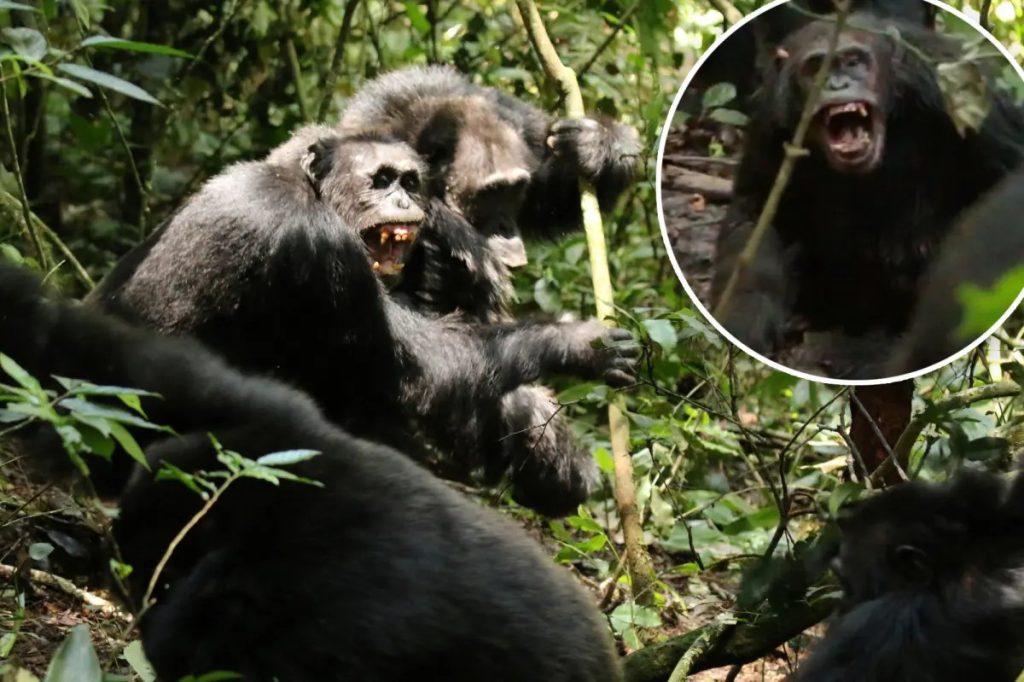
A once tightly bonded community of wild chimpanzees in Kibale National Park has descended into a prolonged and deadly internal conflict, shocking researchers who had observed decades of peaceful coexistence.
Scientists studying the Ngogo chimpanzee population, recognized as the largest known group of wild chimpanzees, report that the community has been split into rival factions and has been engaged in a violent struggle since 2018. The conflict has resulted in at least 24 documented killings, including a significant number of infants.
“These were individuals who once lived, fed, and even held hands together,” said Aaron Sandel, lead author of the study published in Science. “Now they are turning on each other with lethal intent.”
The division traces back to growing tensions between two subgroups, referred to as Western and Central chimpanzees, which had long coexisted within a larger, unified society. Early signs of the breakdown emerged in 2015, when interactions shifted from routine disputes to prolonged avoidance and escalating aggression.
By 2018, the fracture had fully formed, with members of the Western group launching coordinated attacks on their Central counterparts. Victims have included at least seven adult males and 17 infants, though researchers believe the true toll may be higher.
Experts suggest the violence may stem from a combination of factors, including competition for resources and reproductive dominance among males. However, three major disruptions appear to have intensified the divide: unexplained deaths of key adult chimpanzees in 2014, a shift in leadership within the dominance hierarchy in 2015, and a devastating respiratory outbreak in 2017 that killed dozens, further destabilizing social bonds.
The findings provide a rare and unsettling glimpse into how complex social systems can unravel, even among one of humanity’s closest genetic relatives. Researchers say the study offers important parallels for understanding the roots of conflict in human societies.
“If such divisions can arise without the influence of religion, politics, or ideology,” the study notes, “then the dynamics of relationships themselves may play a more powerful role in driving conflict than previously thought.”
The case stands as a stark reminder that even the strongest social ties can fracture under pressure, sometimes with deadly consequences.