

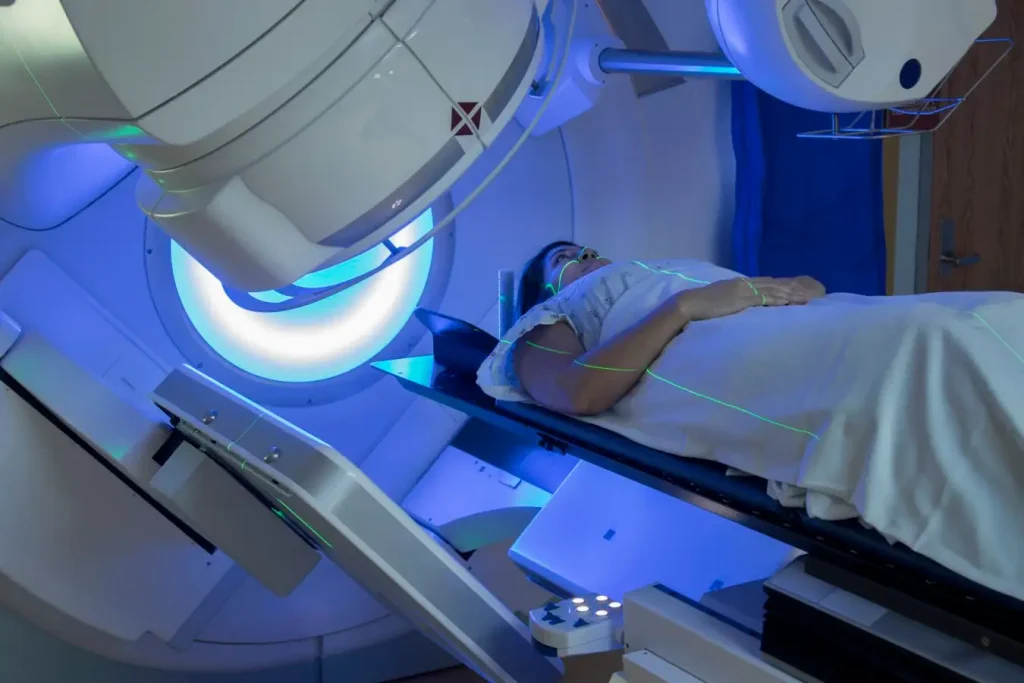
There is renewed hope for cancer patients following the introduction of nuclear therapy, an approach that promises greater precision and improved treatment outcomes. The advanced procedure, known as theranostics, involves delivering radioactive medicine directly into cancerous tumors. According to the Kenyatta University Teaching, Referral and Research Hospital (KUTRRH), this marks the first time such a treatment has been carried out in the region.
While the breakthrough introduces a new chapter in cancer care, the cost remains a major hurdle. Each treatment cycle goes for about $10,000 (Sh1.3 million), and most patients require between four and six cycles, putting it out of reach for many Kenyans and neighboring populations.
Dr. Harish Nagaraj, the head of Nuclear Medicine at KUTRRH’s Molecular Imaging Centre, noted that traditional cancer treatments have shown limited success for certain conditions. He spoke during a training on the safe use of the new technique, conducted in collaboration with the International Atomic Energy Agency (IAEA) and Incidium Foundation. Dr. Nagaraj emphasized the need for broader support from various sectors, especially because the treatment is not yet covered under the Social Health Authority.
Experts from the IAEA echoed the benefits of the therapy. Dr. Janke Kleynhans from the agency’s South Africa office said he would choose this treatment for himself or even his mother if faced with cancer, describing it as one of the safest options available. He explained that unlike conventional treatments that expose the entire body to damage, theranostics targets the tumor directly and minimizes harm to healthy tissues.
Prof. Jan Zeevaart, also from the IAEA, added that the therapy’s precision helps protect surrounding body tissues by concentrating radiation only where it is needed. This targeted approach is what sets nuclear therapy apart from standard oncology methods.
During the event, Dr. Frank Sawaga, Deputy Director in the State Department for Science, Research and Innovation, highlighted how misinformation and poor scientific communication have contributed to misconceptions about nuclear energy. He stressed the need for institutions to invest in research and public awareness campaigns to educate communities that nuclear technology is used not only in warfare but also in life-saving medical treatments such as cancer care.
Medical experts maintain that nuclear therapy is both safe and highly effective compared to conventional methods. However, they acknowledge that its high cost remains a significant barrier, limiting access for many patients across Kenya and the wider region.
Despite these challenges, the introduction of this cutting-edge technology signals a major step forward in the region’s fight against cancer—bringing fresh optimism and the possibility of better outcomes for thousands of patients.

