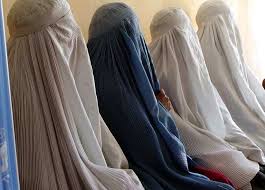
According to Médecins Sans Frontières (MSF), the Taliban authorities in Afghanistan have instructed that all female patients, caretakers, and medical staff in the western city of Herat must wear a burka, the full-body Islamic veil, to access public health facilities.
MSF said the rule, which took effect on November 5, initially led to a drop in hospital admissions by 28 percent in the first few days, though the numbers have since “stabilized.”
Sarah Chateau, MSF’s programme manager in Afghanistan,said that this improvement might be because some women managed to return to hospitals after getting burkas. Still, she expressed concern that the policy could further restrict women’s access to healthcare.
Meanwhile, a Taliban government spokesperson dismissed MSF’s claims.
MSF’s programme manager, Sarah Chateau, said Taliban guards had been stationed at hospital entrances to deny entry to women without burkas, even those in urgent need of care. Though the rule had existed before, this was the first time it had been strictly enforced. She added that more women were now wearing burkas to return to hospitals.
Reports suggest the restrictions have recently eased. A local journalist said that women were now entering hospitals wearing various forms of hijab, including scarves and burkas, and that the situation appeared “normal.”
A Taliban spokesperson from the Ministry for the Propagation of Virtue and Prevention of Vice denied that women were being forced to wear burkas, claiming the rule only required modest dress, or hijab. However, activists in Herat say women must wear burkas to access hospitals, schools, and government offices, with some protesting by burning the garments.
The Taliban enforced similar dress codes during their first rule in the 1990s. Since retaking power in 2021, they have tightened restrictions on women, barring them from universities, most jobs, and secondary education, under their interpretation of Islamic Sharia law. The UN has condemned these actions as “gender apartheid.”
Recently, the UN also suspended operations at the Islam Qala border crossing with Iran, citing Taliban restrictions on female staff.