

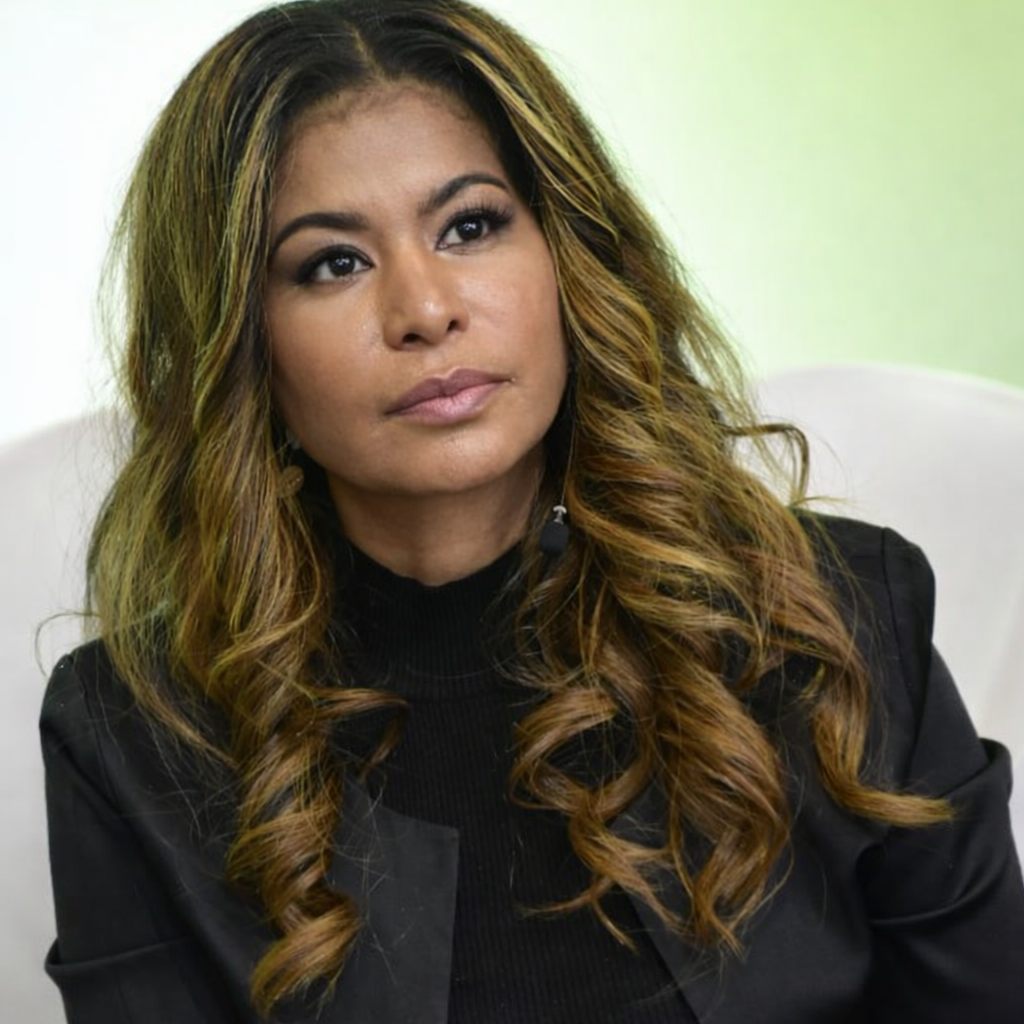
Kenyan media and leadership figure Dr. Julie Gichuru has been named among Avance Media’s 2025 100 Most Influential African Women, a recognition that also spotlights the growing influence of East African women across governance, diplomacy, business, media, sport, and global institutions.
Dr. Gichuru, the Founder and President of the Africa Leadership and Dialogue Institute (ALADI), was recognised for for among other things building African-led platforms that connect leadership development, policy dialogue, and media-driven public engagement across the continent.
Through ALADI, she continues to play a pivotal role in driving conversations on Africa’s role in global governance systems. “This recognition is not about individual achievement, but about the importance of building strong spaces where leadership, dialogue, and evidence come together to shift norms and systems in order to serve our aspirations as Africans,” said Dr. Gichuru. “A more confident, connected, strong, and truly independent Africa will be shaped by our ability to turn shared ideas into action, and to ensure African voices are influencing decisions at every level.”
Her recognition comes amid a strong East African showing on the 2025 list, with 19 women from the region featured among Africa’s most influential leaders – a reflection of East Africa’s expanding footprint in continental and global decision-making.
Heads of State and Regional Power
At the highest level of political leadership is Tanzania’s President Samia Suluhu Hassan. She is joined by Rebecca Nyandeng De Mabior, a central figure in South Sudan’s peace and governance processes, and Jessica Alupo, who continues to shape Uganda’s state and regional engagements.
At the regional level, Veronica Mueni Nduva holds one of the most strategic integration roles in Africa as Secretary General of the East African Community, overseeing cooperation on trade, mobility, and political coordination.
East Africa on the Global Diplomatic Stage
Several honourees are shaping international policy from within the United Nations and global judicial institutions. Uganda’s Julia Sebutinde and Kenya’s Phoebe N. Okowa sit on the International Court of Justice, contributing to decisions that influence international law and state conduct worldwide.
Rwanda’s Valentine Rugwabiza serves as a Special Representative of the UN Secretary-General, while Tanzania’s Joyce Msuya Mpanju and Elizabeth Maruma Mrema occupy senior leadership roles within the UN system.
Kenya’s Sanda Ojiambo and Uganda’s Rose Mwebaza further anchor East Africa’s presence in global sustainability, development, and environmental governance. From Addis Ababa, Nardos Bekele-Thomas leads AUDA-NEPAD, one of the African Union’s most influential development agencies, focused on translating continental policy ambition into implementation.
Media, Business, Philanthropy, and Sport
Beyond formal politics and diplomacy, East African women on the list are shaping narratives, markets, and social outcomes.
Kenyan journalists Anne Soy and Edith Kimani continue to influence how Africa is reported and understood by global audiences.
Rwanda’s Clare Akamanzi leads NBA Africa, positioning sport as a platform for youth engagement and economic opportunity, while Kenya’s Taaka Awori heads Busara Africa, applying behavioural science to development policy and decision-making.
From the philanthropic and development sector, Rica Rwigamba plays a key role in advancing education-to-work transitions across Africa, and Winnie Byanyima remains one of Africa’s most prominent global voices on public health, equity, and human rights.
Kenya’s Beatrice Chebet, a world-class long-distance runner, represents excellence beyond policy and governance, reinforcing the breadth of East African women’s global impact.
A Regional Signal
According to Avance Media, the annual list recognises women whose leadership is shaping policy, culture, innovation, and Africa’s future. Dr. Gichuru said her recognition reflects the importance of building African-led spaces where ideas, evidence, and leadership converge to shift systems and norms.
Taken together, the strong East African presence on the 2025 list signals more than individual achievement. It points to a region increasingly central to Africa’s leadership pipeline – one where women are not only participating in power, but redefining it across national, regional, and global arenas.
