

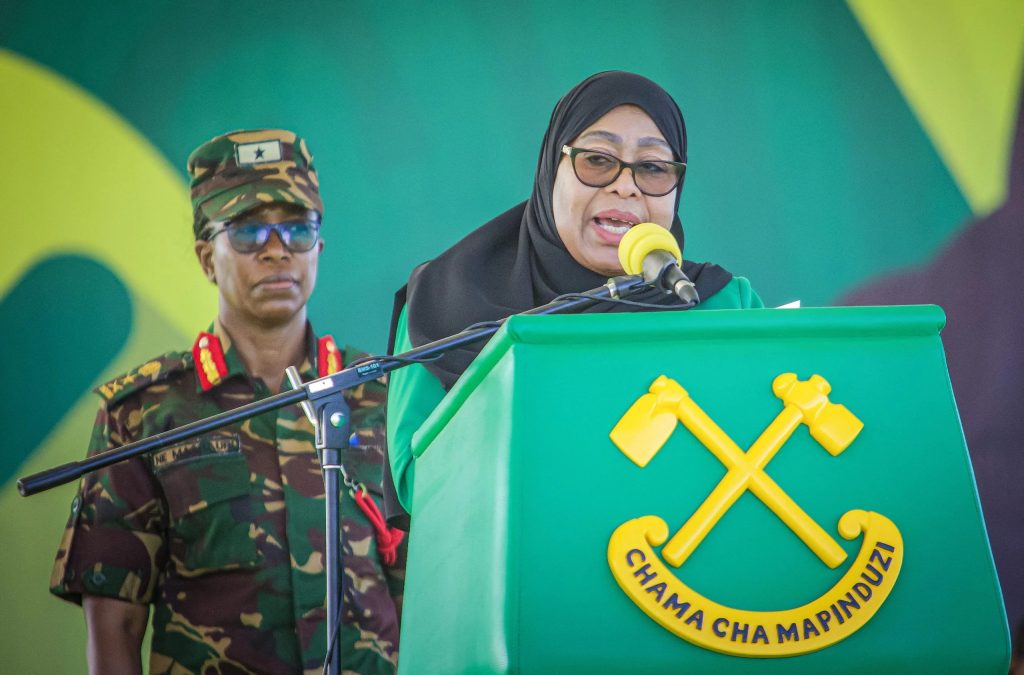
Samia Suluhu Hassan has ordered a major reduction in her official motorcade, announcing that only four vehicles will accompany her on official trips while the rest of her entourage will travel in a single bus, in a move aimed at cutting fuel consumption during a worsening global energy crisis.
The directive, announced during remarks addressing government spending, is part of broader efforts to curb what the president described as excessive fuel use within state operations.
“We have a crisis. Within the government, we have excessive use of fuel. The vehicles are too many, the journeys are too many,” Samia said.
She emphasized that the reform would begin with her own office, signaling a top-down approach to austerity.
“Wherever I go, all the officers and big people with their cars follow behind me. Starting from today, wherever I go, I will pile all of them on a bus, one bus,” she stated. “My entourage will include only my escorts, the police, my motorcade, and one extra vehicle. The rest will go by bus to cut fuel usage.”
Rising Pressure from Global Energy Shock
Tanzania’s decision comes as African economies face mounting pressure from surging fuel prices driven by global supply disruptions. The crisis has been largely linked to instability in the Middle East, particularly disruptions in oil shipments through the Strait of Hormuz, a critical artery for global energy supplies.
According to the International Energy Agency, the conflict triggered one of the largest oil supply shocks in history. In March, the agency estimated a potential drop of around 8 million barrels per day, nearly 8% of global demand, after the key waterway was affected.
Although a ceasefire has eased immediate fears, global markets remain volatile. Reports indicate that oil flows dropped by as much as 13%, while liquefied natural gas shipments declined by 20%, leaving energy prices elevated and supply chains strained.
Africa Feels the Impact
The ripple effects are being felt across the African continent. Countries heavily dependent on imported petroleum products have been forced to adjust policies and absorb rising costs.
Tanzania joins nations such as Ghana, Malawi, Mauritania, Botswana, and Mali in experiencing increased fuel prices.
Elsewhere on the continent:
- Madagascar has declared a state of energy emergency.
- Senegal has restricted non-essential foreign travel by ministers.
- South Africa has temporarily reduced fuel levies to cushion consumers.
- Ethiopia and others have introduced conservation measures.
In Kenya, concerns have emerged over potential shortages at some fuel stations, although authorities maintain that national reserves remain stable.
Tanzania’s Position
Despite the challenges, Samia reassured the public that Tanzania has sufficient fuel reserves to last up to three months. However, she issued a stern warning to businesses against exploiting the situation through unjustified price increases.
Her move to reduce the presidential convoy is being seen as both symbolic and practical—an attempt to lead by example while encouraging broader restraint across government and society.
As global energy uncertainty persists, Tanzania’s approach signals a shift toward cost-saving measures and resource efficiency, with leadership accountability at its core.
