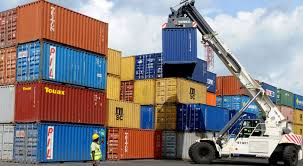
The East African Community (EAC) has recorded a remarkable increase in international merchandise trade during the second quarter of 2025, reaching $38.2 billion, a 28.4 percent rise from $29.7 billion in the same quarter of 2024.
According to the latest EAC Quarterly Statistics Bulletin, the performance was largely driven by a surge in exports, which grew by 40.5 percent to $18.6 billion, while imports rose by 18.8 percent to $19.6 billion. This resulted in a sharp decline in the region’s trade deficit from $3.2 billion to $0.9 billion—marking a significant improvement in the external trade balance.
Trade within the continent also showed notable progress. Commerce with other African countries expanded by 42.9 per cent to $9.3 billion, accounting for 24.5 per cent of total trade. Intra-EAC trade climbed 24.5 percent to $4.6 billion, representing 12.1 percent of the region’s total trade value. The report also highlighted strengthened partnerships with COMESA and SADC, contributing 9.9 percent and 15.2 percent, respectively, to the EAC’s total trade.
Exports were boosted by high global demand from China, the United Arab Emirates, South Africa, Hong Kong, and Singapore, which together absorbed 62.8 percent of EAC exports, up from 40.1 percent a year earlier. The region’s top five export commodities—copper, precious stones and metals, coffee and tea, mineral fuels, and ores—accounted for nearly 80 percent of total exports, underscoring growing specialization in high-value goods.
China maintained its position as the leading source of imports, contributing $4.7 billion (24.2 percent), followed by the UAE, India, South Africa, and Japan. The top imports included petroleum products, machinery, vehicles, and precious metals, reflecting continued investment in infrastructure and industrial growth.
“The EAC’s trade performance in Q2 2025 signals a dynamic and diversified regional economy. The narrowing trade deficit, rising exports, and expanding intra-African trade point to a positive trajectory for integration and sustainable growth,” the press release stated.
Inflationary pressures remain high
Despite the strong trade performance, the report noted persistent inflationary challenges across the region. The EAC Harmonised Consumer Price Index showed that annual headline inflation stood at 22.7 percent in June 2025, down slightly from 24.0 percent in May, but significantly higher than 13.7 percent recorded in June last year.
“The annual average headline inflation for the 2024/2025 financial year stood at 23.0 percent up from 6.6 percent which was recorded for the 2023/2024 financial year,” reveals the quarterly bulletin.
This surge was mainly driven by sharp price increases in South Sudan of 179.4 percent and Burundi at 34.1 percent. Core inflation, excluding food and energy, dropped to 19.3 percent in June 2025 from 23.6 percent in May, showing early signs of stabilization.
Monetary developments and credit growth
The report also detailed trends in monetary policy, noting that short-term interest rates increased in most EAC Partner States except Kenya, where the 91-day Treasury bill rate declined to 8.2 per cent. Uganda and Burundi recorded the highest rates at 11.2 percent and 8.6 per cent, respectively.
Lending rates fell in Kenya and Tanzania but rose in Uganda, while South Sudan maintained the widest interest rate spread at 13.7 per cent.
“The EAC money supply (M3) grew by 19.1 per cent year-on-year in Q2 2025 which was driven mainly by a 19.2 per cent rise in credit to the private sector reflecting continued monetary expansion across the region,”